Two new awards open to help young farmers progress to farm ownership
Entries have opened for two awards in the New Zealand Dairy Industry Awards (NZDIA) programme, aimed at helping young farmers progress to farm ownership.




 increase font size
 Nathan Penny.
After 2019’s record highs, farmers should expect less spectacular NZ commodity prices this year, says ASB senior rural economist Nathan Penny.
In the bank’s Commodities Weekly report, Penny says the bank expects NZ commodity prices to come off the record highs achieved in 2019.
“Recall that over October and November, the ASB Commodity Price Index set record highs in NZD terms, with meat, fruit, forestry and seafood prices all setting record highs on a component basis,” says Penny.
Nonetheless, the bank expects commodity prices to remain at healthy levels on a historical basis.
“Indeed, key (fundamental) drivers including growing global incomes and food demand, global food supply constraints and the ongoing impact of African Swine Flu are likely to remain in play and supportive of prices over 2020,” Penny says.
On African Swine Flu specifically, the report says 2019 coincided with the peak impact on protein prices, including on NZ meat export prices.
However, the sheer magnitude of the rebuild in the global pork herd means that meat prices are likely to remain relatively high over 2020, if not beyond then, as the global pork herd slowly rebuilds. Penny says it’s a similar story with regards to the NZ dollar.
“We expect the NZ dollar to trade at levels that will be historically supportive for commodity prices in NZD terms. However, the risks are that the NZD/USD remains above its 2019 average of US69c.
“The level of commodity prices are consistent with NZD/USD trading closer to US70c over the course of the year, providing slightly less support overall for producer incomes in NZD terms.”
Meanwhile, the bank anticipates global dairy prices (in US dollarterms), will rise over 2020 on the back of tight global supply.
“We expect zero growth in NZ production over the 2019/20 season. US and EU supply growth is low, while Australian production is likely to continues to fall rapidly. We anticipate underlying global dairy demand is likely to remain healthy and supportive of global dairy prices.”
Entries have opened for two awards in the New Zealand Dairy Industry Awards (NZDIA) programme, aimed at helping young farmers progress to farm ownership.
According to ASB, Fonterra's plan to sell it's Anchor and Mainlands brands could inject $4.5 billion in additional spending into the economy.
Sheep and beef farmers are cautiously optimistic as farmgate prices continue to firm.
The 2025-26 season is set to start on a high and a $10/kgMS opening forecast milk price isn't being ruled out.
A global trade war beckons, which is bad news for a small open economy like New Zealand, warns Mark Smith ASB senior economist.


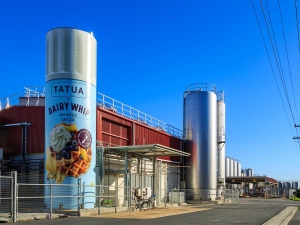
Waikato milk processor Tatua has again declared a record milk payout to farmer shareholders, leaving other processors in the dust.

A Labour-led Government won’t be bringing back the controversial freshwater rules of 2020.
National’s much-touted free trade deal with India featured in the Rural Issues Debate at Mystery Creek, Hamilton on Wednesday night.
New Zealand's 2026-27 freshwater fishing season has opened, with anglers encouraged to head to rivers and lakes over the coming days as conditions look favourable across much of the country.
Central Otago District Council (CODC) has voted against a plan to spread treated sewage sludge from Cromwell and Alexandra on farmland near Lauder, a decision Federated Farmers says reflects strong opposition from rural residents.
Pāmu has released its FY26 Integrated Annual Report, reporting a Net Operating Profit of $113 million, more than double the $49 million recorded in FY25.


OPINION: It seems Canterbury processor Synlait is still in the doldrums.
OPINION: Get offside with New Zealand First leader Winston Peters at your own peril.