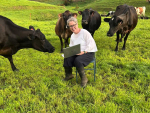
International Day of Rural Women: Two DairyNZ Farmers’ Stories
Today, 15 October, is the International Day of Rural Women, which recognises rural women’s contribution to farming, communities and the environment.




 increase font size
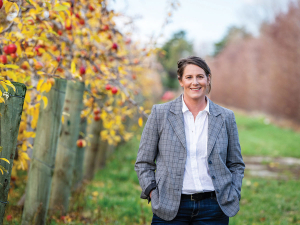
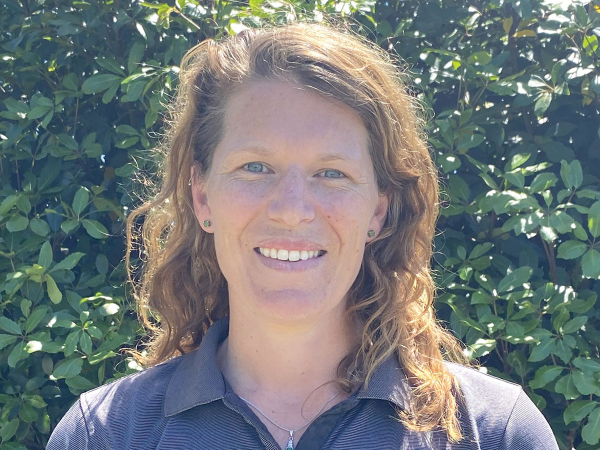 Dr Stacey Hendriks
Animal welfare is of paramount importance to New Zealand's dairy industry, with consumers increasingly interested in how food is produced, not just the quality of the final product.
International customers like Nestle are placing greater emphasis on sourcing products pivotal, and increasingly, technology is helping with this.
DairyNZ scientist Dr Stacey Hendriks has studied the behavioural and environmental needs of grazing dairy cows and reviewed technology-enabled indicators that apply particularly to New Zealand's pasture-based dairy cows.
Her research won her the prestigious T.R. Ellett Agricultural Research Trust Emerging Scientist Award at the 2025 International Precision Dairy Farming Conference held in Christchurch in December.
Hosted by DairyNZ, the event was the first time the event had been held in the Southern Hemisphere. It was attended by almost 400 farmers, researchers, advisors, and technology developers from 22 countries.
During her presentation at the conference, Hendriks showcased the potential use of technology in monitoring animal welfare for grazing dairy cows, emphasising a shift from traditional, subjectived measures to more objective, data-driven approaches.
Historically, animal welfare assessments in dairy farming have relied on animal-based indicators like body condition score and coat condition. While often considered the gold standard for evaluating the health and welfare of dairy cows, they come with significant limitations.
"Animal-based indicators are subjective, require trained assessors, and only provide a snapshot of an animal's experience at a given moment," explains Hendriks.
Additionally, many other indicators have been developed for use on housed cows, making them less applicable to the unique needs of New Zealand's pasture-based grazing dairy cows.
Hendriks and her research team at DairyNZ identified animal-based welfare indicators specifically suited for New Zealand pasture-based dairy systems, and then categorised these based on feasibility, validity and potential for wider uptake.
"We found that technology can play a significant role in improving the scalability and real-time monitoring of animal welfare," says Hendriks.
The team found most practically-feasible indicators related to health and nutrition while fewer options were available for assessing the physical environment and behavioural interactions (both human and animal interactions and cows' social behaviours).
The team identified seven indicators related to the physical environment and five focused on behavioural interactions, which can now be measured using commercially available technologies.
Interpreting animal welfare based on individual behaviours, however, is complex.
"Lying behaviour, for example, can vary significantly. Both increases and decreases in lying time have been observed in cows experiencing clinical health issues or lying deprivation. This highlights that the relationship between behaviour and animal welfare is not always linear and is influenced by many factors," she says.
As a result, future research aims to explore more comprehensive approaches, such as combining multiple behaviours and other physiological and environmental data, to provide a more complete picture of a cow's lived experience.
Promising Future
Hendriks sees a promising future for the integration of advanced analytics like machine learning into building a bespoke tool for pasture-based welfare assessment.
She says that by combining multiple data streams from behaviour to environmental conditions, researchers could develop composite models that offer a more nuanced understanding of animal welfare.
"We believe technology-enabled indicators could provide real-time, scalable monitoring solutions for pasture-based welfare assessment," she says.
"If technology can also alert farmers to potential welfare challenges, such as heat stress, it allows them to take proactive steps to mitigate the problem. This not only improves animal welfare but can also result in economic benefits, like reduced milk production losses."
By focusing on providing farmers with timely and relevant information, Hendriks believes that technology can complement traditional stockmanship, empowering farmers to make informed decisions that improve both animal welfare and farm performance, while demonstrating the high standards of animal care on New Zealand dairy farms.
Today, 15 October, is the International Day of Rural Women, which recognises rural women’s contribution to farming, communities and the environment.
The first major update to the Dairy Cattle Code of Welfare in more than a decade has been released, marking what DairyNZ describes as an important step in ensuring animal welfare standards continue to evolve alongside scientific evidence and on-farm realities.
Have a plan in place for your cows and staff.
DairyNZ deputy chair Cameron Henderson has been re-appointed unopposed for another term.
OPINION: The stats speak for themselves.


National’s pledge to introduce 19 new national standards shows the party is serious about getting Wellington out of farming, Federated Farmers says.
The National Party’s policies to make it easier to grow fresh vegetables, secure reliable water and energy and simplify farm planning are practical changes that will give growers the confidence to invest, according to Horticulture New Zealand (HortNZ).
Fonterra Co-operative Group chief financial officer Andrew Murray has resigned to take up a role outside the dairy giant.
A major move is about to get underway to improve the quality and viability of dairy beef and cattle in NZ.
Veterinarians say changes to the code of welfare for dairy cattle provides a positive foundation for improved cattle welfare across the country.
Today, 15 October, is the International Day of Rural Women, which recognises rural women’s contribution to farming, communities and the environment.

OPINION: It seems Canterbury processor Synlait is still in the doldrums.
OPINION: Get offside with New Zealand First leader Winston Peters at your own peril.




