
#BootsOfShame: Safer Farms Urges Farmers to Check Footwear
Safer Farms is urging farmers to make sure everyone working on farm has safe, suitable footwear for the job.




 increase font size
 Julia Jones says that in the past 16 years there has been significant change for women in the sector.
As the Agri Women’s Development Trust (AWDT) begins the process of winding down, the organisation’s general manager Julia Jones says there’s still a place for its programmes within the industry.
Earlier this month, AWDT announced it would be phasing out over the course of the next 12 months.
AWDT was founded 16 years ago by Lindy Nelson with the aim of understanding the needs or rural women, removing barriers to leadership, and creating pathways for their growth.
Since then, the organisation has supported thousands of women through its Escalator, Understanding Your Farming Business, Wāhine o te Whenua, It’s All About You, and Next Level programmes.
Jones says that in the past 16 years there has been significant change for women in the sector.
“When AWDT began, there were fewer visible pathways, networks, and leadership opportunities for women in agriculture,” she says.
“Today, we see more women leading farming businesses, stepping into governance roles, influencing industry conversations, and supporting each other through strong networks and communities.”
She says AWDT has been proud to play a role in that shift alongside others in the sector.
The announcement of the winddown comes after a period of declining enrolments over the past 12 to 18 months.
Jones says those declining enrolments have been accompanied by increasing economic pressures on rural communities which have impacted the ability for women and farming businesses to commit to the trust’s programmes.
“After careful consideration, we reached the view that continuing in the current form was no longer sustainable,” Jones told Dairy News.
She says the decision is reflective of the current environment, not the historical value or impact of AWDT’s work.
As the organisation winds down its work, it will continue to provide its currently scheduled and committed programmes into 2027.
Jones says the wind down of AWDT will be phased over the next 12 months.
“As part of that process, we will explore whether there is an appropriate home for AWDT programmes within existing organisations,” she says.
“We are not in a rush to make those decisions. Any process will be fair, transparent and considered.”
However, despite the current economic climate, Jones says there is still a place for the leadership programmes for women in agriculture.
“The need for leadership development, confidence building, connection, and capability support for women in agriculture remains important,” she says.
“What has changed is the environment people are operating in. Economic pressure and competing priorities are making it harder for many women to step away from businesses, farms, and families to participate in programmes in the same way they may have previously.”
She says that there are other organisations, networks and industry groups available to support women across the rural sector.
“While AWDT has had its own unique approach and community, we hope women will continue to access learning, support and connection through existing organisations, and that this may include some form of AWDT programmes finding appropriate homes within that wider ecosystem.”
Safer Farms is urging farmers to make sure everyone working on farm has safe, suitable footwear for the job.
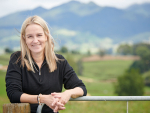
Minister of Conservation Hon Tama Potaka has appointed Susan O'Regan as Chair of the Queen Elizabeth II National Trust (QEII) for a three-year term.
Surprised, humbled and quite thrilled. That’s the reaction of James Allen, one of the founding partners and now chief executive of AgFirst, on being made a life member of the Institute of Rural Professionals.
Conversions of sheep and beef farms to forestry have slowed, however new research from Beef + Lamb New Zealand (B+LNZ) suggests land of value for food production remains at risk.
OPINION: Alistair Carmichael raises some interesting questions about striking a balance between profitability in farming and preserving the character of rural communities.


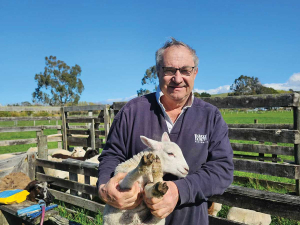
Decades piloting planes has ensured vet and farmer David Hayes is focused on safety. So, after a serious accident while welding on farm, he is sharing his experience so others can learn from it.
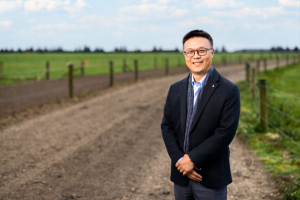
Canterbury milk processor, Synlait Milk has confirmed Leon Fung as its chief executive officer.
OPINION: Making it easier to collect rainwater and use it to grow crops and livestock is a no brainer.
As part of its Election 2026 coverage, Rural News asked political parties how they would help pull the arable sector out of the doldrums. Here's what they said:
Farmers are being encouraged to rethink how they manage waste on farm with the launch of ruralwastesorted.co.nz, a new website bringing together practical tips, real farmer experiences and resources.
New Zealand Winegrowers (NZW) is celebrating the India-New Zealand Free Trade Agreement (FTA) coming into force today, bringing New Zealand wine improved access to one of the world’s fastest-growing economies.


OPINION: It seems Canterbury processor Synlait is still in the doldrums.
OPINION: Get offside with New Zealand First leader Winston Peters at your own peril.




