
Ex-All Black Sam Whitelock Swaps Rugby for Dairy Farming
Returning to the family dairy farm after playing 20 years of professional rugby around the world is no easy task.




 increase font size
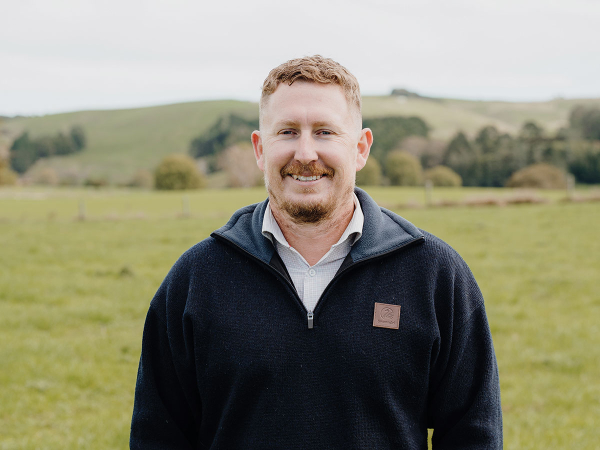 Luke Walker, general manager of DTS Refrigeration, has spent 18 years in the trade.
With a third of NZ dairy farmers still running outdated refrigerants, the country's largest farm refrigeration company says the opportunity for quick, meaningful emissions gains has never been clearer.
Luke Walker has spent 18 years in refrigeration, working his way up from his trade through to general manager of DTS Refrigeration. He's not prone to hyperbole. So, when he describes the current moment in dairy refrigeration as a genuine opportunity for farmers wanting to cut emissions, it's worth listening.
Luke was invited to sit on a panel at ARBS 2026, Australia's premier refrigeration and building services expo, titled "Innovation Meets Practicality: The Future of 1-60kW Refrigeration in Australia and NZ". The discussion brought together contractors, consultants, and industry leaders to work through the practical reality of refrigerant phase downs: what the options are, what works in the field, and how to navigate a rapidly shifting regulatory landscape.
His invitation was well-earned. DTS has been one of the earliest adopters of A2L refrigeration technologies in New Zealand, actively introducing these next-generation options to the local market. The company has also been running a proactive R404A replacement campaign, offering farmers a free kilogram-for-kilogram swap to R449A, a significantly lower global warming potential alternative.
The panel covered the full spectrum of technology choices for the 1-60W sector including CO₂, hydrocarbons, HFOs, and blends, combining global regulatory insights with real-world case studies.
Back home, Luke is focused on a message he wants NZ dairy farmers to hear clearly: the milk room may be the most overlooked emissions opportunity on the farm.
Older dairy refrigeration systems lose around 15% of their refrigerant charge annually through leakage. Commercial systems can leak up to 35% per year. When that refrigerant is R404A, a gas with a global warming potential nearly 4000 times that of CO₂, those losses represent a significant and largely invisible emissions burden.
"By our estimate, roughly a third of NZ farmers are still running R404A in their milk cooling," Luke says. "When you put that alongside the leakage rates, you're talking about a meaningful emissions problem sitting on farms right across the country and most farmers have no idea it's there."
Luke is under no illusions about how the emissions conversation lands in rural communities.
"We know dairy farmers are sick of hearing about emissions, especially when it comes from townies. We all know the cows aren't the real problem," he says. "But that's exactly why the refrigeration industry needs to lead the way here. This is one area where we can make a real difference without anyone having to point the finger at farmers. It's on us to sort it out."
The good news, he says, is that milk cooling is one of the more straightforward problems to fix.
"This isn't like trying to reduce methane from livestock. The technology exists right now. The solutions are proven. For farmers who want to show real emissions progress, milk cooling is genuinely low-hanging fruit."
One of Luke's observations from ARBS 2026 was just how far ahead New Zealand is compared to Australia on the refrigerant transition. DTS has long advocated for moving customers away from R404A and that work has paid off, but a significant portion of the sector still needs to make the shift.
"The phase-down is coming whether the industry is ready or not," Luke says. "The question is whether you're ahead of it or scrambling to catch up."
Luke says the transition has never been more accessible. The reception of A2L refrigerant units in New Zealand has been strong, with Actrol's range gaining real momentum among contractors and processors looking to move away from high-GWP refrigerants.
DTS is also actively exploring partnerships with new brands entering the New Zealand market. Luke says there are some compelling systems now available that use CO₂ as a natural refrigerant, incorporating ice bank technology alongside integrated hot water heat recovery, generating ice during off-peak hours and capturing waste heat from the refrigeration process to heat water.
"The energy efficiency story is compelling," Luke says. "You're cutting operating costs while moving to a refrigerant that has essentially zero climate impact. It's not just better for the environment, it makes commercial sense. We're keen to work with the right partners to bring these solutions to New Zealand dairy farmers at scale."
For farmers still running R404A, DTS is making the first step as easy as possible. The company's ongoing replacement campaign offers a free kilogram-for-kilogram swap to R449A, a lower global warming potential refrigerant suited to existing milk cooling systems. The old R404A doesn't just get shelved - it's collected and sent offshore to an authorised destruction facility.
"R404A has an enormous global warming potential and we want it gone from NZ farms," Luke Walker says. "The swap programme removes the cost barrier and make sure the gas is destroyed properly, not just passed on to someone else."
DTS services customers across New Zealand's major milk processors including Fonterra, Westland, and OFI, with a customer base of over 6000 nationwide.
The timing of Luke Walker's ARBS appearance coincides with a significant milestone for the business: DTS Refrigeration is set to rebrand as Cryvex, following its recent acquisition by Terravest, a New Zealand-owned family business, whose focus spans the entire milk cooling ecosystem.
Terravest's philosophy is built around protecting milk quality from teat to tanker, and the acquisition signals a long-term commitment to ensuring NZ dairy farmers have access to world-class refrigeration expertise and monitoring technology.
For DTS customers, the rebrand means more resources, deeper capability, and the backing of a group that understands the dairy sector from the ground up.
"The refrigeration industry is changing fast, regulatory pressure, new technologies, smarter systems," Luke says. "We want a brand that signals we're leading that change, not following it."
For dairy farmers wondering where to start on their emissions journey, Luke's answer is simple: open the milk room door.
Returning to the family dairy farm after playing 20 years of professional rugby around the world is no easy task.

A long way from when AI meant plunging a plastic-covered arm armpit deep up a cow’s rear, John Deere has shown off its new artificial intelligence (AI) assistant, aptly called JD, which aims to simplify data processing on farms.
In Dacre, near Invercargill in New Zealand’s South Island, Bruce Dinnington is running a dairy operation unlike any other.
Almond hulls sourced from Australian orchards may have the potential to help New Zealand cows reduce emissions, boost milk yield and lower input costs.
Gareth Hale is the current custodian of a 160-year legacy that saw his great grandfather dairying in Taranaki since the mid-1850s and grandfather dairying in the Waikato from the early 1900s.

Federated Farmers has welcomed new rural policies released by ACT, saying they align closely with its own election priorities.
Rural Contractors NZ says proposed changes to land transport rules for agricultural vehicles are a welcome response by the Government to out of date regulations which have seen members hit with huge fines.
Alliance is calling for final applications for its 2027 Graduate Programme, with applications closing on Sunday 25 October.
Decades piloting planes has ensured vet and farmer David Hayes is focused on safety. So, after a serious accident while welding on farm, he is sharing his experience so others can learn from it.
Canterbury milk processor, Synlait Milk has confirmed Leon Fung as its chief executive officer.
OPINION: Making it easier to collect rainwater and use it to grow crops and livestock is a no brainer.
OPINION: It seems Canterbury processor Synlait is still in the doldrums.
OPINION: Get offside with New Zealand First leader Winston Peters at your own peril.




