
Federated Farmers Welcomes ACT’s New Farming Policies
Federated Farmers has welcomed new rural policies released by ACT, saying they align closely with its own election priorities.




 increase font size
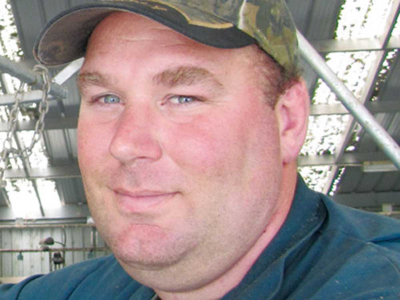 Andrew Hoggard.
OPINION: The Government failed to take on board common sense suggestions for the improvement of the recently passed Zero Carbon Bill (ZCB).
It had a golden opportunity to pass a Bill that was fit for purpose. It could have taken a bipartisan approach to climate change and could have taken farmers along as well.
On November 1, the primary sector put a proposal to the Government which would have achieved the Zero Carbon Bill’s aims and built on the good faith established by the industry-Government climate change commitment -- He Waka Eke Noa.
That was a sad day for common sense. The Government not only walked away from an important part of our commitment to the 2015 Paris Agreement, which requires all its signatories not to forsake food production for climate goals.
But it also relinquished the opportunity to be true leaders and adopt targets for methane which truly reflect its actual warming impact.
Federated Farmers was also deeply worried by a comment made during the debate on the ZCB by Labour MP and former head of the environment select committee, Deborah Russel, who questioned the usefulness of New Zealand’s ability to produce food.
Russel said: “I’m not sure that we have a responsibility to feed as many people as possible. We certainly want to ensure that we produce food -- it’s one of the things that we export -- but it’s not clear to me that we need to continue producing food at that level.”
The Paris Agreement specifically recognises the “fundamental priority of safeguarding food security” and says policies to address climate change should “not threaten food production”.
A major focus of the United Nations is its sustainable development goals, and whilst climate change is one of those, so too is zero hunger.
Cutting food production in New Zealand does not prevent people eating, it merely hands production and jobs to international competitors such as the heavily subsidised European Union’s farmers.
They will just produce the same amount of product, only less efficiently and with higher greenhouse gas emissions.
The unfit-for-purpose biogenic methane reduction targets outlined in the Bill remain unchanged.
The 2050 24-47% reduction target for biogenic methane remains eye-wateringly hard for farmers to achieve and correspondingly dire for our economy to withstand.
With the current tools in the farmer’s toolbox, the only way to meet the top end of the target (47%) is to halve the size of our livestock sector. Even if some of those tools become available, they are not going to universally fit into all farming systems.
The primary sector contributes $28 billion in export earnings to our economy.
New Zealand farmers are proud to be the most carbon efficient farmers in the world. Forcing them to reduce production is not only going to make New Zealand poorer, but will likely increase global emissions, so we will effectively be shooting ourselves in both feet.
• Andrew Hoggard is Federated Farmers vice president.
Federated Farmers has welcomed new rural policies released by ACT, saying they align closely with its own election priorities.

Federated Farmers is backing Feilding High School’s call to keep Agriculture and Horticultural Science as a standalone subject in Year 11.
As part of its Election 2026 coverage, Rural News asked political parties how they would help pull the arable sector out of the doldrums. Here's what they said:
National’s pledge to introduce 19 new national standards shows the party is serious about getting Wellington out of farming, Federated Farmers says.
OPINION: Rivers never sit still. They start as snowmelt and rain in the high country, pick up a creek here and a stream there, and carry all of it down to where it's needed.


Federated Farmers has welcomed new rural policies released by ACT, saying they align closely with its own election priorities.

Rural Contractors NZ says proposed changes to land transport rules for agricultural vehicles are a welcome response by the Government to out of date regulations which have seen members hit with huge fines.
Alliance is calling for final applications for its 2027 Graduate Programme, with applications closing on Sunday 25 October.
Decades piloting planes has ensured vet and farmer David Hayes is focused on safety. So, after a serious accident while welding on farm, he is sharing his experience so others can learn from it.
Canterbury milk processor, Synlait Milk has confirmed Leon Fung as its chief executive officer.
OPINION: Making it easier to collect rainwater and use it to grow crops and livestock is a no brainer.




OPINION: The same mainstream media muppets that brought you Jacindamania in 2017 have been flat out pimping for the Opportunities…
OPINION: Your old mate reckons the atrocious way farmers in the UK are treated by their lords and masters in…




