Let Farmers Decide What They Farm
OPINION: Well, the silly season is upon us and all us politicians are running around shaking babies and kissing hands, or maybe the other way around.




 increase font size
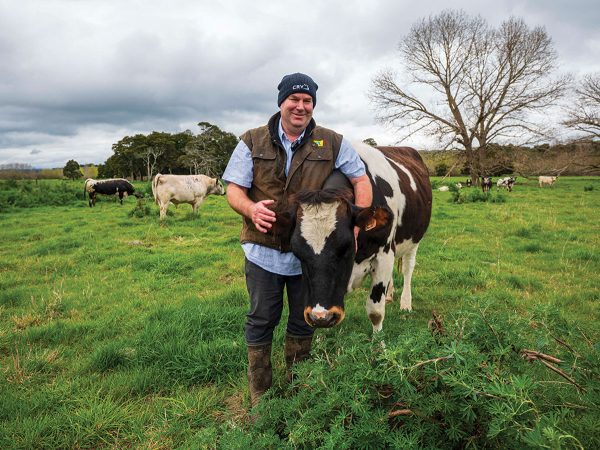 Andrew Hoggard
OPINION: For close to eight years now, I have found myself talking about methane quite a lot.
This has always resulted in rather high pressure whenever someone told me I should speak up more about how methane is different from CO2.
So, it was great to finally be part of an announcement that moves forward with far better settings in law.
Firstly, there will be no pricing of agricultural emissions. At a time when people all around the globe are talking about the cost of living and food price inflation, additional taxes on food production seem like a poor idea. Quite frankly, they were a poor idea even before that - the previous government's own modelling showed that its preferred approach to emissions pricing would have resulted in a 20% reduction in sheep and beef.
The rather strange argument has always been that customers want this, so they will pay more for it. Technically, yes, if custoemrs want something, they will pay more to get that product; that's how the law of supply and demand works. You don't need government intervention to achieve that if it were truly the case.
What we have seen with the collapse of the Net Zero Banking Alliance and Nestle pulling out of the dairy methane reduction agreement is that the wheels are starting to come off all the virtue signalling around this topic.
The second key element of our announcement is that targets will be slashed by half, to numbers that actually reflect the warming impact of biogenic methane from New Zealand agriculture. Those targets will be reviewed in 2040 to ensure that they are in line with what our trading partners and the rest of the world are doing.
Assuming the world carries on its current trajectory, this would mean that in the next 25 years we would only require an additional 6% reduction in methane emissions. With some of the technologies that are coming online, their use in the dairy industry alone would likely achieve all of that.
The last part of the announcement was about two particular items dear to my heart. Firstly, there is one part of the Paris Agreement that we all agree with: ensuring that food security is maintained. This means we shouldn't do less farming; we should try to farm more efficiently. But whatever we do, we must not do so at the cost of food production, which would impact food security around the globe.
Finally, we committed to investigating the use of the split gas approach to all our international obligations. We have this weird situation where in our domestic targets we have agreed to the split gas approaach, we have agreed around the fact that methane has a different warming impact and that it doesn't need to reduce to zero to not create any additional warming. But yet for all our international obligations we have stuck with this all-gas net zero approach. Which in the view of the ACT party is just adding additional costs onto us. When we talk about Paris needing to change or us needing to quit, well this is one of the big things that needs to change with it.
This whole issue of methane emission targets and pricing has been like the sword of Damocles hanging over New Zealand agriculture for a number of years, along with various freshwater rules. They have created uncertainty and a lack of confidence in the future, this shouldn't just matter to farmers but to all New Zealanders, because it holds back investments which would otherwise create jobs and further growth, and saps away at morale.
So, the ACT party is proud to be pushing hard here to fix these issues not just for kiwi farmers but all of regional NZ.
Andrew Hoggard is an ACT MP and Associate Minister for Agriculture.
OPINION: Well, the silly season is upon us and all us politicians are running around shaking babies and kissing hands, or maybe the other way around.
It was billed as a chance for all the political parties to woo the rural vote, but question marks hang over just how effective this was.
There's been widespread support from the primary sector for the Government's announcement on changes to freshwater farm plans that come under the Natural Environment Bill, which is now set to replace the existing RMA.
A pause on Waikato Regional Council's (WRC) plan change that sets new freshwater rules for farming could be announced in the coming weeks.
New Zealanders are being urged to be alert following a confirmed positive case of H5 bird flu this week.


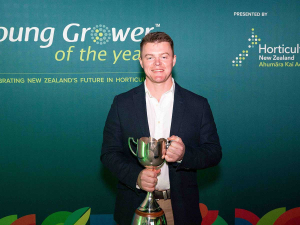
The potato industry is celebrating the success of two rising stars - James Blair, the 2026 Young Grower of the Year and runner-up and innovation award winner, Amber Davy.
Twenty-eight emerging leaders from across the horticulture sector spent two days last month learning valuable skills and connecting with industry experts.
There are five entrants in this year’s Young Horticulturist of the Year, competing in a series of technical, practical, business and leadership challenges.
A seasoned horticulturist has been appointed to deliver the Apple Action Plan, a key initiative of the India-New Zealand Free Trade Agreement.
New Zealand's citrus growers have been told to compete on the value built into their fruit rather than the volume they grow.
Hawke's Bay fruit growers are being reminded of the need to prepare for whatever the El Niño weather system may bring in the coming months.





OPINION: The same mainstream media muppets that brought you Jacindamania in 2017 have been flat out pimping for the Opportunities…
OPINION: Your old mate reckons the atrocious way farmers in the UK are treated by their lords and masters in…




