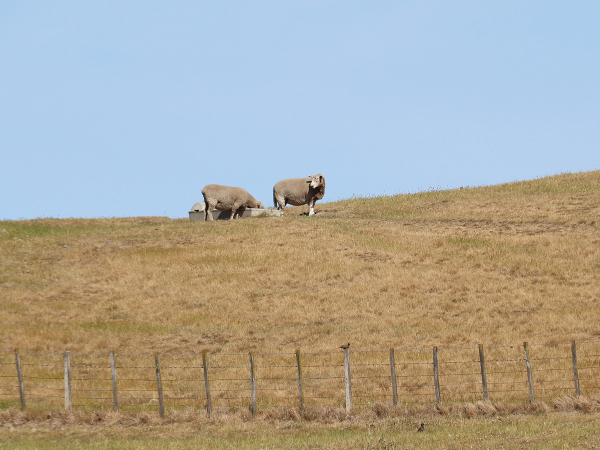
As you approach Hastings from the south along SH2, the colour of the west-facing hills are a good indicator of a drought.
Normally in November, these would still be green, but not this year. They are already starting to turn brown and it's obvious that stock numbers have been cut to the minimum.
But it’s west of Hastings near the township of Bridge Pa and further north from there that the signs of a drought are much more evident. The hills are already brown and some stock are foraging hard to get good green pasture. Other areas hit are those around Patoka, Crownthorpe and towards the Napier Taupo Road.
On his 54ha property, Jim Galloway finishes mainly white-faced heifers – quite a change from the dairy farm that he and wife Lynette ran at Eketahuna more than 10 years ago. He says the drought that the region is coming into effectively began last spring when there was a major dry spell between August and September. There was some rain in December and early January 2025.
“But it’s been quite dry since. In the last 12 months we have only had two months with an average or above average rainfall and all the other months we’ve had were below average rainfall,” he told Rural News.
Galloway says the reasons the dams are low is there’s been no top-up rain doing winter and in recent weeks temperatures have been high and the strong winds have dried out the pastures. A paddock he had set aside for silage is drying out and he says at best it is just standing hay. Streams have also dried up – one on his property has been dry for a year but he’s lucky in terms of stock water in that he’s got access to a bore.
Over the years, farmers in Hawke’s Bay have become more adept at managing droughts and are proactive in taking action rather than just waiting and just hoping it will rain.
Read More:
Galloway says farmers are measuring their covers and have also adopted a more flexible approach to managing their operations. For example, he says they tend to have more trading stock and have flexible stocking rates. He says many are taking action early by selling ewes with lambs at foot and not buying new stock as they might normally do.
“The carrying companies say they have carted more stock out of Hawke’s Bay than ever before this spring to either the works or for store to other regions. So, people are reducing their stocking rates, and this is unheard of at this time of the year,” he says.
According to Galloway, prices for stock are good and even lighter animals are fetching reasonable prices for this time of the year.
Farmers Urged To Have A Plan
Jim Galloway says to mitigate the impacts of a drought, farmers must have a plan and have a series of options worked out in advance with trigger points clearly identified.
He’s a member of the local Rural Advisory Group (RAG) which gathers information and passes this onto Ministry for Primary Industries (MPI) and other agencies involved in managing adverse events. He says they are running some dry weather workshops to help both commercial farmers and lifestyle block owners.
“In many ways, commercial farmers are less of a concern than lifestyle block owners which are a potential issue. They don’t react to the situation quickly enough, their animals have names, and they are pets, so it’s not so easy for them to part with them. In events like this we find that they quickly become overstocked and run into problems,” he says.
Galloway says this becomes an even bigger problem for them if there is a shortage of hay. He says they are asking farmers to keep an eye on nearby lifestyle blocks and offer good advice to stop them getting into difficulties. He says there is still plenty of space at the works and the main flush of spring lambs has still to come.
Dealing with droughts is common in Hawke’s Bay and Galloway says the early nature of this year’s event will have some economic impact. He says farmers will still likely make a profit, but it won’t be as good as it might have been because of the early dry.