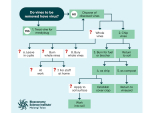
Removing Grapevines Safely: Disposal Options Compared
I am often asked by industry people, what are the options for removing a grapevine without producing a phytosanitary problem? Can it be done sustainably? What will it cost me?




 increase font size
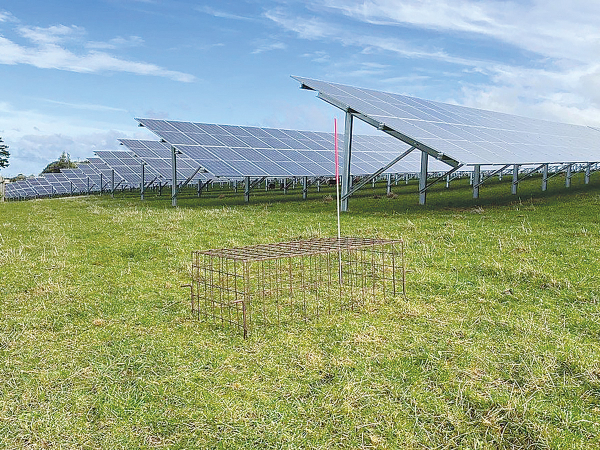
OPINION: I recently wrote an open letter to the Prime Minister because at a recent Federated Farmers meeting, Chris Luxon told me wind and solar generation is not subsidised.
However, giving money is not the only way to subsidise an activity.
There are five effective subsidies that make investing in grid connected wind and solar generation viable. They are distortionary and add unnecessary costs to consumers.
They are:
1. Emissions Trading Scheme subsidy
Wind and solar can sell carbon credits while generators who use coal or natural gas, etc, are made to buy credits. This skews the economics massively in favour of the non-dispatchable wind and solar generation.
2. Back-up power subsidy
Wind generation has a capacity factor of around 30%. Solar is between 10 to 25%. The capacity factor is the amount of power produced on average. A wind farm with a capacity of 100MW will, on average, put out about 30MW. In practice, it might produce 90MW, other times, nothing. When nothing is produced a back-up supply is needed
The grid is set up to balance the generation to the demand. When the sun isn’t shining and the wind isn’t blowing, there has to be a back-up generation, (aka firming), but the cost of the back-up is not met by the wind and solar generating companies. For each gigawatt (GW) of wind capacity, there must be a GW of back-up generation. The cost of large batteries pumped hydro or green hydrogen is prohibitive.
Battery back-up will not work.
Back-up power has to come from a dispatchable supply like hydro, natural gas, or coal. Embarrassingly, the cost of the back-up electricity is lower than from wind or solar. The solution is to use an accounting trick called the “Levelised Cost of Energy” (LCOE). It doesn’t make wind and solar actually cheaper. It just makes it seem like they are. LCOE answers the wrong question. It tells us the cost per kilowatthour (kWh) of different systems. What we really need to know is what is the cheapest way of delivering reliable power?
3. Transmission cost subsidy
Whenever a wind or solar generating station is built, new transmission infrastructure is needed. This large cost is not paid by the wind or solar companies.
4. Rigged market subsidy
The grid is forced to take power from wind or solar generators before other sources of power, because apparently wind and sunshine are free. Other generators have to cut back on their generation while power is coming from wind or solar. Wind and solar generators do not compete in an open market.
5. Frequency stability subsidy
Our alternating current electricity grid has a frequency of 50 Hertz (Hz). A small variation in frequency results in electrical failures in expensive equipment. This is a problem when too much of the power is generated by non-dispatchable sources like wind and solar.
If too much of the generated power is coming from wind and solar, the grid might not have sufficient inertia so the frequency changes and the system can crash. There are some expensive machines called “rotating stabilisers” that can be used to stabilise the frequency, but the cost of the stabilisation is not paid by the wind and solar companies. Hydro, coal and geothermal provide inertia but if we add a lot more wind and solar, frequency control will become a big problem.
It does not matter if you call these subsidies or something else. Without these, wind or solar generation is completely uneconomic in New Zealand. Because of these, the price of our electricity is higher than it otherwise would be.
John Riddell is a Waikato dairy farmer
I am often asked by industry people, what are the options for removing a grapevine without producing a phytosanitary problem? Can it be done sustainably? What will it cost me?

Pāmu has released its FY26 Integrated Annual Report, reporting a Net Operating Profit of $113 million, more than double the $49 million recorded in FY25.
Environment Minister Nicola Grigg has announced details of a new rural plastics recycling scheme.
Almond hulls sourced from Australian orchards may have the potential to help New Zealand cows reduce emissions, boost milk yield and lower input costs.
Red meat farmers are welcoming Labour’s plan to review the Emissions Trading Scheme and not to campaign on pricing agricultural emissions.



Federated Farmers has welcomed new rural policies released by ACT, saying they align closely with its own election priorities.

Rural Contractors NZ says proposed changes to land transport rules for agricultural vehicles are a welcome response by the Government to out of date regulations which have seen members hit with huge fines.
Alliance is calling for final applications for its 2027 Graduate Programme, with applications closing on Sunday 25 October.
Decades piloting planes has ensured vet and farmer David Hayes is focused on safety. So, after a serious accident while welding on farm, he is sharing his experience so others can learn from it.
Canterbury milk processor, Synlait Milk has confirmed Leon Fung as its chief executive officer.
OPINION: Making it easier to collect rainwater and use it to grow crops and livestock is a no brainer.





OPINION: The same mainstream media muppets that brought you Jacindamania in 2017 have been flat out pimping for the Opportunities…
OPINION: Your old mate reckons the atrocious way farmers in the UK are treated by their lords and masters in…




