
Federated Farmers Welcomes ACT’s New Farming Policies
Federated Farmers has welcomed new rural policies released by ACT, saying they align closely with its own election priorities.




 increase font size
 Greg and Renee Rooney have a sensible, conservative approach to farm management.
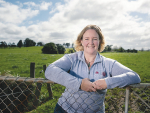
West Coast dairy farmer Renee Rooney and her husband Greg farm in the small settlement of Inchbonnie, near Greymouth.
It's picturesque country with the bush-clad hills seemingly endlessly shrouded in mist. The weather can be both extremely dry and wet. Beautiful Lake Brunner is not far away.
Like all Coasters their philosophy of farming in challenging conditions is practical and successful. In their case, the Rooneys work on the basis of old farming values, doing the basics right and a sensible conservative approach to farm management.
The Rooneys run 530 cows on their 320ha equity partnership farm. Renee says their stocking rate is low – 1.8 per ha – by many people's standards, but this conservative approach works well for them.
"We are pretty much self-contained and for us it is about breeding and feeding and improving our herd's production through that," Renee told Rural News. "We have tried different stocking rates... finding what works best for our business – profit and milking predominantly grass-fed cows.
"We put a bit of meal in the system on the shoulders and [during tough] weather. We call it lollies because the cows love it. We made nearly 1000 bales of baleage on the milking platform and on our 46ha run-off block, which is good because it saves costs."
The Rooneys produce 209,000kgMS from their 530 cows, more than the previous farmer was doing on the farm with 700 cows.
Renee says her husband Greg has old farming values and PKE is regarded as a swear word on their farm. However, they accept it has a place in farming systems, especially in times of drought.
They also have a minimalist approach to urea.
"My husband Greg says contented well-fed cows that eat grass give milk," she says.
One big challenge the Rooneys face is their TB status: they have an infection in the herd and that restricts how they farm. Renee says they knew that when they took on this farm, but have been able to manage their way through it.
"A big disadvantage is that we are unable to sell any calves born on the farm although we keep about 70 heifers as replacements."
She says an area of bush behind their farm has long been a TB hotspot and despite a lot of effort it remains so.
However, despite these challenges, the Rooneys' farm and others in the Inchbonnie area provide a unique and profitable farming environment.
Putting back
It was a neighbour, friend and Federated Farmers national board member Katie Milne who helped propel Renee Rooney into her current role as chair of Feds West Coast dairy section.
Rooney, a born-and-bred Coaster, is one of many women now playing a major role in the federation, which for many years was male-dominated. Rooney has been in the role nearly two years.
She'd never had any ambition to take up a role with Feds, though she had always been a member and saw the value of the organisation.
"It's very important that the grassroots people in farming have a voice at the decision making table and this is what I try to do," Rooney says.
She says she couldn't do her job with Feds without the support of husband Greg. The fact that her three children are a bit older (9, 11, 13) also helps.
Rooney is also concerned about the roadblocks facing the ag sector long term.
"What's the industry going to look like in 20 years? Not now and short term. What will the future hold for our children? There must be voices around the table to engage and inform our urban cousins and to make them aware that [most] dairy farmers are conservationists who care about the land."
Like many women on farms, Rooney is aware of the compliance issues and the huge amount of paperwork.
Federated Farmers has welcomed new rural policies released by ACT, saying they align closely with its own election priorities.

A farmgate milk price of $10/kgMS this season is firming up as milk powder prices soar and the New Zealand dollar weakens.
Federated Farmers is backing Feilding High School’s call to keep Agriculture and Horticultural Science as a standalone subject in Year 11.
National’s pledge to introduce 19 new national standards shows the party is serious about getting Wellington out of farming, Federated Farmers says.
Mobile phone coverage and reliability are deteriorating in rural areas, and farming families are bearing the cost, according to a Federated Farmers survey.


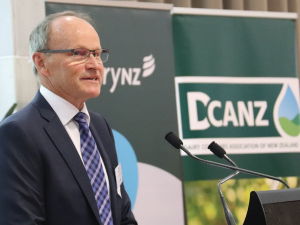
Dairy processors are ready to further boost New Zealand’s export earnings but want the incoming government to match their ambition with good policy.

Massey University is best placed to solve the “problems” facing the dairy industry, says vice chancellor, Pierre Venter.
Synlait's longest serving employee – a man who joined the Canterbury-based milk processor even before it began processing milk – is now its newest executive.
A dairy industry leader believes eradicating the common and costly disease, Bovine Viral Diarrhoea (BVD) is within reach.
A farmgate milk price of $10/kgMS this season is firming up as milk powder prices soar and the New Zealand dollar weakens.
Federated Farmers has welcomed new rural policies released by ACT, saying they align closely with its own election priorities.




OPINION: The same mainstream media muppets that brought you Jacindamania in 2017 have been flat out pimping for the Opportunities…
OPINION: Your old mate reckons the atrocious way farmers in the UK are treated by their lords and masters in…




