
Leon Fung confirmed as Synlait CEO
Canterbury milk processor, Synlait Milk has confirmed Leon Fung as its chief executive officer.




 increase font size
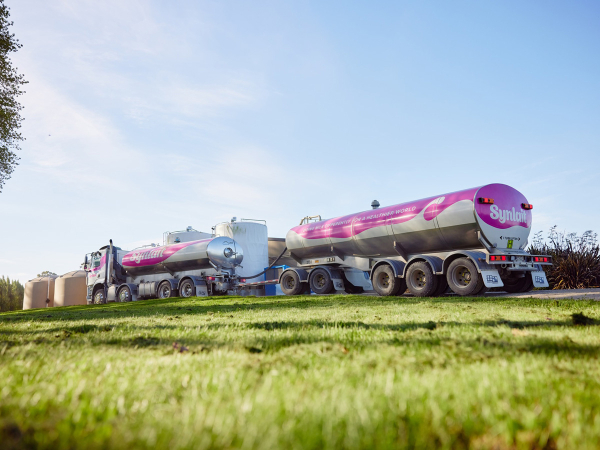 The worsening ties between the two listed dairy industry players isn’t helping Synlait’s share price.
Troubled Canterbury milk processor Synlait and its key stakeholder and customer a2 Milk Company (a2MC) will enter 2024 with a growing list of disputes.
The worsening ties between the two listed dairy industry players isn’t helping Synlait’s share price, which plunged from $1.32/share on December 1 to around 95c this week. With a 19% stake, a2MC is Synlait’s second largest shareholder behind Chinese dairy giant Bright Dairy which owns 39%.
While the initial disagreements – over a2MC cancelling the exclusive manufacturing and supply rights held by Synlait of infant formula products for sale by a2MC in China, Australia and New Zealand – are being referred to arbitration – Synlait this week announced that pricing of a2MC products and other matters were now also under “good faith negotiation”.
The first dispute erupted in September when a2MC wrote to Synlait purporting to cancel the exclusivity arrangements under the Nutritional Powders Manufacturing and Supply Agreement (NPMSA) for a2 Platinum and other nutritional products. Synlait disputes that a2MC has the right to cancel the exclusivity arrangements.
After a 20-business day good faith negotiation failed to resolve the dispute, the matter is being referred to arbitration.
Synlait told the NZ Stock Exchange that both parties have jointly appointed the arbitrator and are agreeing on an arbitration agreement and timetable for the matters to be resolved during 2024.
They have also agreed that this arbitration will determine whether the obligation on Synlait under the NPMSA to procure the supply of a minimum annual volume of product, and certain priority arrangements in favour of a2MC under the NPMSA, will cease to apply if the exclusivity provision under the NPMSA is found to have been validly cancelled.
It will also determine if any, intellectual property under the NPMSA, and related know-how in the products, is owned by a2MC and that which party is responsible for certain one-off airfreighting costs.
Additionally, Synlait informed NZX that it recently entered a good faith negotiation period under the NPMSA regarding a separate issue between the parties about pricing regarding products manufactured for a2MC.
“The resolution of this matter is important because it could impact the margin for certain products manufactured under the NPMSA historically and going forward,” it says.
The good faith negotiation period under the NPMSA expired on December 21. Synlait wants the matters resolved and will refer the pricing matters to a confidential binding arbitration.
It also revealed that a2MC has filed further potential claims from relating primarily to the NPMSA. The claims involve costs associated with product services, surplus or damaged packaging materials costs, new product development, lost profit on delayed deliveries, and alleged failure to share cost savings from the use of third-party ingredients.
“The a2MC has not asserted any monetary loss in its claims at this stage. The parties are underway with good faith negotiations to attempt to resolve these matters,” it says.
Synlait, which announced a $4.3 million loss for year ending July 31, is struggling to restructure its business and return to profitability.
It has also expressed a desire to work with a2MC and overcome infant formula trading woes in China.
“Synlait remains of the view that together both companies stand the best chance of weathering the China market dynamics,” it says.
“Synlait continues to hold the Chinese regulatory State Administration for Market Regulation (SAMR) license which is attached to Synlait’s Dunsandel manufacturing facilities.
“The license is for a2MC’s Chinese labelled infant formula (stages one, two and three). The company expects to manufacture those products for a2MC for products destined for the China market for the period of that license (currently expiring September 2027). Synlait continues to support a2MC as its major customer.”
In a statement a2MC says it “remains confident in its position in respect of all of the issues in dispute in the exclusivity arbitration”.
The company is also confident in its position overall in relation to the new pricing and other matters in dispute “which largely relate to matters initially raised by a2MC".
“All of these matters are commercial in nature and are not expected to have any operational impact on a2MC,” it says.
Canterbury milk processor, Synlait Milk has confirmed Leon Fung as its chief executive officer.
Waikato milk processor Tatua has again declared a record milk payout to farmer shareholders, leaving other processors in the dust.
Synlait has swung to second-half profit as operations stabilise, but the dairy processor still posted a $75.4m annual loss.
OPINION: It seems Canterbury processor Synlait is still in the doldrums.
Speculation of a possible joint move by Fonterra and a2 Milk to buy Synlait raises a much bigger strategic question, says agribusiness expert Dr Nic Lees.


Federated Farmers has welcomed new rural policies released by ACT, saying they align closely with its own election priorities.

Rural Contractors NZ says proposed changes to land transport rules for agricultural vehicles are a welcome response by the Government to out of date regulations which have seen members hit with huge fines.
Alliance is calling for final applications for its 2027 Graduate Programme, with applications closing on Sunday 25 October.
Decades piloting planes has ensured vet and farmer David Hayes is focused on safety. So, after a serious accident while welding on farm, he is sharing his experience so others can learn from it.
Canterbury milk processor, Synlait Milk has confirmed Leon Fung as its chief executive officer.
OPINION: Making it easier to collect rainwater and use it to grow crops and livestock is a no brainer.




OPINION: The same mainstream media muppets that brought you Jacindamania in 2017 have been flat out pimping for the Opportunities…
OPINION: Your old mate reckons the atrocious way farmers in the UK are treated by their lords and masters in…




