
Time for Reality, Not Fantasy Scenarios
OPINION: Back in April, the Intergovernmental Panel on Climate Change delivered an update that should have triggered an 8.5 magnitude earthquake in the world of climate change policy.




 increase font size
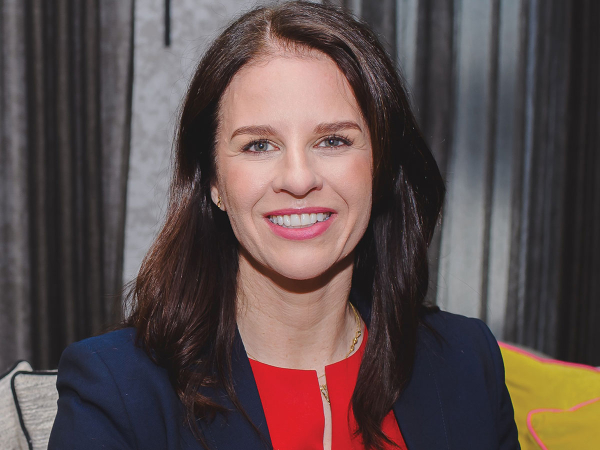 Immigration Minister Erica Stanford.
The New Zealand Nature Fund (NZNF) has congratulated the government on recently announced changes to the Active Investor Plus (AIP) Visa Growth category.
This week, Immigration Minister Erica Stanford announced that from 1 June 2026, applicants in the Growth category will be able to include philanthropic gifts of up to 20% of their total investment, with the remainder continuing to be invested in higher-growth assets.
The changes are anticipated to be attractive to globally mobile philanthropists choosing New Zealand as their home and could help strengthen the charitable sector, which is comparatively small and undercapitalised against the scale of the causes it serves, and reliant on a narrow funding base.
Stanford says the AIP Visa is designed to attract experienced investors who can make a meaningful contribution to the country's economy and communities.
"The Growth category is focused on investment that supports business growth, innovation and productivity," she says.
She says that allowing a capped philanthropic option adds flexibility, while keeping the category's focus on strong economic outcomes.
She adds that feedback from investors and charities highlighted strong demand for a philanthropic pathway within the Growth category.
“Over the last year I have met a number of investors, potential investors, and heard from charities, asking for investors to be able to contribute directly to social, environmental, conservation, or cultural good in New Zealand through a philanthropic gift as part of their AIP Visa," Stanford says.
According to Stanford, while this option is currently available in the Balanced category, it is not available in Growth which has attracted the majority of applications.
She says the changes will help charities and conservation organisations access new funding streams while maintaining the category’s focus on active investment.
“This expansion to Growth gives investors the option to support eligible charities or specified Department of Conversation initiatives with philanthropic gifts alongside their investment,” Ms Stanford says.
“Charities make invaluable contributions to our communities and for many a philanthropic gift can make a significant difference in being able to continue their important work."
Eligibility criteria for registered charities to receive philanthropic gifts via the visa has also been changed.
Now, to receive a gift via the AIP Visa, charities must:
“This expansion retains the Grown category’s focus on active investment, while recognising that philanthropy also supports positive outcomes for communities alongside strong economic investment,” Stanford says.
NZNF chief executive Nicky Sygrove says the announcement is "genuinely transformational".
"For our charitable sector, and for conservation in particular, this is a turning point — it opens the door to a scale of philanthropic investment that simply has not been available to us before,” Sygrove says.
AIP applicants wishing to make philanthropic conservation investments under the new settings can do so by establishing their own donor advised fund with the New Zealand Nature Fund.
A donor advised fund allows the philanthropist to recommend how their contributions are deployed over time, while NZNF provides the governance, due diligence, grant-making infrastructure, and reporting required to ensure each dollar achieves measurable conservation impact.
The New Zealand Nature Fund has operated as an independent charitable trust for more than 25 years, channelling donor philanthropic funds to the Department of Conservation as well as to regional, district, and community conservation initiatives the length of the country.
“For more than two and a half decades we have helped donors translate generosity into measurable outcomes for native species, landscapes, and the communities that protect them,” Sygrove says. “We stand ready to work with AIP applicants, their advisers, and government to ensure this new pathway delivers lasting impact for Aotearoa’s natural taonga.”
OPINION: Back in April, the Intergovernmental Panel on Climate Change delivered an update that should have triggered an 8.5 magnitude earthquake in the world of climate change policy.

There's strong support from the horticulture sector for the Government's plans to overhaul and streamline the Recognised Seasonal Employer (RSE) scheme.
Agriculture Minister Todd McClay has admitted that a scheme bringing workers from Pacific nations to work on orchards has become too hard to navigate but says changes are coming.
OPINION: At a time when farmers are advocating for less government spending and no new taxes, the dairy sector is rightly concerned by ACT's new immigration policy.
ACT's new immigration policy has come under fire from farmers and the Government.


Mark Hooper has been appointed the new chair of NZPork, the industry organisation representing New Zealand pig farmers.

As the India-New Zealand free trade agreement enters into force, New Zealand’s apple industry has reaffirmed its commitment to the long-term development of India’s apple sector.
Fonterra shareholders can begin voting on Tuesday 20 October in the 2026 Board of Directors’ election, a Co-operative Council election in one Ward, and seven Annual Meeting resolutions.
National’s pledge to introduce 19 new national standards shows the party is serious about getting Wellington out of farming, Federated Farmers says.
The National Party’s policies to make it easier to grow fresh vegetables, secure reliable water and energy and simplify farm planning are practical changes that will give growers the confidence to invest, according to Horticulture New Zealand (HortNZ).
Fonterra Co-operative Group chief financial officer Andrew Murray has resigned to take up a role outside the dairy giant.




OPINION: The same mainstream media muppets that brought you Jacindamania in 2017 have been flat out pimping for the Opportunities…
OPINION: Your old mate reckons the atrocious way farmers in the UK are treated by their lords and masters in…




