
Final call for Alliance’s 2027 Graduate Programme
Alliance is calling for final applications for its 2027 Graduate Programme, with applications closing on Sunday 25 October.




 increase font size
 New Zealand exported $2.58 billion worth of red meat products in the first quarter of the year.
Weaker pricing and demand from China continue to impact New Zealand red meat export earnings.
New Zealand exported $2.58 billion worth of red meat products in the first quarter of the year, down 5% from the first quarter of 2023 and the lowest value for the quarter since 2018, according to an analysis by the Meat Industry Association (MIA).
The weaker Chinese market was partly offset by good demand from North America and there are signs of some recovery in the United Kingdom and Japan.
However, MIA chief executive Sirma Karapeeva says China remains challenging, with exports down 27% to $796 million.
Most other top markets remained steady or increased. Exports to the US were up by 11% to $658 million, the UK by 44% to $126 million, Japan by 26% to $117 million, and the Netherlands steady at $114 million. However, exports to Korea dropped 30% to $46 million for the quarter, and exports to Germany dropped by 185 to $62 million.
Sheepmeat export volumes were up 3% to 119,244 tonnes, and beef by 2% to 129,375 tonnes. However, the value of sheepmeat was down 5% to $1.04 billion. Beef remained unchanged at $1.08 billion.
Karapeeva said it is encouraging to see the positive performance of chilled products. While the volume and value of frozen exports was down or unchanged, chilled exports of both sheepmeat and beef increased.
Chilled sheepmeat exports increased 17% by volume to 13,202 tonnes and 11% by value to $204 million on the first quarter of last year. This included China, with an increase of 405 by volume to 107 tonnes, and 615 by value to $3.4 million.
Chilled beef exports increased 26% by volume to 9,112 tonnes and 28% by value to $141 million.
“Although chilled sheepmeat volumes are still below pre-pandemic levels, it is encouraging to see some recovery, while chilled beef exports have largely recovered,” notes Karapeeva.
“The high-value chilled meat offering is largely because of innovation and research and development in processing and packaging, which is providing a longer product shelf life.
“While this is still a small volume compared to frozen exports, it reflects the work New Zealand processors and exporters are doing to create value add products and to meet changing market demands.”
Overall, March exports were in line with the trends of the quarter. The total exports of $949 million, were down 9% on March 2023 and represented the lowest value for the month since 2018.
China remains a big factor. There was a 35% drop in exports to China to $277 million. The US remained steady at $233 million, the UK increased by 57% to $50 million, Japan by 63% to $47 million and Canada by 565 to $29 million.
Sheepmeat exports dropped by 3% by volume compared to last March to 43,702 tonnes, with value down 9% to $395 million.
Volumes to China were down 25% to 20,008 tonnes and 425 by value to $106 million.
China’s consumer spending still isn’t growing as fast as it did before the pandemic. This is leading to the country importing less food.
Alliance is calling for final applications for its 2027 Graduate Programme, with applications closing on Sunday 25 October.

New Zealand’s red meat sector has welcomed the India-New Zealand Free Trade Agreement taking effect, which removes India’s 33% tariff on New Zealand sheepmeat.
OPINION: There could hardly be a more appropriate theme for a conference than the one chosen by the red meat sector - Navigating Volatility.
The red meat sector is in great heart.
New Zealand's red meat and fifth-quarter exports reached $867 million in August, up 23% on the same month last year, as stronger returns lifted earnings across all major markets.


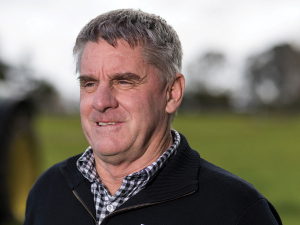
Federated Farmers has welcomed new rural policies released by ACT, saying they align closely with its own election priorities.

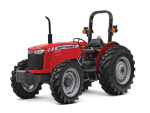
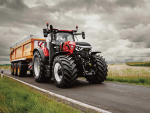
Rural Contractors NZ says proposed changes to land transport rules for agricultural vehicles are a welcome response by the Government to out of date regulations which have seen members hit with huge fines.
Alliance is calling for final applications for its 2027 Graduate Programme, with applications closing on Sunday 25 October.
Decades piloting planes has ensured vet and farmer David Hayes is focused on safety. So, after a serious accident while welding on farm, he is sharing his experience so others can learn from it.
Canterbury milk processor, Synlait Milk has confirmed Leon Fung as its chief executive officer.
OPINION: Making it easier to collect rainwater and use it to grow crops and livestock is a no brainer.


OPINION: The same mainstream media muppets that brought you Jacindamania in 2017 have been flat out pimping for the Opportunities…
OPINION: Your old mate reckons the atrocious way farmers in the UK are treated by their lords and masters in…




