
James Blair Named 2026 Young Grower of the Year
The potato industry is celebrating the success of two rising stars - James Blair, the 2026 Young Grower of the Year and runner-up and innovation award winner, Amber Davy.




 increase font size
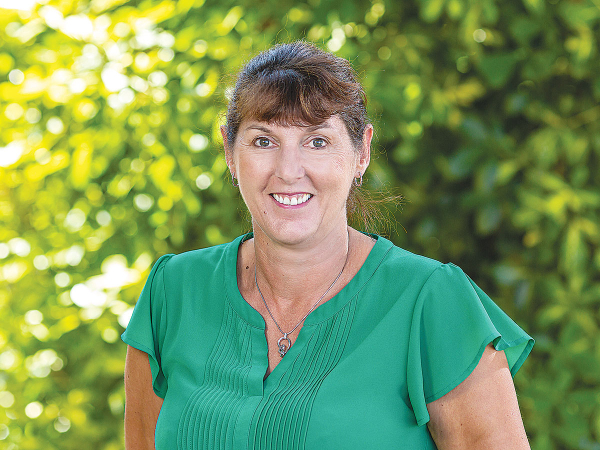 Potatoes NZ chief executive Kate Trufitt.
New Zealand potato growers are prioritising value creation from high yields to meet a complex mix of challenges and opportunities, says Potatoes NZ chief executive Kate Trufitt.
She notes that the global potato industry is experiencing challenges and opportunities linked to production volumes, market conditions, climate variability and evolving global trends.
"New Zealand's sector is responding by prioritising value creation from high yields, alongside responsible environmental and market management," she told Rural News.
Like other commodities, supply-demand balance affects returns for potato growers.
Trufitt says that a record potato crop puts downward pressure on returns per kilo if demand and market access do not grow accordingly, a phenomenon seen worldwide.
Processing contracts help stabilise prices for growers, while open-market potatoes feel price pressure first.
Despite higher volumes, increased costs keep margins tight, so higher yield does not automatically mean lower farm-gate prices, she says.
"Short-term volume growth can soften prices, but efficiency and market development protect returns in the medium term.
"At Potatoes New Zealand, and across the industry, our focus is on turning additional volume into value through exports, processing, product innovation and new market opportunities."
In NZ, the processing and table potato split remain stable.
Fresh Facts records the production in New Zealand last season at 518,282 tonnes, split across seed 4%, table 40% and processed 56%.
Trufitt says that there are variations driven by seasonal and market conditions rather than industry structural changes.
"The processing sector supports technology investment, while the table sector, as well as seizing innovation, underpins regional jobs and New Zealand's food security.
"High-quality seed is vital for yield and disease management."
Like other farmers, potato growers are also at the mercy of the weather.
Trufitt says variable weather across regions continues to create challenges, such as waterlogging, increased disease pressure, and harvest delays, all of which affect yield and quality.
"While potatoes are a resilient crop, they are increasingly exposed to the risks of extreme weather events, prompting ongoing risk-management efforts by growers and industry bodies.
"This year has been particularly challenging, with a very poor summer season. Storm events have disrupted harvesting and damaged infrastructure; arable crops in the South Island have suffered significant losses," she says.
Chasing High Yields
For potato growers, high yields stem from natural and management factors.
Kate Trufitt says New Zealand's temperate maritime climate, fertile soils, sophisticated agronomy, and strong certified seed standards contribute to yields of 50-80 tonnes per hectare.
High-performing potato varieties, carefully matched to local conditions and supported by good agricultural practices and integrated pest management, further underpin these yields.
Yield improvements are also being achieved on less land.
Trufitt says that advances in genetics, precision farming, soil and rotation management, pest and disease control, and strong industry collaboration have lifted output per hectare, enabling greater food production from a smaller land footprint.
"Globally, innovations such as hydroponic growing systems are also being explored," she says.
Land-use pressure from urban expansion is also impacting growers.
Truffitt says high-quality cropping land is under increasing pressure from housing and infrastructure development.
"The industry continues to advocate for the protection of elite soils and for spatial planning that balances food production needs with development demands. Ongoing productivity gains help maintain production from a smaller land base."
The potato industry is celebrating the success of two rising stars - James Blair, the 2026 Young Grower of the Year and runner-up and innovation award winner, Amber Davy.

Potatoes New Zealand has congratulated Peter Reynolds of TA Reynolds Ltd in Pukekohe on being awarded the Horticulture New Zealand Bledisloe Cup, recognising a lifetime of service and contribution to New Zealand horticulture.
New nationwide research has revealed exactly how Kiwis like to enjoy hot chips, with a simple sprinkle of salt coming out on top.
New Zealand’s vegetable sector will take centre stage at Parliament today, celebrating a vital industry and sharing a clear, future focused vision for how it can continue to thrive.
Potatoes New Zealand says it congratulates Amber Davy of Eurogrow on her recent win at the 2026 Canterbury Young Grower of the Year competition.


National’s pledge to introduce 19 new national standards shows the party is serious about getting Wellington out of farming, Federated Farmers says.
The National Party’s policies to make it easier to grow fresh vegetables, secure reliable water and energy and simplify farm planning are practical changes that will give growers the confidence to invest, according to Horticulture New Zealand (HortNZ).
Fonterra Co-operative Group chief financial officer Andrew Murray has resigned to take up a role outside the dairy giant.
A major move is about to get underway to improve the quality and viability of dairy beef and cattle in NZ.
Veterinarians say changes to the code of welfare for dairy cattle provides a positive foundation for improved cattle welfare across the country.
Today, 15 October, is the International Day of Rural Women, which recognises rural women’s contribution to farming, communities and the environment.




OPINION: The same mainstream media muppets that brought you Jacindamania in 2017 have been flat out pimping for the Opportunities…
OPINION: Your old mate reckons the atrocious way farmers in the UK are treated by their lords and masters in…




