Remediation NZ (RNZ) has been fined more than $71,000 for discharging offensive odours described by neighbours as smelling like ‘faecal and pig effluent’ from its compositing site near Uruti in North Taranaki.
The company pleaded guilty at the New Plymouth District Court to discharging odorous compounds between March and May 2024, when the discharges were not permitted by the resource consent held by RNZ.
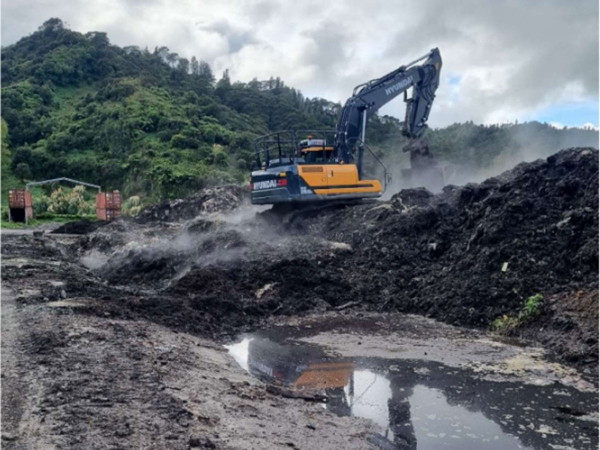
Site inspections from March to June 2024 by Taranaki Regional Council officers found a number of issues with the management of the site operations which contributed to ‘odour generation’. This included uncontrolled venting of odours from compost piles due to insufficient capping materials and poor management of associated site operations resulting in the generation and subsequent discharge of offensive odours beyond the site.
RNZ holds 10 resource consents at the site and conditions for these include that discharges of odour beyond the site’s boundary should not be ‘offensive or objectionable’.
Following the 2024 inspections, officers said the odour had an ‘unpleasant pig effluent character’ and an ‘unpleasant faecal character’ and was assessed as ‘offensive and objectionable’. One inspection on 19 April 2024 detected an odour linked to the RNZ facility about 2.5km from the site’s entrance.
Assessments on 7 March and 24 April by the Council were proactive monitoring while monitoring on 19 and 23 April, 11 May and 18 May were in response to complaints.
Prosecutor Karenza de Silva told the court that on five of the six dates, the alleged occurrences of the odour was assessed as offensive and objectionable at a residential address.
The court heard a victim impact statement from a neighbour who rated the odour’s severity as between six to eight out of 10 when he made several complaints.
Judge MJL Dickey said there was no doubt the odour was objectionable during the site assessments and it was likely the offensive odours were also emitted at other times.
“Offensive odour can be pervasive and life altering. It is difficult to escape, and I have no doubt that those experiencing it would have been revolted and distressed. I find the effects of the offending were serious,” said Judge Dickey.
Judge Dickey said she had taken into account measures the company put in place to improve systems and infrastructure, but the offending demonstrated the site was not being adequately managed. The company’s culpability was ‘highly careless’.
While a 25% discount was applied to the $95,000 starting point for the fine for RNZ’s guilty plea, no discount was applied for the ‘belated’ remedial steps which were necessary and not a circumstance for a discount.
A discount for good behaviour was also denied by the Judge due to the company’s long enforcement history at the facility.
TRC issued 16 abatement notices and 34 infringement notices between July 2009 and January 2024. RNZ has eight previous convictions under the RMA, including a conviction in 2010 for five discharges in contravention of the RMA related to the discharges from its site.
Council Compliance Manager Jared Glasgow welcomed the severity of the fine imposed on Remediation NZ given the company’s long history of failing to comply with its resource consent obligations.
“We are pleased with the outcome of this case as the odours have made life very difficult for those living near to the composting site,” says Glasgow.
“The victim impact statements show that the offending had a hugely detrimental impact on residents in the Uruti Valley. Our officers saw this for themselves during the inspections and this was why it was important to bring this prosecution.
“The level of the fine and the fact no discounts were allowed for mitigation or good behaviour reflect the seriousness of the case.
“Hopefully the $71,250 fine will act as a deterrent and a reminder to resource consent holders that they have a duty to follow the rules and ensure discharges are not negatively impacting people living nearby.”