
Why Now Is the Time to Plan Farm Succession, Findex Says
OPINION: Succession and long-term planning are perennial topics because it is perpetually sidelined on busy farms.




 increase font size
 Nigel Smellie
New Zealand farmers have earned a global edge by consistently yet cautiously taking advantage of emerging agri-technology.
The result, says Alexandra-based Findex advisor Nigel Smellie, is a lesson for every business: a solid business case, careful capital allocation, and resistance to fanciful promises in favour of demonstrable value, is the well-trodden path to success.
“Most farmers are not short on ideas for new tech to try, but they are short on certainty. If they cannot clearly see the payback, or get support when it breaks, it is hard to justify the spend.”
Smellie says the pattern is consistent across the sector: high enthusiasm and keen interest, with action only when real results such as return on investment, improved capability, reduced risk, or better crop yields are on the table.
That caution, he says, is justified. Many technologies promise gains, but not all deliver meaningful improvements.
“The ‘killer app’, always, is avoiding tech for tech’s sake. The best results start with a business case that includes well-defined problems, set baselines, and a controlled rollout including support and training for staff members.”
“That,” Smellie stresses, “is how you turn the promise of ‘innovation’ into measurable ROI. And it is as applicable on the farm as it is anywhere else.”
He argues that the most successful adopters of new technology are those who don’t go it alone, providing a further blueprint for any industry.”
Farmers who regularly talk with advisors, peers, and industry groups are better able to filter hype from value, understand risks, and build a business case before committing capital; farmers, of course, tend to do this well.”
There’s a reason, he smiles, for the concept of Number 8 wire.
“That’s a thing because our farmers are known for multidisciplinary resourcefulness… and that includes building teams and support networks across communities, with their peers and neighbours, and with their suppliers all the way from fertiliser and machinery, and through to their accountants and advisors.”
In the latter respect, Smellie says technology has had an impact across the board, including on the accounting profession of which he is a part.
“What once centered on compliance and tax has expanded into forecasting, capex planning, workforce management, and technology evaluation,” he explains.
Recalling endless hours spent poring over manual cashbooks 25 years ago, automation, digital systems and indeed artificial intelligence means accountants, human resources specialists, and many others upon whom agribusiness operators have themselves elevated their value propositions.
“While we don’t work the fields like the farmer does, the principle is consistent, and those benefits accrue to the farmer. The adoption of technology means improving what we do and how we do it; incremental improvements across a range of the industries that serve primary producers, roll up into substantial benefits.”
That includes smarter tractors, virtual fencing, targeted spraying, and animal health monitoring.
These developments might not be headline grabbing innovations, particularly as they mature from concept to reality, but they do add up.
He says that as generally practical people, those engaged in agribusiness want to know the nuts and bolts of how new technologies work, the problems they solve, and how it will integrate with existing ways of getting the job done.
Finally, he says some things stay the same, even as the pace of change continues accelerating.
“Farmers are still producing fibre, meat, dairy, fruit and vegetables. There will always be developments that improve efficiencies and performances, along with a multitude of distractions that merely promise but can’t deliver those outcomes. When innovation is practical, grounded, and focused on what matters most, it means our farmers will keep producing world class food more efficiently and sustainably.”
OPINION: Succession and long-term planning are perennial topics because it is perpetually sidelined on busy farms.

Fonterra farmers are set for a multi-billion-dollar payout this week.
In a significant shift for employers, wage theft is no longer only a civil matter but now also a criminal one.
A windfall of billions of dollars is good news for the agricultural sector and the economy in general, following the sale of Fonterra's global consumer businesses.
A tax advisory specialist is hailing a 20% tax deduction to spur business asset purchases as a golden opportunity for agribusiness.


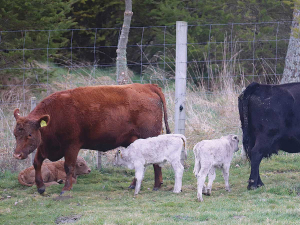
A major move is about to get underway to improve the quality and viability of dairy beef and cattle in NZ.
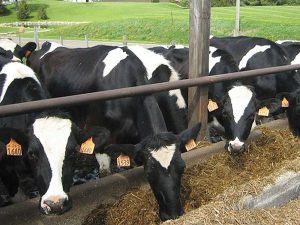
Veterinarians say changes to the code of welfare for dairy cattle provides a positive foundation for improved cattle welfare across the country.
Today, 15 October, is the International Day of Rural Women, which recognises rural women’s contribution to farming, communities and the environment.
Global dairy giant Lactalis has integrated its Australian operations with the Mainland Dairy consumer business it acquired from Fonterra earlier this year.
After almost two decades of sharemilking, saving and building equity, Aaron and Marcia Flay this year realised their long-held dream of settling on their first dairy farm.
Good medium to long term prospects for NZ beef, especially in the US, has heighted the focus on various initiatives to capitalise on this situation.




OPINION: The same mainstream media muppets that brought you Jacindamania in 2017 have been flat out pimping for the Opportunities…
OPINION: Your old mate reckons the atrocious way farmers in the UK are treated by their lords and masters in…




