Ah Tatua, You've Done It Again!
Waikato milk processor Tatua has again declared a record milk payout to farmer shareholders, leaving other processors in the dust.




 increase font size
 Findex Wealth Management partner Craig Smith.
A windfall of billions of dollars is good news for the agricultural sector and the economy in general, following the sale of Fonterra's global consumer businesses.
But financial services provider Findex says that farmers may not reinvest the payout quite as one might expect.
"The sale of parts of Fonterra to Lactalis for $3.845 billion raises the issue of where that capital injection to the cooperative members might be applied," says Findex Wealth Management partner Craig Smith.
"As is the case with anyone's funds, the answer varies based on individual circumstances. However, we're seeing sentiment turning away from putting that money straight back into the land that producted the payout."
The deal between Fonterra and Lactalis represents a significant financial event for Fonterra shareholders, a substantial number of whom are New Zealand dairy farmers. The transaction could potentially increase to $4.22 billion (with the inclusion of Bega lincences) and is expected to result in a tax-free capital return of $2 per shares. This dividend accrues to shareholders including around 10,000 farmers who are in line to receive a share of approximately $3.2 billion.
"That's obviously an enormous boost for farmers and regional communities," Smith notes. "For instance, a farm producing 100,000 milksolids annually could see a $200,000 payout with most farmers potentially receiving $100,000 to $1,000,000 as a capital injection."
Smith combines the capital injection with observations from the field, which indicates farmers reaching the end of their tether.
"We're seeing growing negative sentiment from dairy clients turning away from buying more land, reinvesting in their properties and doubling down into farming after a challenging decade on a number of fronts," he says.
Instead, Smith says there is an apparent appetite for other investments and a move towards diversification.
Cash, of course, provides the ultimate flexibility, and there is no shortage of options available to the “capital flush”. Strategies can include:
Where Smith’s view is firm, is that the windfall is welcomed by the nation’s rural communities. “It has unquestionably been a tough decade, so the monetary relief is palpable. Farmers now have options to leverage and improve their circumstances, and as always, the decisions ahead require close assessment of potential returns.”
Smith adds that as these discussions and decisions routinely involve the entire/wider family, they can be improved with an impartial facilitator providing financial knowledge, metrics and advice.
Waikato milk processor Tatua has again declared a record milk payout to farmer shareholders, leaving other processors in the dust.
Fonterra has unveiled its annual results for the 2026 financial year, posting $27 billion in revenue and close to $20 billion returned to New Zealand farmer owners and unit holders.
Fonterra Co-operative Group has confirmed the independently assessed candidates standing for election to its board in 2026.
Fonterra has revised its Farmgate Milk Price forecast for the 2026/27 season, lifting the midpoint and narrowing the range on the back of improving global dairy commodity prices.
Outgoing Fonterra Co-operative Council chair John Stevenson says that it has been a privilege to represent the co-op's farmer shareholders.


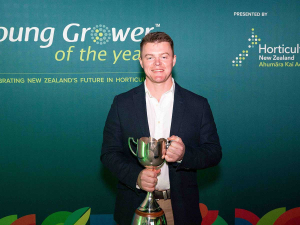
The potato industry is celebrating the success of two rising stars - James Blair, the 2026 Young Grower of the Year and runner-up and innovation award winner, Amber Davy.
Twenty-eight emerging leaders from across the horticulture sector spent two days last month learning valuable skills and connecting with industry experts.
There are five entrants in this year’s Young Horticulturist of the Year, competing in a series of technical, practical, business and leadership challenges.
A seasoned horticulturist has been appointed to deliver the Apple Action Plan, a key initiative of the India-New Zealand Free Trade Agreement.
New Zealand's citrus growers have been told to compete on the value built into their fruit rather than the volume they grow.
Hawke's Bay fruit growers are being reminded of the need to prepare for whatever the El Niño weather system may bring in the coming months.




OPINION: The same mainstream media muppets that brought you Jacindamania in 2017 have been flat out pimping for the Opportunities…
OPINION: Your old mate reckons the atrocious way farmers in the UK are treated by their lords and masters in…