
Importer: Fertiliser Security Policy Must Include All Players
An independent importer says National’s fertiliser security policy will only work if protects all players.




 increase font size
 National’s agriculture spokesman David Bennett suggests the current drive for sustainability needs to be driven by using good scientific evidence and a consistent approach that doesn’t hurt the key primary sector players.
National’s Waikato team of David Bennett and Tim van der Molen have been spreading the party word at a series of farmer meetings around the region.
Bennett, now the party’s agriculture spokesman, following Todd Muller’s recent move to leader, focused on the issues likely to affect agriculture. He claimed National’s ag polices aimed to drive momentum.
Starting out by commending the current Government’s handling of the Covid-19 pandemic, Bennett raised the question of how New Zealand will pay its bills in the future. He intimidated that the current Labour/NZ First coalition’s policies were reactionary, rather than visionary.
With all the major political parties agreeing that sustainable agriculture, horticulture and viticulture will be vital in a post-Covid future, Bennett suggested that the current drive for sustainability needs to be addressed.
He says this needs to be driven by using good scientific evidence and a consistent approach that doesn’t hurt the key primary sector players. He also adds that these key players and the regulatory authorities must be open to discussions about structured changes and redevelopment.
On the vexed issue of water, Bennett – a dairy farmer in Te Awamutu, Waikato – says three areas need to be investigated.
“Namely, water storage to combat summer shortages or drought conditions. Water-takes to ensure river and streams remain viable in the dryer months. And the needs of urban NZ – in the domestic and industrial sectors.”
Bennett suggested that unemployment will rise to around 10%. On the vexed issue of employment and migration, he says the farming sector faces a serious shortage of skilled labour and will need to bring more skilled migrant workers into the country.
“This will undoubtedly prove to be a major challenge, given that our borders are unlikely to open at any time soon,” he explained.
“So, the Government should be working to extend the terms of any immigrants already in NZ, whose visas are coming to an end in the near future.”
In the same vein, Bennett warned of a looming issue for the rural contracting sector as we approach the harvest season in August/September and the possibility of harvest being delayed or corners cut.
“As the borders are likely to remain closed, they [ag contractors] will be unable to secure the traditional cohort of skilled northern hemisphere operators for high value, high tech harvesting machinery.”
Bennett suggested that the “re-training” of displaced New Zealanders should have started earlier to address this escalating problem.
He also disputes claims by Agriculture Minister Damien O’Connor, who suggested specialists coming to NZ annually amounted to around 350 people.
“In my region alone, the Irish army measures around 100 people, so the Government does not really understand the scale of the problem nationally.”
An independent importer says National’s fertiliser security policy will only work if protects all players.
Beef + Lamb New Zealand says the National Party’s agriculture plan provides a strong basis for lifting productivity, supporting rural communities and recognising the sheep and beef sector’s environmental track record.
OPINION: Making it easier to collect rainwater and use it to grow crops and livestock is a no brainer.
National’s pledge to introduce 19 new national standards shows the party is serious about getting Wellington out of farming, Federated Farmers says.
Farmer-owned fertiliser company, Ballance Agri Nutrients is welcoming National’s plan to negotiate security agreements with key supplier countries to protect New Zealand-bound products from export restrictions and greater supply chain certainty.


Farmers have until the end of this week to help shape DairyNZ’s future focus.
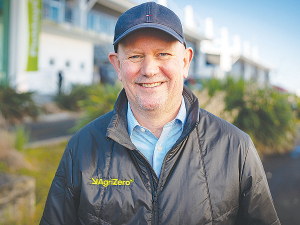
Wayne McNee, chief executive of AgriZeroNZ, has resigned and will leave the organisation on 15 January 2027.
The New Zealand dairy sector set a record in the 2025/26 season, producing more than two billion kilograms of milksolids for the first time.
Milk powder prices are continuing their merry run, firming up a potential $10/kgMS farmgate price this season.
Teachers are welcoming the outgoing Government’s U-turn allowing agriculture and horticultural science to remain a standalone Year 11 subject.
Outgoing ACT MP and dairy farmer Mark Cameron says Saturday’s election result reflects voters deeply impacted by the cost of living.




OPINION: The same mainstream media muppets that brought you Jacindamania in 2017 have been flat out pimping for the Opportunities…
OPINION: Your old mate reckons the atrocious way farmers in the UK are treated by their lords and masters in…