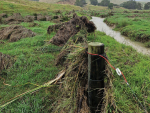
Top Māori farm faces costly rebuild after severe storm damage
One of the country's top Māori farms faces a long and costly rebuild to get the property back to where it was before recent storms ripped through it.




 increase font size
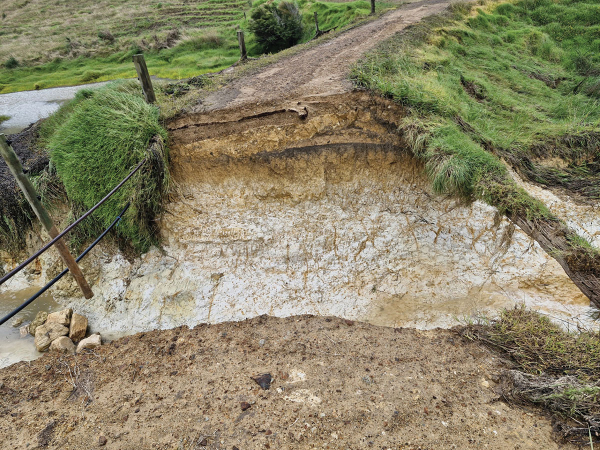 What was once a beautiful coastal farm is now facing months of work to get fully back up and running
One of the country's top Māori farms has been badly damaged by a severe isolated thunderstorm which hit parts of the east coast of Northland last week.
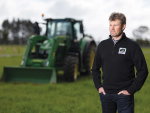
The 360ha bull-beef farm owned by the Whangaroa Ngaiotonga Trust is located near the settlement of Whangaruru and last year won the prestigious Ahuwhenua Trophy for the top Māori farm in the country. It is one of a small number of farms in the Whangaruru area which bore the brunt of the storm.
What was once a beautiful coastal farm is now facing months of work to get fully back up and running. Co-trustee of the Whangaroa Ngaiotonga Trust, Morris Pita, says they had 400 millimetres of rain in a very short period which caused a lot of damage to the farm and other properties and roading infrastructure in the area.
He says the farm took a big hit with half a dozen culverts destroyed.
"What we have now with these crossings is ditches that are two metres deep and four metres wide which are impassable to stock," he told Rural News.
"The stock are being moved to other parts of the farm. However, the water is so deep in certain places around the farm that the only way that staff can get around is by using kayaks," he says.
Pita says fortunately there have been no stock losses and no damage to any houses on the property. He says their first priority has been their people, their community and the stock. He says in addition to the damaged culverts, they estimate that they have lost about two kilometres of fences.
Pita says they also lost some pumps that were washed away by the storm.
"As well, some debris from hillsides not on our farm have been washed down on to some of our low-lying paddocks making these inaccessible. However, we will see what the next storm brings and when things dry out we will need to get a digger in to deal with this problem," he says.
Rural News spoke to Pita just before the tropical storm arrived and he says they were hunkering down and taking the necessary precautions to deal with this and any other events.
Meanwhile, Federated Farmers Northland provincial president Colin Hannah says the storm that hit the town near Whangaruru had little effect on the rest of the region. But when Rural News spoke to him before the storm arrived, he indicated that farmers and emergency organisations were preparing for what might come their way. He says Northlanders are used to such events.
One of the country's top Māori farms faces a long and costly rebuild to get the property back to where it was before recent storms ripped through it.

OPINION: The past few weeks have been tough on farms across the North Island: floods and storms have caused damage and disruption to families and businesses.
OPINION: This old mutt has been around for a few years now and it seems these ‘once in 100-year’ weather events are occurring nearly every year.
Northlanders scooped the pool at this year's prestigious Ahuwhenua Trophy Awards - winning both the main competition and the young Maori farmer award.
Recently two of New Zealand's top Maori sheep and beef farms held field days as part of the prestigious Ahuwhenua Trophy competition. The two are: Whangaroa Ngaiotonga Trust, northeast of Whangarei, and the proprietors of Tawapata Onenui farm on Mahia Peninsula in southern Hawke's Bay. Reporter Peter Burke attended both field days.


National’s pledge to introduce 19 new national standards shows the party is serious about getting Wellington out of farming, Federated Farmers says.
The National Party’s policies to make it easier to grow fresh vegetables, secure reliable water and energy and simplify farm planning are practical changes that will give growers the confidence to invest, according to Horticulture New Zealand (HortNZ).
Fonterra Co-operative Group chief financial officer Andrew Murray has resigned to take up a role outside the dairy giant.
A major move is about to get underway to improve the quality and viability of dairy beef and cattle in NZ.
Veterinarians say changes to the code of welfare for dairy cattle provides a positive foundation for improved cattle welfare across the country.
Today, 15 October, is the International Day of Rural Women, which recognises rural women’s contribution to farming, communities and the environment.




OPINION: The same mainstream media muppets that brought you Jacindamania in 2017 have been flat out pimping for the Opportunities…
OPINION: Your old mate reckons the atrocious way farmers in the UK are treated by their lords and masters in…




