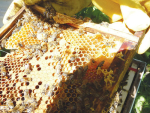
Egmont Honey Buys Tweeddale's, Now NZ's Biggest Apiary
New Plymouth-based Manuka honey exporter Egmont Honey has completed its acquisition of Taihape beekeeping business Tweeddale's Honey, with settlement finalised on Friday, 18 September.




 increase font size
 Apiculture NZ chair Bruce Wills.
Apiculture NZ says the future focus of the industry is finding markets for what is seen as a glut of honey.
Chair Bruce Wills says the industry's recent three-day conference was a mixture of positive news and challenges. But it was honey exports that took centre stage.
In the year ended 2020, New Zealand earned $505 million from honey exports, but the outlook for this season is not good. In MPI's (Ministry for Primary Industries) latest report on the state of the primary sector, the bad news is spelt out with honey exports predicted to be down almost $1 million by 2025.
However, the problem is worse, with an estimated 20,000 tonnes of unsold honey being held in beekeepers' sheds around the country. This honey mountain is equivalent to about a year of production.
Will says this all goes back to the controversy over what is and isn't mānuka honey.
"The price of the honey that didn't meet the mānuka criteria crashed and a bunch of beekeepers have said they will keep this in their shed because they are not prepared to sell at the low price."
Wills says the mānuka boom also saw a dramatic rise in hive numbers and these now stand at about 900,000.
The value for pollination and other bee products is estimated at about $5 billion.
New Plymouth-based Manuka honey exporter Egmont Honey has completed its acquisition of Taihape beekeeping business Tweeddale's Honey, with settlement finalised on Friday, 18 September.

Ravensdown has reported a net profit before tax and rebate of $50.1 million for the year ended 31 May 2026.
Nominations are now open for two directorships on the Ravensdown Board and will close at 5pm, Friday 24 July 2026.
Naki Honey, a New Zealand manuka apiary company, has crafted what is believed to be the world's most expensive honey.
Farmers who find the land next to them is about to be converted into forestry, face potential damage and costly consequences.



Federated Farmers has welcomed new rural policies released by ACT, saying they align closely with its own election priorities.

Rural Contractors NZ says proposed changes to land transport rules for agricultural vehicles are a welcome response by the Government to out of date regulations which have seen members hit with huge fines.
Alliance is calling for final applications for its 2027 Graduate Programme, with applications closing on Sunday 25 October.
Decades piloting planes has ensured vet and farmer David Hayes is focused on safety. So, after a serious accident while welding on farm, he is sharing his experience so others can learn from it.
Canterbury milk processor, Synlait Milk has confirmed Leon Fung as its chief executive officer.
OPINION: Making it easier to collect rainwater and use it to grow crops and livestock is a no brainer.




OPINION: The same mainstream media muppets that brought you Jacindamania in 2017 have been flat out pimping for the Opportunities…
OPINION: Your old mate reckons the atrocious way farmers in the UK are treated by their lords and masters in…




