Federated Farmers Backs Year 11 Agricultural Science
Federated Farmers is backing Feilding High School’s call to keep Agriculture and Horticultural Science as a standalone subject in Year 11.




 increase font size
 Katie Milne.
The Government has been warned that it needs to back off some of its signalled regulations if it wants farming to help the NZ economy recover from the COVID-19 hit.
Federated Farmers national president Katie Milne told Parliament’s Epidemic Response Committee that: "winter is coming" for the sector – and not just the freezing weather.
She told MPs the double whammy of the drought and reduced capacity at meat processing works meant many farmers were carrying into the colder months more stock than they would wish, and feed was very tight.
Milne said winter, in another sense, was the dampener on primary produce prices that would likely stem from world economies crashed by the virus crisis.
"Meat that was getting $5-something a kilo is now bringing in $3, if we can get it off the farm. The milk returns (per kg of milk solids) had $7 in front of it this year, but there are predictions next year it will be $5."
While the sector was working as hard as it could to keep things going, "farming will not come out of this unscathed," she told the committee.
Milne added that Feds also had particular concerns about the lockdown impacts on businesses downstream of producers and growers, which help keep farming running every day – "the suppliers to the guy who fixes the hydraulic pump, the guy who imports the tractor tyres".
She also sounded a warning about the potential for signalled government regulation in the environmental space to reduce agriculture’s earnings at a time when farmers - and the nation - can’t afford it.
Milne pointed out that research done by agriculture sector agencies and Local Government NZ suggested the impact of the Essential Freshwater package, if not modified, could cut agricultural earnings by 10-30% in some regions.
If pause was pressed on those regulations "that wouldn’t kick the can down the road" on progress because farmers were already underway with a host of environmental initiatives and work streams, she said.
Federated Farmers is backing Feilding High School’s call to keep Agriculture and Horticultural Science as a standalone subject in Year 11.
National’s pledge to introduce 19 new national standards shows the party is serious about getting Wellington out of farming, Federated Farmers says.
Mobile phone coverage and reliability are deteriorating in rural areas, and farming families are bearing the cost, according to a Federated Farmers survey.
Central Otago District Council (CODC) has voted against a plan to spread treated sewage sludge from Cromwell and Alexandra on farmland near Lauder, a decision Federated Farmers says reflects strong opposition from rural residents.
Federated Farmers has called on Central Otago District Council (CODC) to drop or vote down a plan to truck sludge from Alexandra and Cromwell to farmland near Lauder, warning it would compound an "outrageous" situation created by a separate council's decision weeks earlier.


Alliance is calling for final applications for its 2027 Graduate Programme, with applications closing on Sunday 25 October.
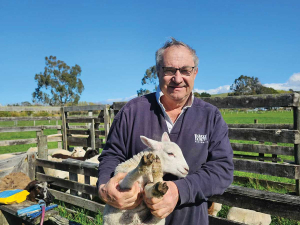
Decades piloting planes has ensured vet and farmer David Hayes is focused on safety. So, after a serious accident while welding on farm, he is sharing his experience so others can learn from it.
Canterbury milk processor, Synlait Milk has confirmed Leon Fung as its chief executive officer.
OPINION: Making it easier to collect rainwater and use it to grow crops and livestock is a no brainer.
As part of its Election 2026 coverage, Rural News asked political parties how they would help pull the arable sector out of the doldrums. Here's what they said:
Farmers are being encouraged to rethink how they manage waste on farm with the launch of ruralwastesorted.co.nz, a new website bringing together practical tips, real farmer experiences and resources.



OPINION: The same mainstream media muppets that brought you Jacindamania in 2017 have been flat out pimping for the Opportunities…
OPINION: Your old mate reckons the atrocious way farmers in the UK are treated by their lords and masters in…




