Federated Farmers Backs Year 11 Agricultural Science
Federated Farmers is backing Feilding High School’s call to keep Agriculture and Horticultural Science as a standalone subject in Year 11.




 increase font size
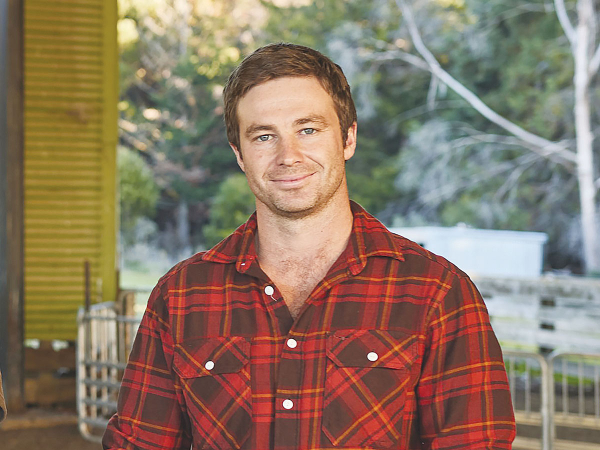 Federated Farmers forestry spokesman Richard Dawkins.
Federated Farmers says a report to Parliament on the subject of a ban on carbon forestry does not go far enough to prevent continued farm to forestry conversions.
Richard Dawkins, Federated Farmers forestry spokesperson, says the report is an "incredibly disappointing result", adding that many farmers will be feeling a sense of betrayal.
"Despite widespread feedback during consultation, and clear cross-party support for action, massive loopholes remain in the Environment Select Committee's recommendations," says Dawkins.
"Their report sends a clear message to rural New Zealand that the march of permanent carbon farms across productive farmland won't be stopping any time soon," he adds.
Dawkins says that one silver lining is that the committee has listened to Federated Farmers' concerns regarding the need to tighten rules around the 'intent to plant' test.
"We made a very strong case that simply purchasing seedlings before 4 December 2024, with no land to plant them on, should not count as a clear intent to plant.
"The committee has recommended the Bill be redrafted to make it crystal clear to carbon foresters that if they had seedlings but no land, they won't be able to enter the ETS."
Dawkins says that if the select committee's recommendations are accepted, then any carbon farmers who have been trying to skirt around the rules will need to make other plans.
He is also critical of other aspects of the report, saying recommended changes have missed the mark.
"It's extremely disappointing that what's proposed continues to ban whole-farm conversions only on Land Use Capability (LUC) classes 1-5 land," Dawkins says.
"That might sound good in a press release, but in reality only 12% of farm conversions were happening on that land anyway. Our productive hill country - the engine room of the agricultural industry - is still at risk of becoming a giant pollution-driven carbon farm."
He says two-thirds of sheep and beef farms are on classes 6 and 7 land.
"Those classes of land are still exempt from the 25% carbon credit restrictions, so the vast majority of our sheep and beef farms will still be at risk of full conversion to carbon forestry.
"Once those farms are gone, they're gone for good."
Dawkins says while Federated Farmers has always supported the intent of the law changes, what's proposed won't deliver meaningful change.
"Recommendations on the Bill allow a potential ‘lottery’ system for class 6 land, where 15,000ha of conversions each year will likely still occur on a first-come-first-served basis.
"There are also no restrictions on classes 7 and 8 land - effectively making it open slather. If you’re in the business of carbon forestry, business is going to be booming."
Federated Farmers says that every farm in New Zealand should be subject to the same 25% carbon credit limit, regardless of LUC rating.
"Otherwise, the damage just shifts - it doesn’t stop," Dawkins says.
"Class 6 and 7 hill country is not ‘marginal land’ as it’s often described by foresters. It’s often productive breeding land that underpins New Zealand’s entire red meat sector.
"Sacrificing that land to carbon speculation isn’t just short-sighted, it’s economic self-sabotage that will rip the guts out of rural communities, not to mention the national economy."
Federated Farmers is backing Feilding High School’s call to keep Agriculture and Horticultural Science as a standalone subject in Year 11.
National’s pledge to introduce 19 new national standards shows the party is serious about getting Wellington out of farming, Federated Farmers says.
Mobile phone coverage and reliability are deteriorating in rural areas, and farming families are bearing the cost, according to a Federated Farmers survey.
Central Otago District Council (CODC) has voted against a plan to spread treated sewage sludge from Cromwell and Alexandra on farmland near Lauder, a decision Federated Farmers says reflects strong opposition from rural residents.
Federated Farmers has called on Central Otago District Council (CODC) to drop or vote down a plan to truck sludge from Alexandra and Cromwell to farmland near Lauder, warning it would compound an "outrageous" situation created by a separate council's decision weeks earlier.


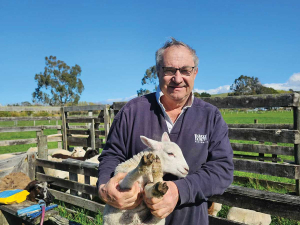
Decades piloting planes has ensured vet and farmer David Hayes is focused on safety. So, after a serious accident while welding on farm, he is sharing his experience so others can learn from it.
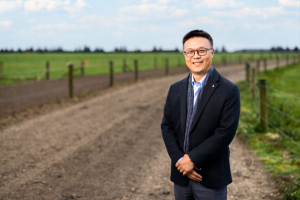
Canterbury milk processor, Synlait Milk has confirmed Leon Fung as its chief executive officer.
OPINION: Making it easier to collect rainwater and use it to grow crops and livestock is a no brainer.
As part of its Election 2026 coverage, Rural News asked political parties how they would help pull the arable sector out of the doldrums. Here's what they said:
Farmers are being encouraged to rethink how they manage waste on farm with the launch of ruralwastesorted.co.nz, a new website bringing together practical tips, real farmer experiences and resources.
New Zealand Winegrowers (NZW) is celebrating the India-New Zealand Free Trade Agreement (FTA) coming into force today, bringing New Zealand wine improved access to one of the world’s fastest-growing economies.



OPINION: The same mainstream media muppets that brought you Jacindamania in 2017 have been flat out pimping for the Opportunities…
OPINION: Your old mate reckons the atrocious way farmers in the UK are treated by their lords and masters in…




