
Federated Farmers Welcomes ACT’s New Farming Policies
Federated Farmers has welcomed new rural policies released by ACT, saying they align closely with its own election priorities.




 increase font size
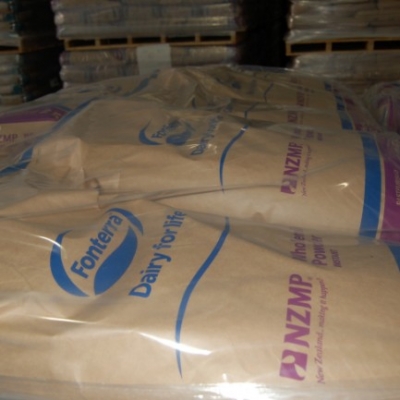
Dairy farmers are still wary despite three successive lifts in global dairy auction prices.
While economists say dairy prices have bottomed out, Federated Farmers Dairy chairman Andrew Hoggard it’s still “a real dodgy world out there”.
“There are still a lot of geo-political factors at play; things are tethering at the edge and any little thing could upset the apple cart,” Hoggard told Rural News.
Russia’s actions in Ukraine still worry the western world, the recent change of government in Greece has sparked fears of economic instability and lower oil prices are seen as demand dampeners for dairy products.
Hoggard says the recent GDT auction results are a positive sign but farmers remain cautious. “It’s too early to say that we have turned the corner,” he says. The 1% lift in GDT price index two weeks ago followed a 3.6% jump a month ago.
Whole milk powder, New Zealand’s largest dairy export, rose 3.8% offsetting falls in several other categories including anhydrous milk fat which was down 5%.
Butter milk powder was down 6.4% and cheddar was down 4.3%; rennet casein rose by 3.3%, skim milk powder 1% and butter was flat with a 0.1% increase.
Overall prices remain about 46% lower than a year ago. And banks are not raising their forecast milk price; ANZ dropped its forecast to $4.35/kgMS last month.
ASB remains most optimistic, matching Fonterra’s current forecast for this season at $4.70/kgMS; BNZ sits in the middle at $4.50/kgMS.
Rabobank senior dairy analyst Hayley Moynihan warns of another hurdle. “The firming trend will be challenged as we get closer to the removal of European milk production quotas on April 1. Volumes on offer from New Zealand start to decline seasonally, but the Europeans coming into spring and milk production quotas coming off are likely to test market prices the closer we get to April 1.”
However she says last month’s GDT result is “along with our expectations of a slow price recovery through the first half of this year”. “The most notable thing was the rebalancing in pricing between whole milk powder and returns from skim milk powder and butter. The lift of whole milk powder put the stream returns back into balance.
“But in some respects it is a lacklustre result given the reduction in volumes on offer. The price lift could [arguably] have been stronger but it is a reflection of plentiful product availability globally and buyers being well stocked up. The positive is that at least it is in the right direction and three auctions in a row have had a slight firming.
“That is further evidence we are at the bottom and at least starting to show some encouraging signs.”
ASB economist Nathan Penny says there’re tentative signs of a recovery, but they are “baby steps”.
“It has taken a lot of reduction in volumes to get there particularly with whole milk powder. That has been hard work. Nonetheless it is pointing towards the recovery – but gradual.
“We are seeing export growth around the world slow so that should support prices.” But demand is still weak from two big dairy importers, China and Russia.
“Beyond this season, we remain broadly positive on dairy prospects,” Penny says in his latest update. ASB expects the 2015-16 milk price to rebound to around $6/kgMS. “But for now, the baby steps are likely to continue.”
Federated Farmers has welcomed new rural policies released by ACT, saying they align closely with its own election priorities.

Federated Farmers is backing Feilding High School’s call to keep Agriculture and Horticultural Science as a standalone subject in Year 11.
As part of its Election 2026 coverage, Rural News asked political parties how they would help pull the arable sector out of the doldrums. Here's what they said:
National’s pledge to introduce 19 new national standards shows the party is serious about getting Wellington out of farming, Federated Farmers says.
OPINION: Rivers never sit still. They start as snowmelt and rain in the high country, pick up a creek here and a stream there, and carry all of it down to where it's needed.



Federated Farmers has welcomed new rural policies released by ACT, saying they align closely with its own election priorities.

Rural Contractors NZ says proposed changes to land transport rules for agricultural vehicles are a welcome response by the Government to out of date regulations which have seen members hit with huge fines.
Alliance is calling for final applications for its 2027 Graduate Programme, with applications closing on Sunday 25 October.
Decades piloting planes has ensured vet and farmer David Hayes is focused on safety. So, after a serious accident while welding on farm, he is sharing his experience so others can learn from it.
Canterbury milk processor, Synlait Milk has confirmed Leon Fung as its chief executive officer.
OPINION: Making it easier to collect rainwater and use it to grow crops and livestock is a no brainer.





OPINION: The same mainstream media muppets that brought you Jacindamania in 2017 have been flat out pimping for the Opportunities…
OPINION: Your old mate reckons the atrocious way farmers in the UK are treated by their lords and masters in…




