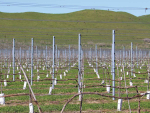
Hawke's Bay Fruit Growers Urged to Prepare for El Niño
Hawke's Bay fruit growers are being reminded of the need to prepare for whatever the El Niño weather system may bring in the coming months.




 increase font size
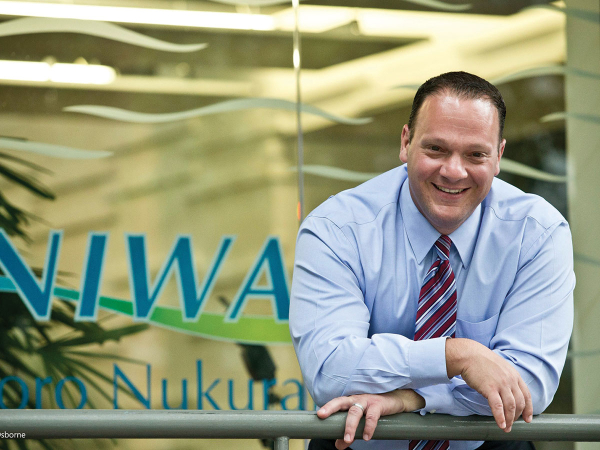 Chris Brandolino, Earth Sciences NZ.
A warning to all those in the primary sector to prepare for an unpredictable El Niño weather pattern in the coming season.
It comes from Chris Brandolino, principal scientist - forecasting and media at Earth Sciences NZ, who says while history tells us the El Niño usually brings dry weather to eastern areas of both islands and Northland and wetter weather to western regions, there is no absolute guarantee that this will happen over the coming year.
He points out that in the 1970s, '80s and '90s, when there were major El Niño events, there was no fixed weather pattern.
Brandolino says on one occasion there was a severe drought in a region, but some years later El Niño turned on a wet season.
"Each El Niño has its own personality and characteristics and forecasters like me can't predict exactly what El Niño we will get. There will be subtleties with the present El Niño," he told Rural News.
Brandolino says already there are some worrying signs related to El Niño occurring in the South Island, particularly around Mid Canterbury, but also in East Otago and around Dunedin.
He says some places are in "meteorological drought" and at the moment there is a significant soil moisture deficit in many places.
He says if such places don't get rain, the ground water will not be recharged, with significant implications for farmers who irrigate their land or crops.
The other point of note, he says, is the occurrence of some very high temperatures near Christchurch.
"This situation is really eye grabbing and of significant concern," he says.
While there have been signs of drought in Northland and right down the East Coast of the North Island from Gisborne to the Wairarapa, and especially in Central Hawke's Bay, recent rains will ease the situation and give those areas time to recover.
"As we approach spring, the indications are that in Canterbury it could be particularly windy and this could accelerate dryness. The other risks it poses are for fires, which we have seen already, and there is the possibility of damage to irrigation systems. So, when you combine the wind, the spikey temperatures and the elevated level of dryness already, it raises concern," he says.
Despite it being winter, Brandolino says overall temperatures in NZ in June have been unusually warm, dictated it would seem by high sea temperatures, but he says he'd be surprised if these conditions continued throughout the winter and believes there may be some cooling in August and September.
He also points out that while there is a lot of talk about El Niño, that in itself only accounts for about 25% of the actual weather conditions.
He notes that other factors including sea temperatures play a part in the weather we get. It should be noted that Australia is also experiencing El Niño and the warning has gone out to farmers there that it may have different impacts in different states or regions, the same as NZ.
“My message to farmers here is: number one, to have a plan. You are much better to have one and… not need it, than being in a situation where you need it and don’t have one. The plan must state what actions should be taken when paddocks start to get dry. But above all, make a point of keeping up-to-date with the latest weather forecasts and the projections going forward,” he says.
Brandolino says knowing that El Niño can be fickle and unpredictable, it is vital that farmers and orchardists get the latest and best information possible so that they can make the right decisions at the right time for their property.
Hawke's Bay fruit growers are being reminded of the need to prepare for whatever the El Niño weather system may bring in the coming months.

Westpac NZ is calling on farmers and growers to start preparing now for the possibility of a dry summer, as likely El Niño conditions raise the risk of drought across parts of the country.
OPINION: Have a plan in place now!
A spate of southerly winds bringing cold temperatures has presented challenges for Taranaki dairy farmers.
Have a plan in place for your cows and staff.


The potato industry is celebrating the success of two rising stars - James Blair, the 2026 Young Grower of the Year and runner-up and innovation award winner, Amber Davy.
Twenty-eight emerging leaders from across the horticulture sector spent two days last month learning valuable skills and connecting with industry experts.
There are five entrants in this year’s Young Horticulturist of the Year, competing in a series of technical, practical, business and leadership challenges.
A seasoned horticulturist has been appointed to deliver the Apple Action Plan, a key initiative of the India-New Zealand Free Trade Agreement.
New Zealand's citrus growers have been told to compete on the value built into their fruit rather than the volume they grow.
Hawke's Bay fruit growers are being reminded of the need to prepare for whatever the El Niño weather system may bring in the coming months.





OPINION: The same mainstream media muppets that brought you Jacindamania in 2017 have been flat out pimping for the Opportunities…
OPINION: Your old mate reckons the atrocious way farmers in the UK are treated by their lords and masters in…




