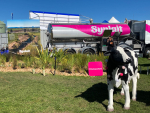
What Would Synlait Be Worth to Fonterra or a2 Milk?
Speculation of a possible joint move by Fonterra and a2 Milk to buy Synlait raises a much bigger strategic question, says agribusiness expert Dr Nic Lees.




 increase font size

AN ANALYSIS of profit data shows farmers receive $4 return for every dollar spent on professional farm consultants.
Yet most farmers don't use them. This is just one conclusion from the first instalment of a series of results stemming from research conducted by Lincoln University's Senior Lecturer in Farm Management Research, Dr Kevin Old, and Research Fellow, Dr Peter Nuthall.
Last year more than 2000 farmers were mailed a questionnaire on farm succession and governance. A response rate of 36% was achieved. The researchers noted, with this response rate being greater than the norm, it was clear farmers were interested in the topics covered.
Results showed that while all farms have a manager, some 29% were sole traders responsible for making the decisions themselves. Nearly 2% were paid managers and a further 6%, while also paid, had some investment interest in the farm. Similarly, 1.7% were sharemilkers. For the remaining balance the 'farmer' was usually a business partnership which took responsibility for the majority of the business decisions.
Only a small proportion of farms reported having a 'farm specific' board of directors (4%) or a formal advisory committee (5.3%). While these are overall figures, it was found that larger farms tended to be more highly represented in this regard.
Most farmers have the potential to access farm consultants, but the results found only a small number used such services on a regular basis. The average use across all farmers was 21 hours per annum; however, over half the farmers surveyed use less than 10 hours per annum, which indicates infrequent or irregular use.
At the upper end of farm consultant use, just 4% used more than 70 hours per annum; equating to nearly six hours per month, which probably represents one appointment per month.
Young farmers (those under 35 years) tend to use consultants more (an average of 42 hours per annum) compared to relatively older farmers. For instance, for those over 55 years of age, the figure is 21 hours per annum. However, these are averages, and many farmers will not employ consultants at all.
The researchers also found some farmers use 'company representatives' to help with decision making, with the average being 14 hours per annum. The category with the highest average for usage, however, was 'trusted persons' at 51 hours per annum. These people could be anyone from a respected colleague to a family member.
A pertinent measure of whether farmers feel the need to hire a professional consultant is in how much they are willing to pay for these services.
It was found that farmers with a net farm investment of less than $5 million paid $1,330 per annum on average. In contrast, farmers with a net investment of more than $25 million spent $17,700 per annum on average.
When all farm sizes were averaged out, it was found that dairy and crop farmers spent the most on consultants: $4,240 and $5,800 per annum respectively. This is perhaps unsurprising as crop farms have important decisions to make each year regarding selecting crop mix.
A total of 56% of the farmers rated their trust in consultants at 1 or 2 on a 5 point scale (with 1 being good and 5 poor). The remaining 44% were ambivalent or worse when it came to trust in consultants. In fact, the average score overall was 2.42, which strongly suggests an overall ambivalence, Lincoln says.
Speculation of a possible joint move by Fonterra and a2 Milk to buy Synlait raises a much bigger strategic question, says agribusiness expert Dr Nic Lees.

Lynnette Hudson's 30-year obsession with Pinot Noir was sparked working vintage in Burgundy, seeing how subtle changes in terroir were expressed in the glass. It was, she says, "an elightening moment in every way".
A four year trial has reaffirmed that mixing plantain into dairy pastures can help reduce nitrogen losses to freshwater while maintaining milk production and profitability, say researchers.
Twenty five secondary school students from around New Zealand recently completed a three day residential programme designed to explore career opportunities across the food and fibre production supply chain.
A Lincoln University student is set to become the first person to contest both the Young Viticulturist and the Young Winemaker national titles in one year.


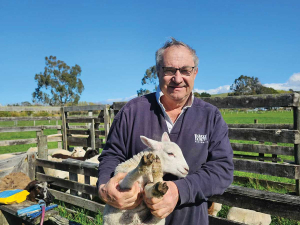
Decades piloting planes has ensured vet and farmer David Hayes is focused on safety. So, after a serious accident while welding on farm, he is sharing his experience so others can learn from it.
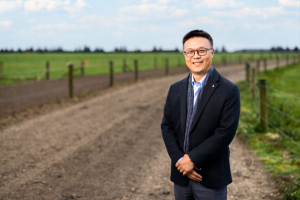
Canterbury milk processor, Synlait Milk has confirmed Leon Fung as its chief executive officer.
OPINION: Making it easier to collect rainwater and use it to grow crops and livestock is a no brainer.
As part of its Election 2026 coverage, Rural News asked political parties how they would help pull the arable sector out of the doldrums. Here's what they said:
Farmers are being encouraged to rethink how they manage waste on farm with the launch of ruralwastesorted.co.nz, a new website bringing together practical tips, real farmer experiences and resources.
New Zealand Winegrowers (NZW) is celebrating the India-New Zealand Free Trade Agreement (FTA) coming into force today, bringing New Zealand wine improved access to one of the world’s fastest-growing economies.



OPINION: The same mainstream media muppets that brought you Jacindamania in 2017 have been flat out pimping for the Opportunities…
OPINION: Your old mate reckons the atrocious way farmers in the UK are treated by their lords and masters in…




