
Powering farmers to tackle worm challenges on farm
The worm challenge for sheep and beef farmers is increasing as the warm, moist weather of spring and early summer arrives.




 increase font size
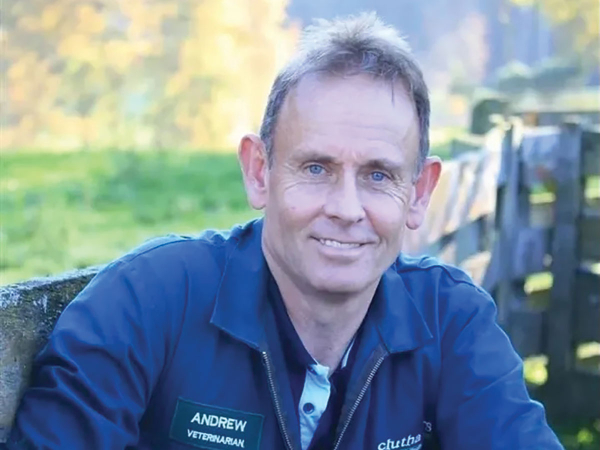 Andrew Roe, Clutha Vets
Adopting strategies to reduce worm burden on farm goes hand-in--hand with best practice farm management practices to optimise stock production and performance, veterinarian Andrew Roe says.
A production animal veterinarian with Clutha Vets, Roe's practice services the South Otago region, and he observes a ris in drench resistance in the area.
"Looking at the positives, good worm management tools and strategies often align with good farming management practices. By reducing stock exposure to worms you are maximising their potential to be healthy and productive," he says.
Roe says Beef + Lamb New Zealand and Wormwise workshops have helped disseminate information to farmers, but it's still a minority of clients who have gone as far as a full faecal egg reduction test.
"There is a thought that at the bottom of the South Island, drench resistance is not as bad as further north. Combination drenches, particularlyh triples, have largely been working on most farms up until about four years ago. Since then, about a quarter of the farms we have done reduction tests on now have triple drench resistance."
Research has shown that drench resistance doesn't stand out, clinically at least, in terms of visible production loss until drenches have dropped to around 60% efficacy.
Farms could be sitting at 80 to 85% effectiveness and this will not necessarily be showing up in lamb performance, he explains.
"We would encourage farmers to consider, just because you are getting good performance and lambs are growing well, it doesn't mean you do not have a drench resistance issue or early stages of drench resistance."
A good first step is to understand your status and what is working on your farm.
Get a faecal egg reduction test or, at the least, carry out a post-drench check on the drench you are using for the year, especially if it is a triple.
Aside from monitoring, best practice includes trying to reduce drench inputs, where possible.
"We tend not to push that too much in the early part of the season, four-weekly drenching in December to January when lambs are shedding a lot of eggs is still important. It's a generalisation but I would recommend four-weekly drenching for the first two to three drenches to suppress egg production that will flow on to autumn. After that, monitoring egg counts will show if you can reduce the drench frequency."
With adult sheep, Andrew recommends avoiding blanket drenching but says there are cases where ewes will benefit from a drench, like skinnier and tail end ewes or triplet bearing ewes who could use a boost.
Along with drench as a tool, there are other well documented strategies that can help reduce the worm burden such as using other classes of stock to mop up the worms, like cattle.
The Wormwise FARMED acronym of feeding well, avoiding exposure to pasture with a high worm burden, refugia, monitoring and effective drench should all be considered as part of developing an individual farm parasite management plan.
"We find that for people who have encountered drench resistance issues and changed things in their system to reduce their reliance on drench, stock performance increases anyway. This is because they have reduced exposure to worms in the first place, which will result in better growth rates."
Andrew observes that most drench resistance in the region seems to be involving Trichs (Trichostrongylus) in autumn.
If farmers have strategies in place to grow lambs quickly and get them away faster, then the majority of lambs are gone before the main worm culprit turns up in autumn.
Vets have an important role to play in supporting farmers to understand their drench status but equally in helping them to develop a parasite management plan that is tailored to their individual farm.
Planning means taking the information available from the likes of Wormwise and putting it into tangible action on your farm. Vets and advisors bring an element of discipline to the process, identifying th information that is applicable to you and ensuring follow up.
A plan will depend on many factors, such as stock classes on the farm - do you have cattle to use for integrated grazing? Climatic conditions play into it, and whether you are a dryland or irrigated property.
For each farmer, he then suggests some strategies or recommendations relevant to their farm, under each of the four headings.
Article supplied by Zoetis
The worm challenge for sheep and beef farmers is increasing as the warm, moist weather of spring and early summer arrives.
There are eight different worm species that have varying effects on the health of our sheep – excluding liver fluke and lung worm.
Central Southland vet Andrew Roe reviews use of the long-acting vitamin B12 injection products, SMARTShot B12 and SMARTShot B12 plus SE, in the management of vitamin B12/cobalt deficiency with and without selenium deficiency in ewes and lambs.*
Worms are probably the biggest health problem for goat farmers.


Federated Farmers has welcomed new rural policies released by ACT, saying they align closely with its own election priorities.

Rural Contractors NZ says proposed changes to land transport rules for agricultural vehicles are a welcome response by the Government to out of date regulations which have seen members hit with huge fines.
Alliance is calling for final applications for its 2027 Graduate Programme, with applications closing on Sunday 25 October.
Decades piloting planes has ensured vet and farmer David Hayes is focused on safety. So, after a serious accident while welding on farm, he is sharing his experience so others can learn from it.
Canterbury milk processor, Synlait Milk has confirmed Leon Fung as its chief executive officer.
OPINION: Making it easier to collect rainwater and use it to grow crops and livestock is a no brainer.





OPINION: The same mainstream media muppets that brought you Jacindamania in 2017 have been flat out pimping for the Opportunities…
OPINION: Your old mate reckons the atrocious way farmers in the UK are treated by their lords and masters in…




