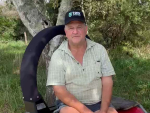
Safer Farms Champions Promote Quad Bike Crush Protection Devices
Safer Farms Regional Champions are putting Crush Protection Devices (CPDs) through their paces and sharing their first-hand experiences with other farmers.




 increase font size
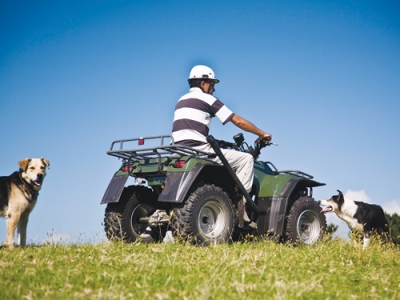 Quad bike safety devices are not going down well in Victoria, Australia.
Quad crash injuries and deaths in Australia have prompted Worksafe Victoria to push the use of crush prevention devices, but there's a howl of protest.
Worksafe Victoria (WV) has declared that crush prevention devices (CPDs) are a good way to mitigate injury in a rollover, and they want employers to fit them if rollover risk is high.
Interestingly, with no law in place requiring CPD use, Worksafe says it will consult for 12-18 months, encouraging employers to fit such a device to mitigate risk of prosecution in the event of an accident.
But this stance is at odds with quad manufacturers who cite extensive research, including accident modelling for 20 years, that indicate that CPD's are largely ineffective in saving riders from death or injury, and sometimes do more damage than they set out to prevent.
The quad makers also say that 99.6% of Australia's 350,000 quads are ridden without incident, and though the 15 quad deaths in 2015 are regrettable, they are a tiny percentage of the problem.
They want to see more emphasis on rider training, to ensure operators understand the abilities and limitations of quads, and that quads need more rider 'input' than other vehicles.
They also accept that a quad will not always be the best vehicle for a particular job, or difficult terrain; instead side-by-side vehicles may be better. These offer the protection of seatbelts and a safety structure over the passengers, features impossible on a quad.
Speaking to Dairy News, Worksafe NZ acknowledged Worksafe Victoria's stance on CPDs and the conflicting views of the quad makers. "We're waiting for more detail and the empirical evidence before commenting," a spokesperson said.
NZ Motor Industry Association chief executive David Crawford says WV's proposals are at odds with the reliable science, and that they conflict with recent coroners' inquests in Queensland and NSW: the coroners had found insufficient evidence to recommend the use of CPDs, and they suggested that more time and effort should be spent on proving CPDs' effectiveness.
Crawford says good operator training, good quality safety gear including helmets, keeping children off adult sized machines and allowing only solo riders on single-seaters would best tackle the safety problem.
Safer Farms Regional Champions are putting Crush Protection Devices (CPDs) through their paces and sharing their first-hand experiences with other farmers.

OPINION: Your old mate hears an international incident is threatening to blow up the long-standing Anzac alliance as Kiwis and Aussies argue over who wants new Australian resident and former NZ Prime Minister Jacinda Ardern.
It's hard to believe that quad bikes or ATVs have been around for about 50 years – even longer if you add in the balloon-tyred trikes that first appeared in the Bond movie Moonraker.
OPINION: Your old mate hears that at a recent China Business Summit, PM Christopher Luxon delivered a none-too-subtle "could try harder" report card on the red meat industry regarding its exports to China - particularly when compared to Australia.
More Australian states are embracing virtual fencing technology, opening growth opportunities for Kiwi companies like Halter.


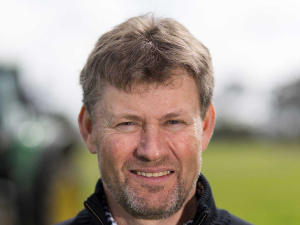
Mark Hooper has been appointed the new chair of NZPork, the industry organisation representing New Zealand pig farmers.

As the India-New Zealand free trade agreement enters into force, New Zealand’s apple industry has reaffirmed its commitment to the long-term development of India’s apple sector.
Fonterra shareholders can begin voting on Tuesday 20 October in the 2026 Board of Directors’ election, a Co-operative Council election in one Ward, and seven Annual Meeting resolutions.
National’s pledge to introduce 19 new national standards shows the party is serious about getting Wellington out of farming, Federated Farmers says.
The National Party’s policies to make it easier to grow fresh vegetables, secure reliable water and energy and simplify farm planning are practical changes that will give growers the confidence to invest, according to Horticulture New Zealand (HortNZ).
Fonterra Co-operative Group chief financial officer Andrew Murray has resigned to take up a role outside the dairy giant.


OPINION: It seems Canterbury processor Synlait is still in the doldrums.
OPINION: Get offside with New Zealand First leader Winston Peters at your own peril.




