Second generation Amarok ups the stakes
The first-generation VW Amarok – launched back in 2010 – has built a reputation based on comfort, handling and ability that has led to more 7700 of the vehicles being driven on New Zealand’s roads.




 increase font size
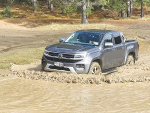
 VW Amorak offers a new V6 engine.
When we reviewed the VW Amorak in February 2016, it was fair to say we quite liked it. For 2017, that ‘like’ has just moved up to a ‘love’, especially because of the new V6 engine offering.
Though pricey, as all flagship models are, with a V6 pumping out 165kW of power and delivering 550Nm torque, it is smoother, pulls better than James Bond and gets even better when the over-boost delivers 180kW and 580Nm. This occurs when the throttle is set at more than 70%, the speed is above 50km/h, and it lasts for about 10 seconds, so is great for overtaking on the open road: 100km/h comes up in 7.9 seconds. Stopping is by industry-leading disc brakes on each corner.
Interestingly, towing capacity remains unchanged at 3000kg, but even with that maximum load on the towbar the eight-speed transmission is a joy, and leads the field with its silky-smooth shifts, which can be hurried up by moving to the S-mode on the shift lever, or the wheel-mounted paddle shifters. This reviewer let the technology do its thing and came away suitably impressed.
The ride, as enjoyed in the previous incarnation, was comfortable and compliant and didn’t have the normal tendency of utes to feel over-sprung when the load bay is empty – none of that ‘twitchy’ feel. Whether or not this is because the rear leaf springs are set outside the chassis rails, we don’t know.
Permanent 4WD with a centre Torsen differential makes cornering sure-footed, though some reviewers question the lack of 2WD. But the technology delivers a drive split favouring 60:40 rear to front as normal, shifting to 80:20 under hard acceleration or 40:60 when there’s soft stuff under the wheels.
At the business end the load tray is the largest out there: 1555mm long, 1620mm wide and 508mm deep. Importantly, the distance between the inner wheel arches is 1222mm, no doubt helped by the wide-spaced springs, and accommodating standard Euro pallets. Vertically-challenged folk might find the 780mm load height a bit of a reach.
The cab is wide and airy, and the front seat jockeys get great seats, great instrumentation and a good climate package.
So is it worth the price ticket? A resounding yes! The opposition might point out that even at this level the Amorak V6 misses out on some hi-tech gizmos like blind-spot monitoring, lane departure warning and adaptive cruise control. Is that a problem? Maybe, but not for this driver who likes to drive, and is a follower of the KISS doctrine.
One thing’s for sure, if you want to get from A to B quickly and smoothly while leaving the others in your dust, look no further.
The first-generation VW Amarok – launched back in 2010 – has built a reputation based on comfort, handling and ability that has led to more 7700 of the vehicles being driven on New Zealand’s roads.
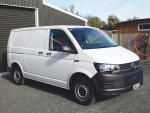
Kiwis remain fixated on utes of every shape, size and price, but we wonder whether in the rural sector the clever folk may be looking to diversify into a good van.
You wonder how the marketing people in the motor industry come up with new model names.
At a recent vehicle launch I mentioned to a fellow journalist that I was getting the Volkswagen Passat Alltrack to test and he replied "you'll enjoy it".
The Amarok 'Aventura' model will hit New Zealand at the end of the year and ought to make it onto the big 'must have' list.


Federated Farmers has welcomed new rural policies released by ACT, saying they align closely with its own election priorities.

Rural Contractors NZ says proposed changes to land transport rules for agricultural vehicles are a welcome response by the Government to out of date regulations which have seen members hit with huge fines.
Alliance is calling for final applications for its 2027 Graduate Programme, with applications closing on Sunday 25 October.
Decades piloting planes has ensured vet and farmer David Hayes is focused on safety. So, after a serious accident while welding on farm, he is sharing his experience so others can learn from it.
Canterbury milk processor, Synlait Milk has confirmed Leon Fung as its chief executive officer.
OPINION: Making it easier to collect rainwater and use it to grow crops and livestock is a no brainer.

OPINION: It seems Canterbury processor Synlait is still in the doldrums.
OPINION: Get offside with New Zealand First leader Winston Peters at your own peril.




