Short courses for all visa holders
Primary ITO has a wide range of work-based training options to help you grow the skills and knowledge of your staff in 2025.




 increase font size
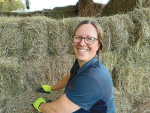
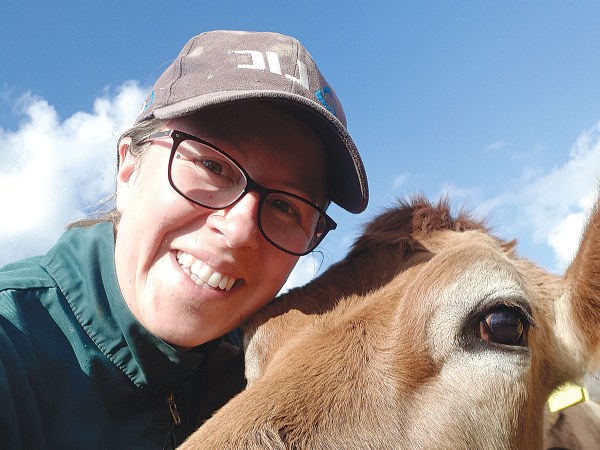 Primary ITO new sector manager for dairy, Marianne Awburn.
Now is the best time for training, says the new sector manager for dairy at Primary ITO, Marianne Awburn.
She says that while there are significant headwinds for the industry, Primary ITO's current 50% off agriculture training feeds means investing in training can set up farms for the future.
The 50% off fees offer on agrictulutre and horticulture training programmes lasts for the whole of 2024.
Awburn says the offer was put in place in response to a challlenging 2023 for farmers and growers, with the aim of making training more accessible so employers can invest in the skills of their staff.
"Dairy farming is a highly skilled occupation and training is increasingly needed to run a great business."
Based in Hamilton, Awburn has worked for Primary ITO for almost three years in her previous role as training adviser for East Waikato. In her present role, she works with a team of training advisers up and down the country.
"I have worked in the dairy industry for nearly 20 years, in various roles including AI technician, calf-rearer, farm assistant, contract milker, and dairy recruiter. I am also a trained secondary school teacher and have a real passion for learning."
Awburn lives in Te Kawa, south of Te Awamutu, where her husband manages a 450-cow dairy farm.
Meanwhile, Primary ITO has launched the new Farm Environment Planning Level 4 Microcredential in response to farmers and their staff needing to know how to implement and monitor a farm environment plan.
The Future
Primary ITO is currently a business division of New Zealand Institute of Skills and Technology.
The Government has announced it will disestablish the institute and as an interim step, so Primary ITO has reverted to its sole identity.
Awburn says their frontline teams working with employers, learners and schools are still very much in place.
"It may be a significant period of time until the Government confirms its future plans. We'll be keeping our industries informed when we have more detail on what's next.
"Meanwhile, at Primary ITO, our focus is on providing high quality training for the primary industries. For the dairy team, this includes work underway to provide even better delivery of top-quality learning opportunities for our farmers of the future.
"My aim this year is to connect with as many of you as possible, to understand how we can deliver exactly what's needed for all farms - big and small - and for the dairy industry in New Zealand to continue to thrive."
Primary ITO has a wide range of work-based training options to help you grow the skills and knowledge of your staff in 2025.
Nine lucky school leavers passionate about farming will join Pamu for a two-year journey into agriculture, living and working at Pamu farm, Aratiatia near Taupo.
Primary ITO will apply to the Ministry of Education for more Trades Academy places with demand from schools now outstripping supply.
New ‘micro-credentials’ in wool harvesting will help meet a critical need to train shearers and wool handlers, claims Primary ITO chief executive Linda Sissons.
One in five of all people wanting to take up a dairy apprenticeship is coming from Auckland.


South of the central Hawke’s Bay town of Waipukurau is Taniwha Station – a highly successful 550ha bull beef farming operation.
Beef + Lamb NZ funded research has shown that some simple changes to pasture management could help farmers make better use of rainfall and build resilience before dry conditions hit.
OPINION: There could hardly be a more appropriate theme for a conference than the one chosen by the red meat sector - Navigating Volatility.
When Northland leather worker Vernon Suckling started making horse saddles 50 years ago, quad bikes and side-by-side vehicles were unheard of.
Alliance Group has confirmed that eligible farmer-shareholders who supply and continue to back the business will receive up to $20 million later this year, following the strategic investment partnership with Dawn Meats.
With a general election under five weeks away, Rural News is asking major political parties about their policies and positions on key issues facing the primary sector. We will run their responses to each question over the next four weeks. The ACT Party and the Greens didn't respond in time.
OPINION: It seems Canterbury processor Synlait is still in the doldrums.
OPINION: Get offside with New Zealand First leader Winston Peters at your own peril.