Efficient Irrigation Improves Pasture Productivity
Increased competition for water means the whole community is looking at how irrigators use water.




 increase font size
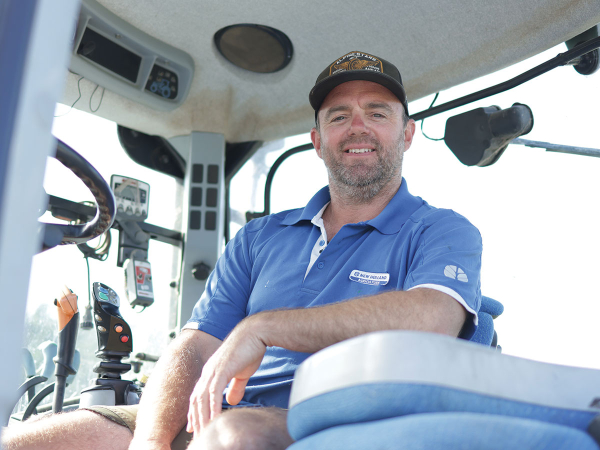 Whangarei farmer Logan Hewlett
Logan Hewlett is milking 500 cows, split into two herds on 405 hectares of land, up on a farm in Mata, fifteen minutes from Whangārei. His neighbour completely changed the way he manages his effluent.
Logan Hewlett was sceptical about using a slurry tanker; he had been using a travelling irrigator for 20 years. He knew it well and was used to all the hassles that come with owning an irrigator, but those niggles were starting to add up.
His travelling irrigator pumped effluent directly to the paddocks but only covered about 35 hectares.
On top of that, he had the usual problems of blocked nozzles that needed to be cleared – it was just a time sink and an inefficient system. He’d drive out to the irrigator, find a blockage and then have to traipse all the way back, shut off the pump, drive back to the irrigator to unblock the nozzle and then return all the way back to the pump to switch it back on.
As a result, he was only spreading about 60,000 litres a day.
Logan has a split herd of 500 cows that are milked twice a day, so there is a lot of effluent that needs to be cleared.
He needed a better solution. His neighbour said he could borrow his slurry tanker.
In the first week, he had spread over a million litres of effluent. He was amazed by how fast he could move product and the amount of land he could cover. He was sold; he knew straight away that he needed to get a tanker for himself.
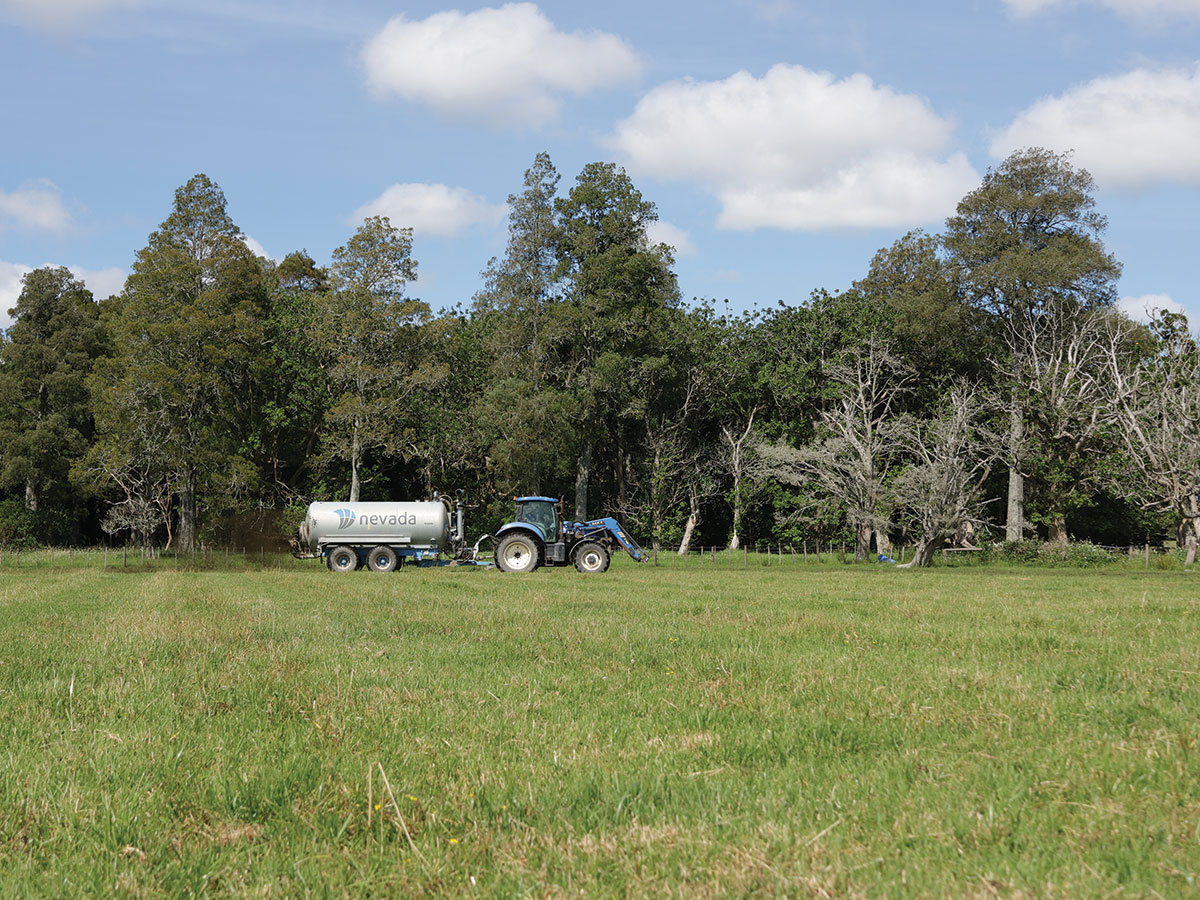
Logan went out and got a Nevada 12,800L tandem slurry tanker.
He thought about getting the 10,000L model but now thinks he could go a bit bigger and cut down the trips.
When he had the travelling irrigator, he was covering half a paddock in a day –about 60,000 litres.
He regularly spreads 250,000 litres a day and has seen a massive improvement in soil health, grass and crop production.
With his previous system, he could only cover 25% of the farm, now he is easily reaching 75%. Making the switch was easy.
The 12,800L slurry tanker has a tandem axle with steering, so it is easy to manoeuvre around the farm, through gates and tight places.
He controls everything from the interior of the cab; he just pulls up to the pond side easel and drops the Auto-Fill arm, which fills up the tank in about three minutes.
Logan is using System 5, so the quality of the effluent is high, meaning he does not need to use any other fertiliser, except some sulphur in the winter.
The quality of the effluent he is loading into the slurry tanker has a lot to do with the system he uses on his ponds. When he overhauled his effluent management, Logan made sure to install a Nevada Electric Stirrer and a submersible pump at his sump.
 |
|---|
|
The Nevada slurry tanker allows 75% coverage of the farm. |
The main pond holds eleven million litres of effluent, which he uses for long-term storage over the winter months. For his day-to-day effluent needs, he normally uses a 100,000L sump, which takes the wash off from the feed pad.
Before he got the electric stirrer, he had a pontoon stirrer installed in the sump. This set-up pushed the liquid downward from the pontoon but had trouble moving all the effluent in the sump. This caused a big problem in summer when the crust would grow so quickly that it would end up lifting the pontoon out of the liquid.
The day the electric stirrer arrived, Logan set it up, dug a hole in the crust and dropped the stirrer in and went home to get some lunch. By the time he got back, the crust was gone, the centrifugal force had churned through the crust. He has never had a problem since then. It is set on a timer and can run when he wants, usually just before he is about to start spreading.
It is a perfect companion to the tanker, keeping the effluent solids in suspension, so the effluent he spreads has a higher nutrient value. For Logan, it was a great investment.
“The stirrer is awesome – plug and play. If you get anything wrapped around the prop shaft, you just winch it up, turn it to the side of the pond and unwrap it. Then poke it back in the slurry – really easy.”
Logan has got some great neighbours and lending him his first slurry tanker for one week could have been the best thing they’ve ever done.
He is spreading more effluent than ever before, which is saving him thousands in fertiliser costs and delivering fantastic growth in his paddocks. Both the soil and bank balance are in much better health.
Increased competition for water means the whole community is looking at how irrigators use water.
Analysis of decades of research has revealed the implementation of good farming practices plays a critical role in reducing nutrient losses to improve freshwater outcomes.
DairyNZ has pulled together tactics that will help farmers improve on-farm efficiency and have positive benefits for the environment. These tactics are based on research, data, and lessons from leading farmers.
The design and construction of an effective dairy effluent system is a complex process.
Umbilical pumping specialists Transpread have designed a compact, single-axled version of its Contractor trailer engine-driven pump system, offering reduced dimensions for ease of access through tight gateways or confined yards.


High country stations, mixed sheep and beef farms, Māori-owned farms, corporates and family operations are among the nine commercial farms taking part in the Livestock Innovation Farming Transformation programme, known as LIFT.
OPINION: New health and safety guidance unveiled by the Government recently provides farmers greater certainty about what is expected of them when managing risks on farm.
The National Animal Welfare Advisory Committee (NAWAC) is seeking public feedback on proposed changes to the Code of Welfare for Rodeos.
A New Zealand initiative supporting farmers to restore the health of grazing landscapes has received international backing through the Regenerative Fund for Nature, a global collaborative fund supporting regenerative agriculture and the communities that produce natural fibres for the fashion industry.
Combine premium New Zealand products, blend in a family ritual and what do you get? A world-class functional drink.
Entries are now open across eleven regions for the 2027 New Zealand Dairy Industry Awards (NZDIA).




OPINION: It seems Canterbury processor Synlait is still in the doldrums.
OPINION: Get offside with New Zealand First leader Winston Peters at your own peril.




