Boosting Crop Production by Spreading Effluent
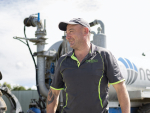
Tararua district farmer Jamie Harris milks around 400 cows using a split calving system on his farm, Crossdale Dairies.




 increase font size
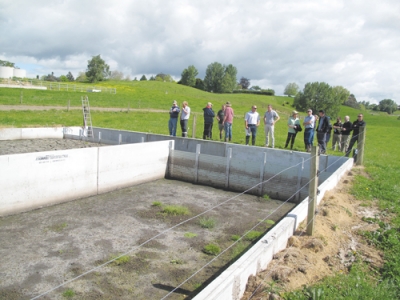
Craig Kusabs, chief executive of the Maori agribusiness, Tumunui Trust, says a desire to keep things simple prompted the choice of an Archway Group weeping wall effluent system.
“We had one at the other farm and while we looked at others we came back to the Archway system for several reasons.”
The trustees had studied an independent cost benefit analysis by Dr Debbie Care, of AgVice. This compared three effluent systems -- weeping walls, mechanical solids separation and pond only. The Archway capital costs were mid-priced but their operating costs were 60-70% lower than the other two methods and after four years theirs was seen as being more cost effective.
They offered a warranty of 20 years and a 50 year warranty on the concrete.
“With the storage of the bunkers and the pond we have the flexibility to spread the solids or water when the weather is OK for the liquid and when cropping land is available for the solids.”
Full utilisation of nutrients helps environmentally and with no mechanical gear there is less to go wrong and the system has a low labour need.
The shed wash water and yard effluent falls to two side-by-side holding bunkers 56m x 6m x 1.5m deep; each side has six months capacity. Once one side is full it is left for a further five-six months and by then almost all liquid is drained off and the solids are removed.
Tel. 0800 ARCHWAY
Tararua district farmer Jamie Harris milks around 400 cows using a split calving system on his farm, Crossdale Dairies.
Water management is an integral component of sustainable farming practices, according to Watermetrics.
Two farmers and two farming companies were recently convicted and fined a total of $108,000 for environmental offending.
A Taupiri farming company has been convicted and fined $52,500 in the Hamilton District Court for the unlawful discharge of dairy effluent into the environment.
Founded in Germany as recently as 1977, today, the Fliegl Group employs more than 1100 workers, offering an expansive range of transport solutions, from their base in Bavaria.


Safer Farms is urging farmers to make sure everyone working on farm has safe, suitable footwear for the job.
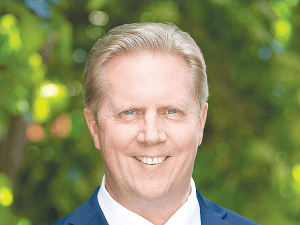
The Government is backing work on a community-led water storage scheme that could irrigate up to 11,000 more hectares of the Poverty Bay flats, Agriculture Minister Todd McClay says.
Agri-tech company Herd-i has become a new all-region sponsor of the New Zealand Dairy Industry Awards (NZDIA), the largest nationwide celebration of excellence in the dairy sector.
Four candidates have been confirmed for two director positions on Fonterra’s board.
Returning to the family dairy farm after playing 20 years of professional rugby around the world is no easy task.
After delivering another record farmgate milk price to 100 supplying farms, independent milk processor Tatua is entering thee new financial year with a positive outlook.

OPINION: It seems Canterbury processor Synlait is still in the doldrums.
OPINION: Get offside with New Zealand First leader Winston Peters at your own peril.




