
Boosting Crop Production by Spreading Effluent
Tararua district farmer Jamie Harris milks around 400 cows using a split calving system on his farm, Crossdale Dairies.




 increase font size
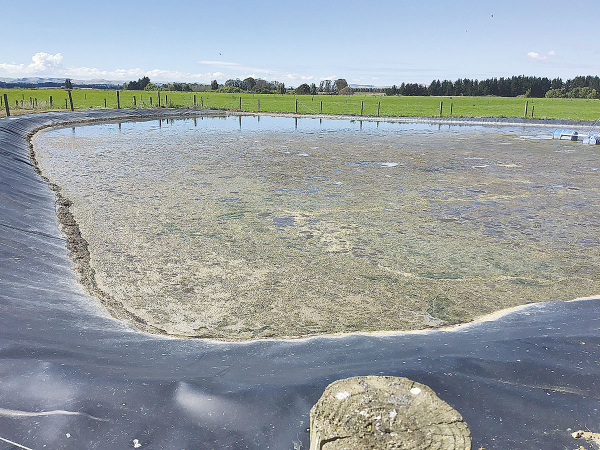 10 days after adding Biostack, the sludge has lifted from the base of the pond and the odour has noticeably reduced.
Handling the challenges of effluent management could become easier with a new product that allows dairy farmers to treat their effluent systems as a routine part of weekly milking shed maintenance.
The product comes in a liquid form and can be added to the effluent system through the existing drain in the dairy yard, says Richard Kettle of AHD Nutrition Division.
The core microbial technology is known as a photoautotroph, he says.
"In 'farmer' terms, this product has bacteria that activate and do their work when the sun is shining. Particularly effective in an effluent pond system where there is large reflective surfaces and sunlight.
"Biostack also holds onto micronutrients like nitrogen and phosphorus during dormancy. This means that when you pump effluent on the paddock or emerging crops you are taking the micronutrients to the plant, fostering additional growth."
The bacteria have a shelf life of three years when unopened; once the containers are opened it must be used within a six month period.
Kettle says Biostack users would notice a reduction in odour within two weeks of using the product and there will be little to no crusting on the pond surface. He says the product has the ability to break down both surface and bottom solids and effluent is easier to pump.
Kettle says farmers will notice an improvement in paddock performance after irrigation.
"Local experience has shown that some effluent ponds are under capacity and have massive sludge build up, even to the extent of a crusted top layer.
"A different approach with Biostack will be required in this instance. The product has shown to work under these heavier burdens, but the timeframe is longer. The photoautotroph bacteria will work incredibly well when it is utilised in a functioning manure pond system."
Biostack comes in two formulations, BiostackSL for sludge breakdown and non lactating period pond maintenance and Biostack AP for ongoing pond maintenance.
Tararua district farmer Jamie Harris milks around 400 cows using a split calving system on his farm, Crossdale Dairies.
Water management is an integral component of sustainable farming practices, according to Watermetrics.
Two farmers and two farming companies were recently convicted and fined a total of $108,000 for environmental offending.
A Taupiri farming company has been convicted and fined $52,500 in the Hamilton District Court for the unlawful discharge of dairy effluent into the environment.
Founded in Germany as recently as 1977, today, the Fliegl Group employs more than 1100 workers, offering an expansive range of transport solutions, from their base in Bavaria.



Mark Hooper has been appointed the new chair of NZPork, the industry organisation representing New Zealand pig farmers.

As the India-New Zealand free trade agreement enters into force, New Zealand’s apple industry has reaffirmed its commitment to the long-term development of India’s apple sector.
Fonterra shareholders can begin voting on Tuesday 20 October in the 2026 Board of Directors’ election, a Co-operative Council election in one Ward, and seven Annual Meeting resolutions.
National’s pledge to introduce 19 new national standards shows the party is serious about getting Wellington out of farming, Federated Farmers says.
The National Party’s policies to make it easier to grow fresh vegetables, secure reliable water and energy and simplify farm planning are practical changes that will give growers the confidence to invest, according to Horticulture New Zealand (HortNZ).
Fonterra Co-operative Group chief financial officer Andrew Murray has resigned to take up a role outside the dairy giant.




OPINION: It seems Canterbury processor Synlait is still in the doldrums.
OPINION: Get offside with New Zealand First leader Winston Peters at your own peril.




