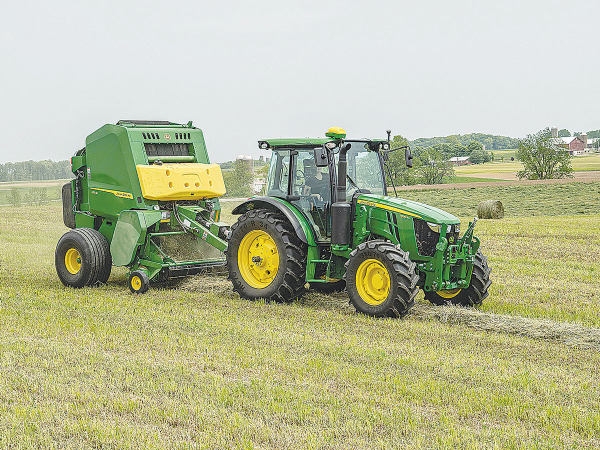
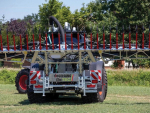
With the launch of the new John Deere 1 Series Round Balers, New Zealand round bale producers will now be able to document bale moisture and weight in near real-time, using innovative Bale Doc technology.
In addition to optimising moisture and ensuring consistent bale weight, Bale Doc also sends data to the John Deere Operations CenterTM for post-harvest analysis, helping operators to make informed decisions about key production factors such as nutrient management and reducing input costs.
The new 1 Series Round Baler line-up includes the 451M, 451R, 461M, 461R, 561M and 561R. The “E” designation signals a regular pickup, the “M” shows the baler is equipped with the MegaWide™ Plus pickup, and the “R” model shows the round baler is equipped with the High- Capacity or the High-Capacity and Pre-cutting feeding system.
Options include Net-Lift Assist to deliver a 90% reduction in lifting effort as the connecting linkage attaches to the net wrap handles and the roll is moved into position.
Net Lighting illuminates the net wrap and wrapping components and a Preservative System that utilises a tank, sensors, controller and distribution system ensures the right amount of preservative is applied to each bale.
Operator fatigue is reduced using the integral Baler Automation system that opens and closes the tailgate at the right time, eliminating repetitive tasks, reducing operator error and minimising down time, helping farmers produce bales as quickly as possible.
A new, standard 8-inch G5e display provides operators with an easy-to-learn, consistent experience, giving them total visibility and control over baling operations. The 1 Series also features a new optional High-Capacity Pickup, which internal testing showed could pick up and feed crop with up to 33% increased capacity compared to previous models.
Speaking to the technology in the 1 Series, John Deere production systems manager, Stephanie Gersekowski, said the aim was to deliver consistent, high-quality bales for hay operations of all sizes.
“Our customers have told us reliability, serviceability and productivity were three key factors they considered when selecting a new round baler,” says Gersekowski.
“Providing near real-time moisture and weight data, in addition to bale count and other agronomic data, the information will allow operators to monitor and track bale location and baling conditions, while remote managers can leverage this data to more effectively plan workflow and logistics to save time and money. Every bale recorded through Bale Doc is like a mini-income statement for your entire production cycle.”