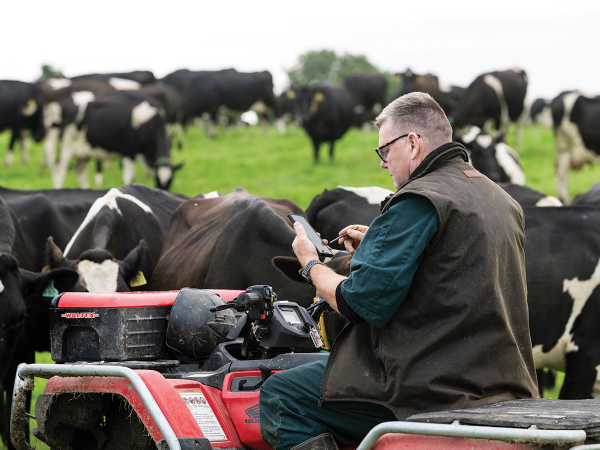
For Ashburton farmer Craig Hickman, technology hasn’t replaced the way he farms, it’s strengthened how he operates day to day.
Running 1000 cows across 285 hectares, Craig has spent the past five years using Nedap collars across his herd. In that time, the system has proven highly reliable, with just one collar failure, replaced within two days.
What has evolved more noticeably is how Craig is now using that system. As he puts it, the upgrade to Nedap Now has been “an absolute gamechanger”, particularly in how easily he and his team can interact with the data they’re collecting.
Like many farmers, Craig acknowledges that moving from no collars to collars brings a shift. It introduces a level of insight that hasn’t traditionally been available, and with that comes a learning curve. What has improved is how accessible and practical that insight has become.
Where he once had to organise groups in MINDA and copy them across, he explains that “the new filtering tools allow me to do that directly in the program, bypassing MINDA altogether”.
The same applies to reporting. Rather than data sitting in the background, Craig says “with filtering, I can customise reports to see what I like”, giving him direct access to the information that matters most.
Even when MINDA is still part of the process, the workflow is more efficient. Being able to export a CSV and import it straight into Nedap as a list is, in his words, “a huge time saver”.
That shift from simply having data, to actively using it, is where Craig sees the biggest difference. Being able to pull reports with the information he wants has allowed him to become “a data-driven farmer, rather than relying on guesswork”.
The impact of that is most obvious in animal health. Instead of relying solely on observation, Craig and his team are getting earlier signals when something is not quite right. He notes that it improves animal welfare, with early detection picking up animals “a good day before we might pick them up by eye”.
That extra time gives the team a clear advantage, allowing them to act sooner and reduce the impact on both the animal and the wider herd.
Reproduction is another area where time is being clawed back. Cows on heat are automatically drafted through a GEA gate powered by Nedap, removing the need for manual drafting. For Craig, “having the cows that are on heat automatically drafted is a huge time saver”, and on a farm of this scale, that efficiency quickly adds up.
At the same time, the system has become more adaptable to how the farm runs. The ability to adjust health alert sensitivity allows Craig to finetune how the system responds, while simple tools like flags have streamlined day-to-day management.
A Helping Hand for Staff
Importantly, Craig Hickman sees the role of the technology as supporting his team, not replacing it. As he explains, “the collars and the software complement what my staff are doing”, giving them better information and removing repetitive tasks so they can focus on higher-value decisions.
For Craig personally, that has meant being able to step back from the routine. He says the collars have allowed him to concentrate on the important things by “taking the mundane things away”.
This level of visibility reinforces what the system is delivering. It is not just about saving time, it is about having the right information, at the right time, to make better decisions with confidence.
And increasingly, that is what modern farming demands.