
UK Politician Alistair Carmichael Praises "Positive Spirit" of NZ Farmers
A leading British farming politician says he's impressed with the positive attitude of New Zealand farmers that he met during his recent trip here.




 increase font size
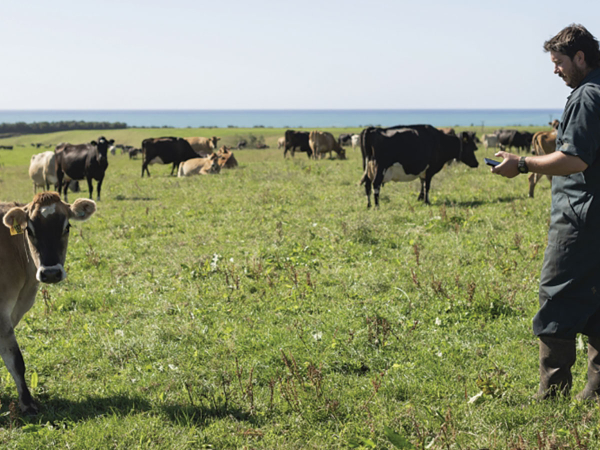 Elly and Kale Grahame have introduced Nedap collars as their primary heat detection tool.
For Taranaki sharemilkers Elly and Kale Grahame, technology hasn't beeen about overcomplicating their system.
It's been about making the high-pressure parts of farming simpler, more manageable and easier to stay on top of.
Running 200 cows, the pair have introduced Nedap collars as their primary heat detection tool.
The impact has been immediate, particularly during mating, a time that, in previous seasons, brought a significant amount of stress.
Like many farmers, Elly and Kale relied on traditional methods such as tail painting, constant observation and managing bulls.
It was a hands-on approach that demanded time, attention and often added pressure during an already busy period.
The shift to Nedap collars has changed that.
Now, instead of relying on visual cues alone, heat detection is handled automatically.
Each morning, Elly has a clear list of cows ready to be inseminated, delivered straight to her phone.
"It's a dream," she says. "Milking in the morning is so much easier, without having to constantly watch for cows that might be on heat."
That visibility has allowed them to step away from bulls altogether and move to a fully AI-based system.
In doing so, they've reduced risk, simplified their mating process and freed up valuable time across the day.
For Elly, the biggest difference is not having to second-guess what she might be missing.
Rather than watching and waiting, the system provides clear, timely signals. It removes the pressure of constand observation and replaces it with confidence in the data.
Beyond mating, the collars are also providing a continuous picture of what's happening across the herd.
With 24/7 monitoring, Elly and Kate can see exactly how their cows are performing, from eating patterns through to rumination.
It’s clear the true value of that level of insight is directly tied to production.
The more their cows are eating and ruminating, the more milk they produce.
Being able to track those behaviours in real time gives them an early indication if something isn’t quite right allowing them to respond sooner.
The system itself has also proven straightforward to implement.
Without needing on-boarding support, Elly and Kale set everything up themselves, installing the aerial, having internet connected to the shed, and getting the collars up and running
From there, day-to-day use has been simple.
Nedap’s app allows them to track progress against their goals, while reporting and filtering tools make it easy to focus on the information that matters most.
Whether it’s by individual cow, performance traits, or specific timeframes, the data is easy to access and continually updating.
Flexibility has also been an important factor.
As sharemilkers, the ability to move systems between farms is a practical consideration. With Nedap, they know the entire setup can be packed down and taken with them when needed.
Financially, the option to purchase the collars rather than lease them has also worked in their favour. After reviewing the numbers, it provided a better long-term outcome for their business.
Looking ahead, Elly and Kale are now exploring how Nedap’s SmartSort drafting gate could further streamline their system, building on the efficiencies they’re already seeing.
For them, the shift has been clear. By removing the pressure points and making better use of data, they’ve been able to create a system that works with them, not against them, every day on farm.
A leading British farming politician says he's impressed with the positive attitude of New Zealand farmers that he met during his recent trip here.

A new digital assistant is now helping Ballance Agri-Nutrients farmers speed up nutrient information and ordering.
OPINION: At Fieldays this year, one theme kept surfacing across the sector: global shocks are no longer something that happens “over there”. They are now translating quickly into local, farm-level impacts through increasingly complex and connected channels.
As the dust settles after Fieldays, we're once again reminded of the sheer volume of technology now available to New Zealand dairy farmers.
Last month's National Fieldays was an important event for Canadian manufacturer Can-Am, as it unveiled its first electric ATV, the Outlander, adding extra option to the new Defender HD11 and Defender MAX HD11 line-up.


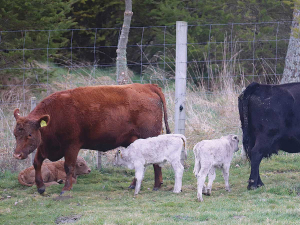
A major move is about to get underway to improve the quality and viability of dairy beef and cattle in NZ.
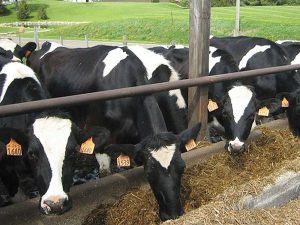
Veterinarians say changes to the code of welfare for dairy cattle provides a positive foundation for improved cattle welfare across the country.
Today, 15 October, is the International Day of Rural Women, which recognises rural women’s contribution to farming, communities and the environment.
Global dairy giant Lactalis has integrated its Australian operations with the Mainland Dairy consumer business it acquired from Fonterra earlier this year.
After almost two decades of sharemilking, saving and building equity, Aaron and Marcia Flay this year realised their long-held dream of settling on their first dairy farm.
Good medium to long term prospects for NZ beef, especially in the US, has heighted the focus on various initiatives to capitalise on this situation.

OPINION: It seems Canterbury processor Synlait is still in the doldrums.
OPINION: Get offside with New Zealand First leader Winston Peters at your own peril.




