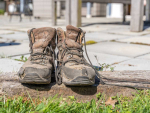
#BootsOfShame: Safer Farms Urges Farmers to Check Footwear
Safer Farms is urging farmers to make sure everyone working on farm has safe, suitable footwear for the job.




 increase font size
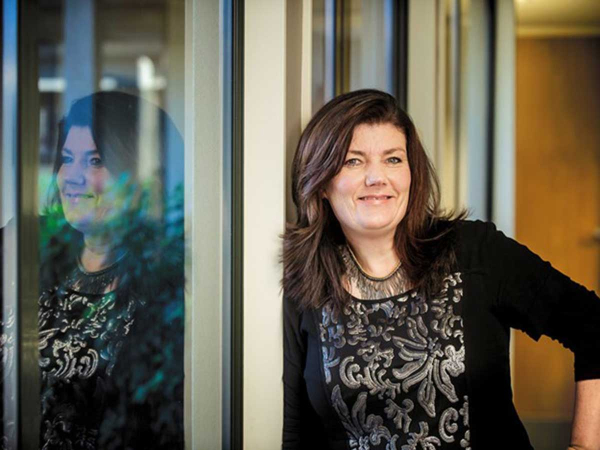 Safer Farms chair Lindy Nelson.
According to a new report, the Safer Rides initiative, which offered farmers heavily discounted crush protection devices (CPDs) for quad bikes, has made a significant impact in raising awareness and action around farm vehicle safety.
Findings from the industry-led programme, instigated by Rabobank and run by Safer Farms, show that more than 130 farm businesses installed CPDs through the scheme, which reduced costs by up to 75%.\
According to the report, 56% of applicants were sheep and beef farmers, and 35% were dairy farmers. 84% did not already have a CPD fitted and most applicants were smaller farm businesses.
Lindy Nelson, chair of Safer Farms, says the initiative sparked a wider call to action among farmers.
"There was a very high uptake, particularly from smaller farm businesses," Nelson says.
“Importantly, CPD retailers Trax Equipment and Quadbar, who partnered with us, have both seen an increase in inquiries and sales since the campaign. It’s clear farmers want safer quad bikes, but cost has long been a barrier. Safer Rides helped remove that barrier," she adds.
In 2024, 16 people lost their lives in agricultural accidents in New Zealand. Many of those accidents involved ATVs or quad bikes.
From January to August 2025, a further seven fatalities have been notified to WorkSafe.
According to the report, motivations for installing a device included personal experiences of accidents, hilly terrain and concerns about older riders.
Nelson says many farmers referenced close calls and accidents as the reason they acted.
“Applicants wanted to protect themselves, their families and staff. A number referenced specific incidents and near-misses that brought urgency to the decision," she says.
Bruce Weir, Rabobank New Zealand's general manager of country banking, says the success of Safer Rides and the organisations that were wanting to get involved highlighted the appetite for change in the sector.
“The initiative was originally proposed by two of our team members, Grace Eglinton and Jack Macfarlane, who are passionate about finding practical ways to support safer outcomes for our farming clients," Weir says.
“CPDs reduce the risk of death by creating a survival space under an overturned quad bike allowing it to roll away from the rider.
“The very strong uptake clearly shows that farmers want to address the risk posed by these farm vehicles and removing cost barriers makes a significant difference in bringing about positive change.”
Canterbury arable farmer David Clark used Safer Rides to get a CPD fitted to one of his farm’s two quad bikes and is now getting one fitted to the second at full cost.
“I have rolled a quad bike before and it was the roll bars on it that stopped the quad coming down on top of me, so I do think they are very important,” he says.
“We find they do not impact at all on the serviceability of the bike. I’m very grateful to the sponsors and Safer Farms for helping to set up the initiative.”
Otago sheep and beef farmer Simon Davies already had one CPD on a quad used by his young staff members but used the scheme to fit another to his second bike.
“It gives me peace of mind to have them on both,” he says.
“I have rolled a quad and the bars do their job. It went over on its side and prevented the bike from going right over.
“Most of the time, they will stop a complete roll over but if it does go right over, it means there is space between you and the bike, or the bike and the ground. If it hadn’t been for the bar, I don’t know how I would have come out of that rollover.
“I would absolutely recommend to other farmers that they get bars fitted. It was a great programme. I saw the opportunity and thought ‘I’ll do that.”
Safer Farms is now exploring a second phase of Safer Rides.
“Phase one focused on lowering the cost of CPDs to achieve immediate change in farm safety,” says Nelson.
“Phase two will look more broadly at informing, educating and incentivising safer quad bike use, as well as ATV and side-by-side vehicles.”
ACC, which is partnering with Safer Farms on the five-year Farm Without Harm strategy, has provided funding support for phase two and work is underway with other potential partners in the sector to get the next initiative underway.
Safer Farms is urging farmers to make sure everyone working on farm has safe, suitable footwear for the job.
Improving health and safety is about incremental gain rather than a sudden decision, says Leeston farmer and Federated Farmers health and safety spokesman David Birkett.
A huge reduction in ACC claims from on-farm accidents over the last five years is due to thousands of small, practical decisions being made in sheds, yards, paddocks and around kitchen tables across the country, says Safer Farms ambassador Lindy Nelson.
Lindy Nelson, Safety Farms ambassador, has been named the winner of the Leadership category at the 2026 New Zealand Workplace Health and Safety Awards in Auckland.
A safety push across New Zealand has revealed significant gaps in hazardous substances management, farm vehicles, tractors, quad bikes and side-by-sides.


Federated Farmers has welcomed new rural policies released by ACT, saying they align closely with its own election priorities.
Rural Contractors NZ says proposed changes to land transport rules for agricultural vehicles are a welcome response by the Government to out of date regulations which have seen members hit with huge fines.
Alliance is calling for final applications for its 2027 Graduate Programme, with applications closing on Sunday 25 October.
Decades piloting planes has ensured vet and farmer David Hayes is focused on safety. So, after a serious accident while welding on farm, he is sharing his experience so others can learn from it.
Canterbury milk processor, Synlait Milk has confirmed Leon Fung as its chief executive officer.
OPINION: Making it easier to collect rainwater and use it to grow crops and livestock is a no brainer.

OPINION: The same mainstream media muppets that brought you Jacindamania in 2017 have been flat out pimping for the Opportunities…
OPINION: Your old mate reckons the atrocious way farmers in the UK are treated by their lords and masters in…




