
Federated Farmers Welcomes ACT’s New Farming Policies
Federated Farmers has welcomed new rural policies released by ACT, saying they align closely with its own election priorities.




 increase font size
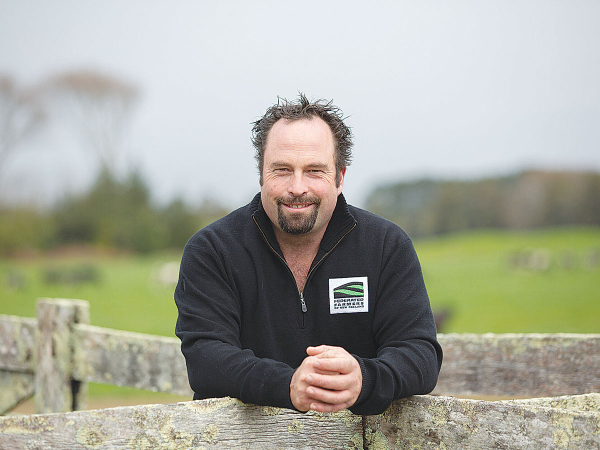 Feds dairy chair Richard McIntyre says migrant workers must be treated well.
An appalling case of migrant worker exploitation on a Southland farm isn't acceptable, says Federated Farmers dairy chair Richard McIntyre.
He says the actions of Indonesian-born farmer Reza Abdul-Jabbar have no place in the dairy sector.
McIntyre says they are pleased that the Employment Relations Authority (ERA) has imposed a significant fine.
"The agriculture sector is reliant on migrant labour, particularly in remote areas, so it is important that they are treated well and the rules are followed," he told Dairy News.
"Farmers will be incredibly frustrated that this employer has let the side down in such a significant way. Farmers are typically very good employers of migrant labour."
Abdul-Jabbar and his company Rural Practice Ltd (RPL) were ordered to pay $215,000 over the exploitation of three migrant workers from Indonesia by ERA member Alastair Dumbleton.
He ruled Abdul-Jabbar disregarded NZ law governing employment and took advantage of three men who were from his own country.
The three workers came from Indonesia to work for the company on its Invercargill dairy farm, and were subject to numerous employment breaches during their time working between 2017 and 2022. They included not paying their workers minimum wage, nor their holidays, manipulating payslips, unlawful wage deductions and not keeping accurate wage records.
In December 2020, one of the workers raised the alarm through the Ministry of Business, Innovation and Employment (MBIE) contact line to complain about his pay, days off and that the employer refused to return his passport and identification.
Abdul-Jabbar was an imam at a mosque in Invercargill, and the religious advisor to at least one of the three workers.
In his ruling, Dumbleton noted that there may be several underlying reasons for the failure of an employer such as RPL to comply with statutory and contractual employment law obligations, or for persons such as Reza Abdul-Jabbar becoming involved in a failure of that kind.
"Lack of dairy farming skill or knowledge or experience, may be an explanation. So too might be financial pressure or concern, personal problems including health issues of different kinds, ignorance of the law, or just plain neglect or inadvertence.
"The authority concludes that none of those reasons provides an explanation. The authority concludes that the explanation is an attitude held by Mr Abdul-Jabbar of disrespect for employment and immigration statutory rules and regulations - 'officialdom and bureaucracy' - and also an attitude of indifference to the sanctity of contract.
"In short, as a director and owner of the employer RPL, when it suited him, Mr Abdul-Jabbar knowingly disregarded the law governing employment.
"The respondents acted as if they knew best what was right for workers from Indonesia, not INZ or the labour inspector or parliament which made the law."
MBIE head of compliance and enforcement Simon Humphries says it was unforgivable that business owners would knowingly and deliberately exploit vulnerable workers they brought to New Zealand.
"These workers came to this country in search of a better life, but they were taken advantage of by those they trusted," Humphries said.
Federated Farmers has welcomed new rural policies released by ACT, saying they align closely with its own election priorities.

Federated Farmers is backing Feilding High School’s call to keep Agriculture and Horticultural Science as a standalone subject in Year 11.
National’s pledge to introduce 19 new national standards shows the party is serious about getting Wellington out of farming, Federated Farmers says.
Mobile phone coverage and reliability are deteriorating in rural areas, and farming families are bearing the cost, according to a Federated Farmers survey.
Central Otago District Council (CODC) has voted against a plan to spread treated sewage sludge from Cromwell and Alexandra on farmland near Lauder, a decision Federated Farmers says reflects strong opposition from rural residents.


Federated Farmers has welcomed new rural policies released by ACT, saying they align closely with its own election priorities.

Rural Contractors NZ says proposed changes to land transport rules for agricultural vehicles are a welcome response by the Government to out of date regulations which have seen members hit with huge fines.
Alliance is calling for final applications for its 2027 Graduate Programme, with applications closing on Sunday 25 October.
Decades piloting planes has ensured vet and farmer David Hayes is focused on safety. So, after a serious accident while welding on farm, he is sharing his experience so others can learn from it.
Canterbury milk processor, Synlait Milk has confirmed Leon Fung as its chief executive officer.
OPINION: Making it easier to collect rainwater and use it to grow crops and livestock is a no brainer.




OPINION: It seems Canterbury processor Synlait is still in the doldrums.
OPINION: Get offside with New Zealand First leader Winston Peters at your own peril.




