
Federated Farmers Welcomes ACT’s New Farming Policies
Federated Farmers has welcomed new rural policies released by ACT, saying they align closely with its own election priorities.




 increase font size
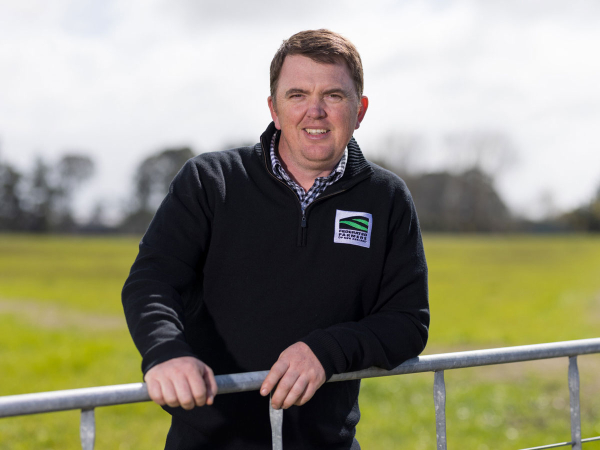 Federated Farmers national president Wayne Langford.
Farmer lobby group Federated Farmers has announced it is supporting a new Member’s Bill which it says could bring clarity to New Zealand farmers and save millions in legal costs.
National MP Joseph Mooney’s Climate Change Response (Restriction on Civil Proceedings) Amendment Bill seeks to establish “clear and uniform policy”, banning legal action arising from climate change matters.
Essentially, if a person or business complies with national climate change laws, they cannot be sued for causing climate-related damage.
“It sounds very obvious, but that’s not how the law appears to be working right now,” says Federated Farmers national president and climate change spokesperson Wayne Langford.
“It’s crazy that companies like Fonterra and Dairy Holdings, who are fully meeting their legal climate obligations right now, can still be dragged into court and sued for allegedly causing harm through emissions.”
Langford says Federated Farmers fully supports the bill, which he says will restore “much-needed common sense and save farmers, food processors and taxpayers millions of dollars in court costs”.
Currently, climate activist Mike Smith is taking seven New Zealand companies – including Fonterra and Dairy Holdings – to court over their greenhouse gas emissions.
Smith, who is part of the Ngāpuhi and Ngāti Kahu iwi, claims that the emissions activity from the seven companies constitutes a public nuisance, negligence, and breach of a duty to cease contributing to climate change.
In 2020, the High Court ruled that only the third cause of action could proceed, concluding that Smith could not demonstrate public nuisance or negligence.
Subsequently, the Supreme Court has reinstated all three claims, allowing the case to go to trial, meaning it is back in front of the High Court.
Federated Farmers argues the case sets a dangerous precedent.
“Every New Zealander contributes to climate change in some way,” Langford says.
"When you turn on a light switch, cook dinner, drive your car - even an EV - you’re using energy and consuming goods. All of that has emissions behind it."
In most cases, those emissions come from companies operating within New Zealand’s legal framework - following rules set out under the Emissions Trading Scheme (ETS), reporting requirements, and other regulatory obligations.
"So, it’s silly stuff to then try and sue those law-abiding companies," Langford says.
He says that long-lived carbon dioxide emissions are already captured under the ETS, and the Government is already actively investing in research and tools to assist farmers in reducing their short-lived methane emsisions.
“If these companies are following the rules, there has to be some certainty and protection in that, or the legal risk becomes unmanageable,” he says.
Langford says that Mooney’s Bill would provide certainty by stating in law that private legal action cannot be taken against individuals or companies for their greenhouse gas emissions, provided they comply with New Zealand’s climate laws.
"Rather than force the courts to debate and decide what the law in New Zealand is, this Bill would allow Parliament to exert its authority and define the law," Langford says.
He says it’s no different from how things work in other areas of law.
"If a property developer gets resource consent to build a high-rise apartment, the neighbours can’t turn around and sue them for the shade or noise.
"That’s because we recognise the developer has done everything required under the law to get permission.
"Why should climate law be treated any differently?"
Federated Farmers has welcomed new rural policies released by ACT, saying they align closely with its own election priorities.

Federated Farmers is backing Feilding High School’s call to keep Agriculture and Horticultural Science as a standalone subject in Year 11.
National’s pledge to introduce 19 new national standards shows the party is serious about getting Wellington out of farming, Federated Farmers says.
Mobile phone coverage and reliability are deteriorating in rural areas, and farming families are bearing the cost, according to a Federated Farmers survey.
Central Otago District Council (CODC) has voted against a plan to spread treated sewage sludge from Cromwell and Alexandra on farmland near Lauder, a decision Federated Farmers says reflects strong opposition from rural residents.


Federated Farmers has welcomed new rural policies released by ACT, saying they align closely with its own election priorities.

Rural Contractors NZ says proposed changes to land transport rules for agricultural vehicles are a welcome response by the Government to out of date regulations which have seen members hit with huge fines.
Alliance is calling for final applications for its 2027 Graduate Programme, with applications closing on Sunday 25 October.
Decades piloting planes has ensured vet and farmer David Hayes is focused on safety. So, after a serious accident while welding on farm, he is sharing his experience so others can learn from it.
Canterbury milk processor, Synlait Milk has confirmed Leon Fung as its chief executive officer.
OPINION: Making it easier to collect rainwater and use it to grow crops and livestock is a no brainer.





OPINION: The same mainstream media muppets that brought you Jacindamania in 2017 have been flat out pimping for the Opportunities…
OPINION: Your old mate reckons the atrocious way farmers in the UK are treated by their lords and masters in…




