
Federated Farmers Welcomes ACT’s New Farming Policies
Federated Farmers has welcomed new rural policies released by ACT, saying they align closely with its own election priorities.




 increase font size
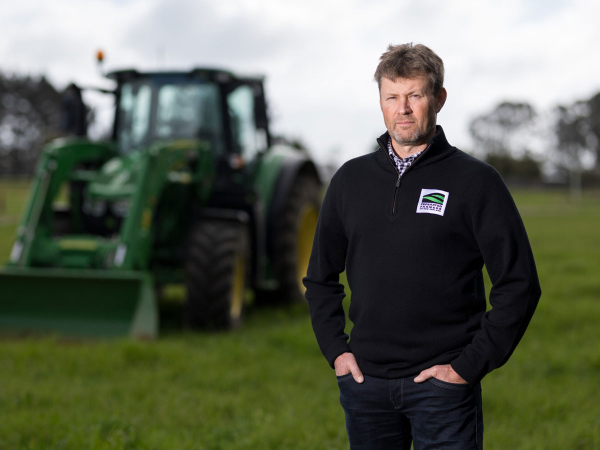 Federated Farmers banking spokesperson Mark Hooper.
Federated Farmers says the final report into banking competition is a significant step forward for rural New Zealand - and a vindication of the farming sector's concern.
Earlier today, the Finance and Expenditure Committee released a report, the result of an inquiry into banking competition.
The report makes a number of recommendations including making rules around climate lending clear and consistent; ceasing capital increases for banks; reviewing rural requirements; and the formal disclosure by banks of factors contributing to risk margins and pricing.
The report also confirms capital rules are currently costing farmers between $555 million and $714 million each year.
Mark Hooper, Federated Farmers banking spokesperson, says the report is the most significant progress rural communities have seen on banking issues in a generation.
"Federated Farmers fought hard to make this inquiry happen because we knew many farmers were getting a raw deal from their banks and felt greater scrutiny was needed," Hooper says.
"Throughout the process, we've raised firm questions and put forward constructive suggestions for how the banking system could be improved for all New Zealanders," he adds.
"Politicians have clearly listened, recognising that farmers have been facing an unfair playing field for too long - and now they've presented concrete changes to start fixing it."
Hooper says that Federated Farmers welcomes the committee's recommendation to immediately halt further increases in capital requirements for agricultural lending.
"This report backs what we've been saying for a long time - that these capital rules are stripping hundreds of millions of dollars out of rural New Zealand each year," he says.
"Overly conservative capital holding rules have only added additional and unnecessary costs onto farmers. They've also made it much harder for farmers to access capital to grow their businesses.
"This immediate stop to increases is a huge result and will directly save farmers thousands of dollars in unnecessary interest costs."
Hooper says one area the committee could have been stronger on is climate lending rules.
"Farmers are very frustrated about having to provide emissions data, and about inconsistent and confusing information requests.
"The report calls for clearer climate-related lending rules, standardising practices to balance environmental goals with practical lending.
"However, when it comes to climate issues, we don’t think the committee has gone anywhere near far enough."
Hooper says sustained political oversight will be key to ensuring the recommendations translate into real, long-term change.
"Recommendations are only words on a page unless Ministers and regulators act on them, but with more regular reporting and Parliamentary scrutiny, there’ll now be nowhere to hide."
Meanwhile, ANZ NZ chief executive Antonia Watson says that the inquiry brought "renewed focus".
"Competition is strong; more New Zealanders are using open banking services, switching between providers is at record levels, and increased transparency around pricing is reflected in more positive farmer sentiment," Watson says.
Watson says that open banking is gaining momentum.
“We’re committed to fostering a competitive, transparent and inclusive banking environment that delivers real value to New Zealanders,” she says.
“Our staff go out every day to win and keep customers in a highly competitive market and we welcome initiatives that enhance benefits for consumers.”
Federated Farmers has welcomed new rural policies released by ACT, saying they align closely with its own election priorities.

Federated Farmers is backing Feilding High School’s call to keep Agriculture and Horticultural Science as a standalone subject in Year 11.
Mark Hooper has been appointed the new chair of NZPork, the industry organisation representing New Zealand pig farmers.
National’s pledge to introduce 19 new national standards shows the party is serious about getting Wellington out of farming, Federated Farmers says.
Mobile phone coverage and reliability are deteriorating in rural areas, and farming families are bearing the cost, according to a Federated Farmers survey.



Federated Farmers has welcomed new rural policies released by ACT, saying they align closely with its own election priorities.

Rural Contractors NZ says proposed changes to land transport rules for agricultural vehicles are a welcome response by the Government to out of date regulations which have seen members hit with huge fines.
Alliance is calling for final applications for its 2027 Graduate Programme, with applications closing on Sunday 25 October.
Decades piloting planes has ensured vet and farmer David Hayes is focused on safety. So, after a serious accident while welding on farm, he is sharing his experience so others can learn from it.
Canterbury milk processor, Synlait Milk has confirmed Leon Fung as its chief executive officer.
OPINION: Making it easier to collect rainwater and use it to grow crops and livestock is a no brainer.





OPINION: The same mainstream media muppets that brought you Jacindamania in 2017 have been flat out pimping for the Opportunities…
OPINION: Your old mate reckons the atrocious way farmers in the UK are treated by their lords and masters in…




