
Four Candidates Confirmed for Fonterra Board Election
Four candidates have been confirmed for two director positions on Fonterra’s board.




 increase font size
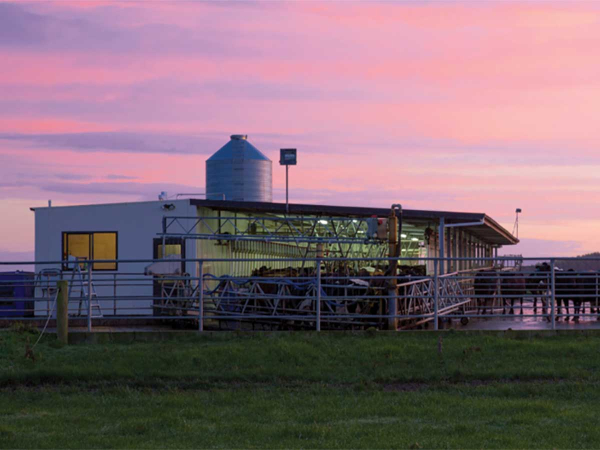 Fonterra acknowledges that progress on on-farm emissions intensity reduction target has been challenging.
Climate, nature and animal wellbeing make up Fonterra's refreshed sustainability roadmap released last week.
It builds on the co-operative's climate roadmap, with near-term emission reduction targets remaining a key part of the path towards their ambition to be net zero by 2050.
The roadmap is also important for Fonterra's global customers who recognise the inherent value of New Zealand's grass-fed dairy and are increasingly interested in the improvements the co-op is making across its supply chain.
Global customers are interested in the data and insights Fonterra can provide right down to an individual farm level, showing the hard work of its farmers.
Charlotte Rutherford, director of sustainability at Fonterra, told Dairy News that their commitment to sustainability remains strong.
Rutherford says the roadmap recognises the hard work their farmers do every day to care for the land, animals and environment that are the foundations of New Zealand's world-leading pasture-based farming.
"A huge thank you to our farmers, whose dedication and daily efforts underpin the path set out in this roadmap."
According to the refreshed roadmap, Fonterra is working alongside farmers to maintain high standards of animal wellbeing.
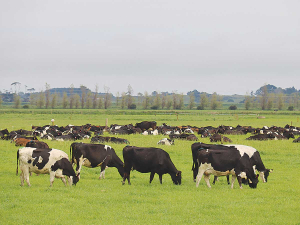
With high health and welfare standards, NZ cows live longer, productive lives.
The co-op says highly productive cows are essential for producing high quality milk.
"The way we farm in New Zealand means cows spend most of their time outdoors on pasture... This has positive animal health and wellbeing benefits for our cows."
On climate, Fonterra says reducing emissions remains a critical component of its climate action plan.
"However, we acknowledge that impacts of climate change are already being felt across the globe. This is why we are also considering how we adapt to climate change for the future of our co-operative."
Fonterra's 2026 emissions profile is made up of 4.5% scope one emissions - direct emissions from sources owned or controlled by the co-op.
Scope two - indirect emissions from the generation of purchased energy - makes up 1.5%.
Scope three is 94% and is mad up of indirect emissions Fonterra incurs outside its ownership, primarily from farming activities.
The co-op says its net zero 2050 ambition is supported by eliminating remaining coal as an energy source in its operations by 2037.
On farming emissions, Fonterra notes that the same pasture-based system that helps them create grass-fed dairy products also presents unique challenges when it comes to reducing on-farm emissions.
The co-op acknowledges that progress with its on-farm emissions intensity reduction target has been challenging.
It is inventing in on-farm tools and services to strengthen on-farm decision making, while also preparing to adopt novel technologies as they become commercially available.
On nature, Fonterra says the significance of 'natural decline' (environmental degredation) is becoming a global focus.
"Key markets like Europe and Asia are advancing disclosure requirements relating to nature which will impact companies selling goods and services into these regions."
Four candidates have been confirmed for two director positions on Fonterra’s board.
A record farmgate milk price and strong global demand is laying the foundation for continued growth of organic dairy farming in New Zealand.
Waikato milk processor Tatua has again declared a record milk payout to farmer shareholders, leaving other processors in the dust.
Pāmu has released its FY26 Integrated Annual Report, reporting a Net Operating Profit of $113 million, more than double the $49 million recorded in FY25.
Fonterra has unveiled its annual results for the 2026 financial year, posting $27 billion in revenue and close to $20 billion returned to New Zealand farmer owners and unit holders.

High country stations, mixed sheep and beef farms, Māori-owned farms, corporates and family operations are among the nine commercial farms taking part in the Livestock Innovation Farming Transformation programme, known as LIFT.
OPINION: New health and safety guidance unveiled by the Government recently provides farmers greater certainty about what is expected of them when managing risks on farm.
The National Animal Welfare Advisory Committee (NAWAC) is seeking public feedback on proposed changes to the Code of Welfare for Rodeos.
A New Zealand initiative supporting farmers to restore the health of grazing landscapes has received international backing through the Regenerative Fund for Nature, a global collaborative fund supporting regenerative agriculture and the communities that produce natural fibres for the fashion industry.
Combine premium New Zealand products, blend in a family ritual and what do you get? A world-class functional drink.
Entries are now open across eleven regions for the 2027 New Zealand Dairy Industry Awards (NZDIA).



OPINION: It seems Canterbury processor Synlait is still in the doldrums.
OPINION: Get offside with New Zealand First leader Winston Peters at your own peril.




