Pichon Adds SV10R and SV14 to SV Slurry Tanker Range
French manufacturer Pichon has expanded its SV slurry tanker range with the launch of two new models.




 increase font size
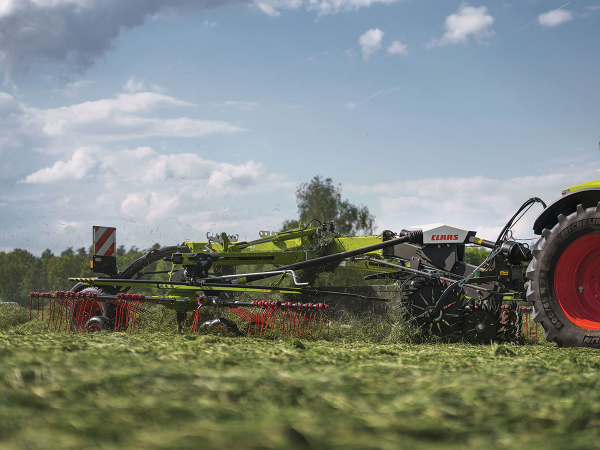 A new option from Claas, designed for the company’s LINER 3100-2600 twin-rotor rakes.
Twin rotor swathers have become the ‘go-to’ for forming swaths to feed hungry harvesters and balers, however, the design layout often means that crop located between the two rotors is not picked up, turned over or incorporated into the swath formed for subsequent harvesting.
Particularly when bringing three cut swaths into one, material gathered from either side by the rotors is deposited onto the untouched crop in the centre. This means that there is little or no drying effect, particularly in challenging crop types or damp conditions.
A new option from Claas, designed for the company’s LINER 3100-2600 twin-rotor rakes, sees a swath turner mounted beneath the drawbar and connected to the existing hydraulic circuit. It allows lifting and lowering at the headland, using the hydraulic circuit of the lift cylinders for the rotor arms.
Two pairs of twin, passively-driven star wheels pick up the crop under the centre of the swather and convey the material outwards, from where the main rotor tines lift and loosely incorporate it back into the swath in the direction of travel.
The incorporation promotes an airy placement that promotes even drying, but also ensures the swath can be picked up more effectively by following machines, as the stalks and leaves are no longer aligned lengthways but crosswise to the direction of mowing.
The wedge-shaped arrangement of the star wheels – smaller at the front and large diameter at the rear –utilise flexible spring steel tines, set in a flexible, resilient thermoplastic polyurethane (TPU) frame with adjustment in three dimensions, ensures a clean crop pick-up.
The easily adjustable coil spring suspension is complemented by standard plastic scrapers to prevent particularly long crops from being ‘dragged along’ before they reach the main rotors.
The company suggests that the option is suited in relatively delicate crops, such as alfalfa or clover-grass or during haymaking, where a consistent crop quality is required.
www.claasharvestcentre.co.nz
French manufacturer Pichon has expanded its SV slurry tanker range with the launch of two new models.
Recently revealed, Krone’s new Series Six, BiG Pack Plus and Pro balers are designed to use standardised components, interfaces, and control concepts, including pick-up, knotter systems and user interfaces.
Consuming around six years and more than 35,000 hours of physical and digital testing, the new sixth-generation Valtra T Series is being described as the most significant new release in the company’s history.
Strautmann has introduced a new Hay Edition auger for its Verti-Mix feed mixer wagons, aimed at operators using rations with larger proportions of hay or other long-fibre materials.
At a time when many businesses are taking a cautious investment approach, Landpower continues to back its customers, having officially opened the doors to its new CLAAS Harvest Centre dealership in Feilding, marking a significant investment in the future of agriculture across the lower North Island.


National’s pledge to introduce 19 new national standards shows the party is serious about getting Wellington out of farming, Federated Farmers says.
The National Party’s policies to make it easier to grow fresh vegetables, secure reliable water and energy and simplify farm planning are practical changes that will give growers the confidence to invest, according to Horticulture New Zealand (HortNZ).
Fonterra Co-operative Group chief financial officer Andrew Murray has resigned to take up a role outside the dairy giant.
A major move is about to get underway to improve the quality and viability of dairy beef and cattle in NZ.
Veterinarians say changes to the code of welfare for dairy cattle provides a positive foundation for improved cattle welfare across the country.
Today, 15 October, is the International Day of Rural Women, which recognises rural women’s contribution to farming, communities and the environment.


OPINION: It seems Canterbury processor Synlait is still in the doldrums.
OPINION: Get offside with New Zealand First leader Winston Peters at your own peril.




