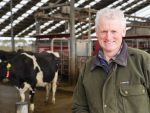
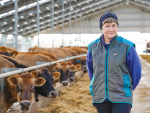
Managing feed by sticking to a firm plan has helped the Southern Dairy Hub (SDH) demonstration farm survive an extremely wet winter, says the farm's acting general manager Greg Delaney.
The Government has declared the extreme wet and cold conditions across Southland and the Clutha District a "medium-scale adverse event", unlocking assistance, including tax relief and Ministry of Social Development special payments and other support.
Delaney manages the 349ha SDH at Wallacetown as a research and development farm on behalf of the Southern Dairy Development Trust.
He said the rain had been "just relentless" for six weeks.
"And as much as it affects the farm, it affects the staff, the people, and everyone's demeanour.
"We're seeing the back of it now, but leading up to this has been pretty challenging."
Delaney believes the farm has weathered the conditions better than many in the district because of its nature as a demonstration farm.
"We spend a lot of time planning and thinking about how best to run our operation.
"So, at the end of last season we made a deliberate decision to dry off with our targeted average pasture covers rather than push it for extra milk.
"It just meant that we went into winter with good cover and then we had a spring rotation planner that was based on optimising our feed usage over winter and we stuck to that diligently.
"When the rains came, we were in a really good position feed wise and we've been able to ride through the challenging winter from a feed perspective.
"That seems to be where most farmers are struggling."
SDH had also been doing targeted and shed feeding for at-risk cows rather than blanket coverage for all cows.
"We've actually been able to protect our feed really well," said Delaney.
"Those that didn't have a backup plan, or have enough feed reserves, are really struggling at the moment because there's just not the available feed and the animals are really crying out for it, given that they're getting into the milking stage now."
SDH runs 750 cows in two herds, one "standard" and one "future" where different feed and management strategies are trialled.
Federated Farmers Southland provincial president and national arable chair Chris Dillon said the last two weeks of September had been particularly bad.
"It was very wet and then it got wetter."
Dillon said that for dairy farmers, it meant pasture damage and lower grass growth.
"They might be able to make it up through the season, but they've had a pretty bad start to it."
He said arable farmers had had only rare small windows to get fertiliser and spraying done.
"Luckily, there's not a lot of spring planting, its autumn planted. So that's been a blessing this year."
Meanwhile, Environment Southland reports very good compliance with the winter grazing rules despite the difficult conditions.
Acting compliance manager Brad Thomas said the council received 35 complaints about potential non-compliance - down from 77 last season. All but one had been satisfactorily resolved.
"We've been very impressed with the compliance levels across the sector," said Thomas.