Fonterra Elections 2026: Voting Opens Tuesday 20 October
Fonterra shareholders can begin voting on Tuesday 20 October in the 2026 Board of Directors’ election, a Co-operative Council election in one Ward, and seven Annual Meeting resolutions.




 increase font size
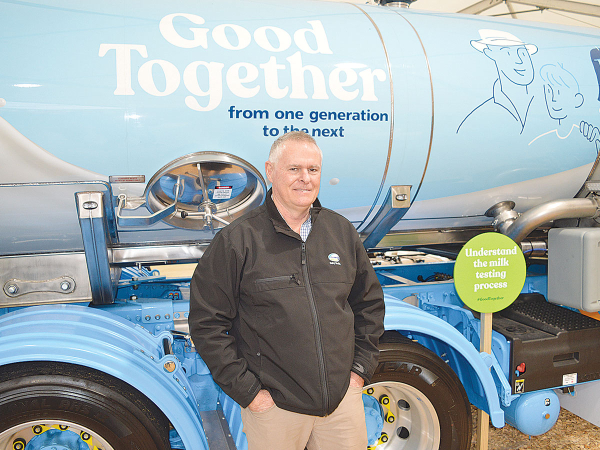 Fonterra chair Peter McBride
Fonterra chair Peter McBride, fellow directors and the management team, will front up farmer shareholders next week to explain the metrics around the proposed $4.22 billion divestment plan.
McBride, who will attend meetings in Waikato and Bay of Plenty, told Rural News that they will also be talking about Fonterra’s strategy, purpose and why farmer shareholders invest in the co-op.
Yesterday, the co-op unveiled its 2024-25 annual results and gave more details around the divestment of its consumer and related business in Oceania and around the globe to French company Lactalis. The divestment plan needs shareholder approval at a special general meeting, to be held online on October 30.
If the sale progresses, Fonterra’s board plan to return $2/share to shareholders, equivalent to $3.2b. Fonterra will retain $700m to “support resilience and growth” and $300m will be spent on sale and separation costs. The deal includes Fonterra securing long term agreements for milk supply, ingredients and other products to the divested business.
While the consumer business divestment will reduce earnings, Fonterra is targeting three years to return to FY25 earnings prior to proposed divestment through realignment of business, including cost out and product mix, driven by shifting to higher value Ingredients and Foodservice growth.
McBride believes the shareholder meetings will include conversations around the milk supply agreement with Lactalis, an important part of the deal and putting more details of the deal in front of farmers.
“And we’ll also discuss what does the remaining co-op or Fonterra of the future look like, and where are we going?
“So, we're going to be able to articulate more clearly with them and fill in some of the gaps that have been missing up until now. Until now, we've been able to reiterate the why without the substance or the detail or the numbers.”
McBride admits that not all farmers support the divestment plan.
He says there’s “a bell curve out there in terms of sentiment”.
“There are some farmers struggling with the decision and there's others that have already moved on in their minds.
“I think we're all at different stages in that journey. So, the more conversations we can have, then people can understand better.”
McBride says farmers have a real decision to make now.
For his part, McBride has spoken to about 40 large shareholders and key influencers, and they are “overwhelmingly supportive”.
“But that's just the ones I've spoken to, there'll be some folk that are really struggling but I think once we get to engage fully with them with the full set of materials, things will change.”
McBride believes emotional connection to the brands like Anchor and generational sentiment are impacting those farmer shareholders struggling to come to terms with the deal.
He points out that the iconic Anchor brand wasn’t always part of Fonterra’s stable.
New Zealand Dairy Co-operative issued shares in NZ Dairy Foods, which farmers sold to Graeme Hart, giving his company Rank Group ownership of the domestic Anchor brand. Fonterra, formed in 2001, still owned the international Anchor brand and bought back the domestic Anchor brand in 2005 in a brand swap with Hart’s Goodman Fielder business.
Fonterra shareholders can begin voting on Tuesday 20 October in the 2026 Board of Directors’ election, a Co-operative Council election in one Ward, and seven Annual Meeting resolutions.

Fonterra Co-operative Group chief financial officer Andrew Murray has resigned to take up a role outside the dairy giant.
Four candidates have been confirmed for two director positions on Fonterra’s board.
A record farmgate milk price and strong global demand is laying the foundation for continued growth of organic dairy farming in New Zealand.
Waikato milk processor Tatua has again declared a record milk payout to farmer shareholders, leaving other processors in the dust.


Federated Farmers has welcomed new rural policies released by ACT, saying they align closely with its own election priorities.

Rural Contractors NZ says proposed changes to land transport rules for agricultural vehicles are a welcome response by the Government to out of date regulations which have seen members hit with huge fines.
Alliance is calling for final applications for its 2027 Graduate Programme, with applications closing on Sunday 25 October.
Decades piloting planes has ensured vet and farmer David Hayes is focused on safety. So, after a serious accident while welding on farm, he is sharing his experience so others can learn from it.
Canterbury milk processor, Synlait Milk has confirmed Leon Fung as its chief executive officer.
OPINION: Making it easier to collect rainwater and use it to grow crops and livestock is a no brainer.

OPINION: It seems Canterbury processor Synlait is still in the doldrums.
OPINION: Get offside with New Zealand First leader Winston Peters at your own peril.




