
DIRA Review: Open Country Dairy Warns Against Regulatory "Complacency"
The country's second largest milk processor is warning against 'complacency' during a review of competition regulations in the dairy sector.




 increase font size
 Agriculture Minister Damien O’Connor says there won’t be a radical reform of DIRA.
The reform of the Dairy Industry Restructuring Act (DIRA) need not be radical but there will be some changes, Agriculture Minister Damien O’Connor has indicated.
“Fonterra is the biggest and best company we have in this country and the DIRA review underway is a really important one,” he told the Northland Dairy Development Trust annual general meeting. He spoke via Skype.
The previous government had done a review and almost got to the point of passing legislation but “chickened out at the last minute” so the review was left ‘sitting on the table’ during the last election, he said.
“I have taken... a fresh look at everything in dairy and how DIRA affects both Fonterra and the wider consumer and international market.
“We are [near to] getting feedback and advice from officials [who have] listened to people all over the country. I’d say it is balanced feedback and we will be making decisions on what that might mean.
“Key issues are open entry, open exit and then the provision of milk for competing companies and how to set the milk price.
“I am not convinced there needs to be radical reform but there needs to be change [to protect] Fonterra’s position as the biggest company we have on the international market [and to protect] farmers’ rights [and ensure] that consumers are getting a fair go.
“You will certainly hear about it and have an opportunity to submit on the changes when we decide the direction of travel in that area.”
O’Connor spoke by Skype because Parliament was reaching the final stages of the Budget process in which some of his bids for funding were under discussion. He said the result was positive and told farmers “hopefully that will be good news for you on Budget day”.
“We are rolling out a real big budget and that will not be just about the social side but the income-generation side as well -- on sustainable use of land.”
Issues of water quality, land use, nitrate leaching and sustainable forestry planting are at the forefront of MPs’ thinking.
Through MPI O’Connor is aiming to get a template for a farm management plan that would help farmers to meet all the basic requirements imposed by regional councils on nitrate leaching, water quality, water safety and biosecurity. “And there are many other issues -- you would say burdensome or challenging issues -- in being farmers in a new and emerging international environment”.
O’Connor says he knows farmers’ concerns about regulation and pending legislation. “We don’t want to impose anything we don’t think is absolutely necessary. [But] international trends mean consumers want to know more about where their food comes from and the ones who can afford to pay for our high value products want to know that we are doing everything in an ethical and sustainable way.” Hence the need to prove good environmental management, labour standards, animal welfare and food safety standards, he says.
A lot of his efforts as minister are to get enough resources to move farming forward to meet those increasing international requirements.
The country's second largest milk processor is warning against 'complacency' during a review of competition regulations in the dairy sector.

A miserable budget that didn’t deliver much for anyone.
National's decision to ‘dribble’ information about the NZ/India to Labour contributed to the delay in it deciding to supported the FTA.
When it comes to international trade, politicians from all sides of the aisle are united, says Labour's trade spokesman Damien O'Connor.
Federated Farmers have reiterated their support for the coalition Government to abolish the present ban on the live export of animals.


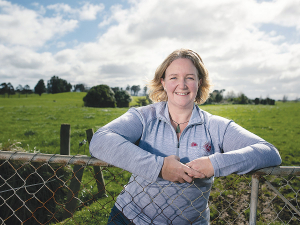
Farmers are being encouraged to rethink how they manage waste on farm with the launch of ruralwastesorted.co.nz, a new website bringing together practical tips, real farmer experiences and resources.

New Zealand Winegrowers (NZW) is celebrating the India-New Zealand Free Trade Agreement (FTA) coming into force today, bringing New Zealand wine improved access to one of the world’s fastest-growing economies.
New Zealand’s red meat sector has welcomed the India-New Zealand Free Trade Agreement taking effect, which removes India’s 33% tariff on New Zealand sheepmeat.
More than 95 per cent of New Zealand’s forestry and wood exports to India can now enter tariff free as the New Zealand-India Free Trade Agreement comes into force today.
Federated Farmers is backing Feilding High School’s call to keep Agriculture and Horticultural Science as a standalone subject in Year 11.
Food and fibre exports have returned a billion- dollar bonus to the country.


OPINION: It seems Canterbury processor Synlait is still in the doldrums.
OPINION: Get offside with New Zealand First leader Winston Peters at your own peril.




