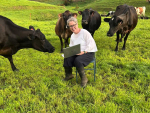
International Day of Rural Women: Two DairyNZ Farmers’ Stories
Today, 15 October, is the International Day of Rural Women, which recognises rural women’s contribution to farming, communities and the environment.




 increase font size
 DairyNZ head of economics, Mark Storey, says current market fundamentals remain stable.
The dairy sector is in a relatively stable position, with strong milk price payout forecasts continuing to offset ongoing high farm costs, according to DairyNZ.
In DairyNZ’s latest Econ Tracker update, the breakeven milk price (BEMP) has been revised to $8.66/kgMS, up slightly from last season’s $8.45, but little change from DairyNZ’s June forecast. The predicted average payout also remains steady at $10.30/kgMS.
The breakeven milk price is the milk sale price per kgMS to cover a farm’s costs in a season, excluding capital expenditure and principal repaid on loans. The forecast average payout is based on the estimated milk receipts for the specified season, along with dairy company dividends.
DairyNZ head of economics, Mark Storey, says the update reinforces the fact that current market fundamentals remain stable.
“Costs continue to remain elevated, but with high expected milk price payouts, the revenue outlook is still relatively strong, which is helping counterbalance cost pressures,” says Storey.
“There continues to be uncertainties in the wider economy and the international geopolitical environment, but overall, the dairy sector is in a good position.”
Farm working expenses have edged up slightly to $5.91/kgMS, reflecting ongoing cost pressures.
StatsNZ’s Farm Expense Price Index shows electricity prices are up 12% and freight costs are up 10% compared to last year, while fertiliser and feed costs are still elevated, with no relief expected in the near term.
However, Storey says easing interest rates are helping farmers manage these increases.
“Falling interest rates are offsetting some of the extra costs and helping to keep breakeven milk prices stable. Looking ahead, further OCR reductions are forecast, which should ease debt servicing pressures, although this also points to a broader economic slowdown.”
According to Rabobank’s Q3 global dairy quarterly report, New Zealand dairy farmer revenues remain strong.
Report co-author RaboResearch senior analyst Emma Higgins says Fonterra has maintained its milk price forecast of $10/kgMS for the 2025/26 season and raised its forecast for 2024/25 to $10.15/kgMS.
She says strong beef prices are also supporting dairy farm incomes, with additional revenue from cull cows providing the income boost.
While revenues are up, Higgins points out that so too are costs.
“Feed prices are rising across most inputs, but they remain affordable, and strong early season milk flows point to a bumper production season.
“If conditions continue to align, New Zealand dairy farmers could be on track to set a new production record – building on a strong 2024/25 season, which ended 2.6% YOY higher in tonnage and 3.3% YOY higher in milksolids.”
Positive Sign
DairyNZ chair, Tracy Brown, emphasises that farmers are focused on what they can control, including careful planning and improving production.
“The season’s production has started relatively well, with national milksolid production up by 18% in June, and up by 2% in July, compared to the same period last year,” says Tracy.
“While it’s early days, that’s a positive sign, but as always, we’ll need to see how the season plays out over the coming months.”
Today, 15 October, is the International Day of Rural Women, which recognises rural women’s contribution to farming, communities and the environment.
The first major update to the Dairy Cattle Code of Welfare in more than a decade has been released, marking what DairyNZ describes as an important step in ensuring animal welfare standards continue to evolve alongside scientific evidence and on-farm realities.
Have a plan in place for your cows and staff.
DairyNZ deputy chair Cameron Henderson has been re-appointed unopposed for another term.
OPINION: The stats speak for themselves.



National’s pledge to introduce 19 new national standards shows the party is serious about getting Wellington out of farming, Federated Farmers says.
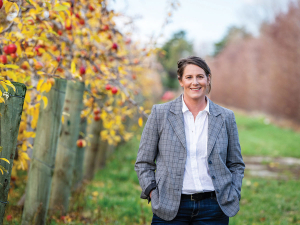
The National Party’s policies to make it easier to grow fresh vegetables, secure reliable water and energy and simplify farm planning are practical changes that will give growers the confidence to invest, according to Horticulture New Zealand (HortNZ).
Fonterra Co-operative Group chief financial officer Andrew Murray has resigned to take up a role outside the dairy giant.
A major move is about to get underway to improve the quality and viability of dairy beef and cattle in NZ.
Veterinarians say changes to the code of welfare for dairy cattle provides a positive foundation for improved cattle welfare across the country.
Today, 15 October, is the International Day of Rural Women, which recognises rural women’s contribution to farming, communities and the environment.

OPINION: It seems Canterbury processor Synlait is still in the doldrums.
OPINION: Get offside with New Zealand First leader Winston Peters at your own peril.




