
Federated Farmers Welcomes ACT’s New Farming Policies
Federated Farmers has welcomed new rural policies released by ACT, saying they align closely with its own election priorities.




 increase font size
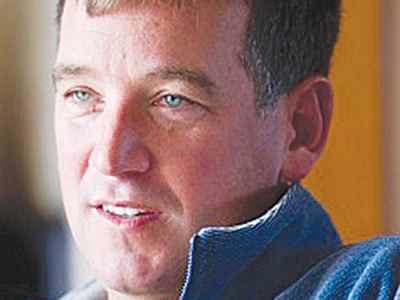 Federated Farmers Manawatu/Rangitikei provincial president James Stewart.
Federated Farmers says legal action announced last week against the Horizons Regional Council shows “some people just can’t accept that industry and councils can work together effectively”.
Federated Farmers Manawatu/Rangitikei provincial president James Stewart says the court action undermines and disregards the enormous amount of good work and investment by farmers in the region to comply with the new One Plan regulations.
The Environmental Defence Society and Fish & Game have filed court papers claiming the One Plan has not been “properly implemented”.
But Stewart says the One Plan is not a rubber-stamping exercise.
“We’ve all been working very hard to meet new stringent requirements and ensure checks and balances are in place that must be met.
“To have organisations, with limited local knowledge, throw stones from outside our region is very disappointing and fails to recognise the large amount of proactive and local work happening to support One Plan,” Stewart says.
The One Plan cost farmers and the regional council millions of dollars to refine and negotiate, in and out of court, for at least seven years. It finally took effect about 18 months ago and has been a daily work-in-progress for farmers and the council since then.
Federated Farmers Tararua provincial president Clint Worthington says the economic cost of revisiting this plan will be depressing for the region – to the ratepayers who will fork out to fight court action and to the communities who will now operate without the security of the already made plan changes.
“This is going to be an enormous drain on progress in our communities, right across the Horizons region,” Worthington says.
Stewart points out that in this tough economic climate, farmers have forked out up to $50,000 each to further improve their work in water quality, nutrient management and environmental farm planning.
“Forums like the Manawatu River Leaders group exist for the good of the local community and promote best practices from a local social, economic and environmental perspective. They contribute to this process on a daily basis, and work closely with the council. The people of Manawatu and Rangitikei deserve the opportunity to address environmental issues at a local level, without out-of-region interference by organisations with minimal knowledge of the outcomes of the One Plan.”
Federated Farmers encourages all farmers to continue their vital work, even with the uncertainty this legal action brings.
Agitators agitating
The Horizons Regional Council’s controversial One Plan is heading back to court.
The Environmental Defence Society (EDS) and Fish & Game New Zealand are going to the Environment Court to challenge the way Horizons Regional Council is implementing the plan.
The council describes One Plan as the “one stop shop” resource management planning document for the Horizons region. It defines how fresh water, air, productive land and natural ecosystems will be cared for and managed by the council and stakeholders.
The plan is designed to manage natural resources in the Horizons’ region of Whanganui and Manawatu, particularly tackling pollution, improving water quality and preserving environmental diversity.
While it was hailed as “precedent setting” when it was first drawn up, EDS and Fish & Game are now unhappy with how Horizons has implemented it. They are filing proceedings in the Environment Court challenging the council.
“We are concerned Horizons hasn’t been implementing its regional plan lawfully, particularly when dealing with resource consent applications for intensive farming and dairy conversions,” says EDS chief executive Gary Taylor.
“The One Plan sets environmental limits for freshwater, well scrutinised in various hearing and appeal court processes. The expectation was that Horizons would properly implement it and, over time, that it would produce improvements in freshwater quality.”
EDS and Fish & Game say they have talked with Horizons staff in recent months, trying to get the One Plan ‘properly implemented’, but without success.
“Key points of difference include interpretations of the Resource Management Act, the National Policy Statement on Freshwater Management and the One Plan itself. In short, we are not convinced the One Plan’s freshwater quality limits will be achieved given the way the consenting regime is presently managed.”
Fish & Game’s Wellington regional manager Phil Teal claims repeated attempts to get Horizons to ‘properly implement’ One Plan have failed.
“The One Plan was seen as key to tackling nitrogen leaching and while we didn’t expect farmers to make radical overnight changes, we did want a realistic approach which produced measurable improvement over time,” Teal says.
“Instead, all that happened was existing practices were grand-parented and that isn’t acceptable.”
Taylor says the discharge of nitrates and other pollutants from intensive farming, including dairy farming, is a national issue.
“The proceedings we are filing pose legal questions for the Environment Court to answer. The issues are technical and complex, but in the final analysis are critical to freshwater quality, so they are important,” Taylor says.
Federated Farmers has welcomed new rural policies released by ACT, saying they align closely with its own election priorities.

Federated Farmers is backing Feilding High School’s call to keep Agriculture and Horticultural Science as a standalone subject in Year 11.
National’s pledge to introduce 19 new national standards shows the party is serious about getting Wellington out of farming, Federated Farmers says.
Mobile phone coverage and reliability are deteriorating in rural areas, and farming families are bearing the cost, according to a Federated Farmers survey.
Central Otago District Council (CODC) has voted against a plan to spread treated sewage sludge from Cromwell and Alexandra on farmland near Lauder, a decision Federated Farmers says reflects strong opposition from rural residents.


Federated Farmers has welcomed new rural policies released by ACT, saying they align closely with its own election priorities.

Rural Contractors NZ says proposed changes to land transport rules for agricultural vehicles are a welcome response by the Government to out of date regulations which have seen members hit with huge fines.
Alliance is calling for final applications for its 2027 Graduate Programme, with applications closing on Sunday 25 October.
Decades piloting planes has ensured vet and farmer David Hayes is focused on safety. So, after a serious accident while welding on farm, he is sharing his experience so others can learn from it.
Canterbury milk processor, Synlait Milk has confirmed Leon Fung as its chief executive officer.
OPINION: Making it easier to collect rainwater and use it to grow crops and livestock is a no brainer.




OPINION: It seems Canterbury processor Synlait is still in the doldrums.
OPINION: Get offside with New Zealand First leader Winston Peters at your own peril.




