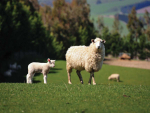
Early Weaning Lambs: What the Massey Trials Found
Farmers with high-quality feed available in late spring could consider weaning at least a proportion of their lamb crop early to benefit both lambs and ewes.




 increase font size
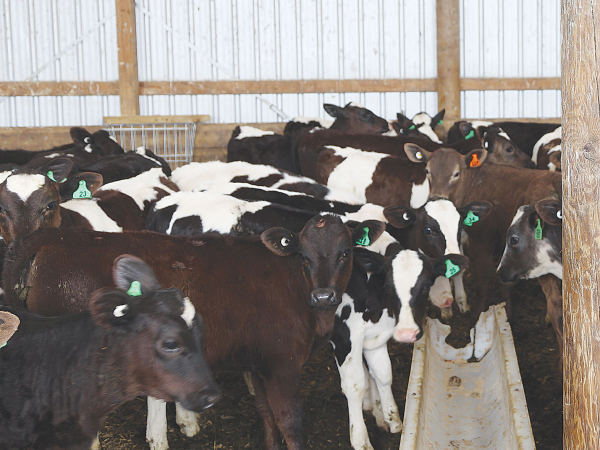 Probiotic products help calf rearers rear bigger healthy calves.
Success in calf rearing is often measured by minimising health issues and achieving target weaning weights.
Since its inception in 2017, Probiotic Revolution has brought in three different probiotic products to help calf rearers rear bigger healthy calves and around 120,000 calves a year are being reared on their products.
"Initially, to help calf health we relied on high doses of beneficial live bacteria in daily doses of Calf Xtreme boosting their immunity," explains Matt Collier of Probiotic Revolution.
"In order to get over scours we just doubled or quadrupled the dose rate. This works extremely well if the issue is just Rotavirus. However sometimes the issue may lie with just a few calves in a pen, so to just treat individual calves we now provide BioRescue paste in a convenient applicator. We have farmers who treat some extremely sick calves that have bounce back within 12 hours.
“We are so confident in this product that we are making it stronger this year and are providing an offer to allow many more to see its benefits.”
He also cites an example of Top Notch Calves who reared 7000 calves last year, but by using Calf Xtreme and BioRescue had 3% go through sick pens and just eight deaths.
Often bull calf rearers find their calves health is not the best when they arrive so last year the company proved BioCalf electrolyte, with its bacteria in it, to either help prevent scours or assist health when scours occur. For some this is now an essential tool to minimise health issues.
Despite improving health, Collier claims the biggest benefit of using Calf Xtreme daily is to boost growth rates. He says research has shown that if early milk volumes are high, better tissue is being laid down in the udder in the first 5 weeks of a calf’s life, and this impacts subsequent heifer milk production.
“With Calf Xtreme, we get to once-a-day feed rates that are not far off ad-lib rates, but there is great consumption of meal, hay and grass and better rumen development.”
This approach prevents nutritional scours, when the excess milk carries Calf Xtreme into the rumen, boosting digestion and intake of hard feed.
“The result is faster growth, with a survey showing calves reaching target weaning weights 11 days earlier,” he explains.
Collier cites an example of a Stratford farmer who used Calf Xtreme to change from feeding two litres twice a day to 7 to 8 litres once-a-day by day 10.
“Calves can’t normally get to this level of milk without getting scours but accompanied with a higher intake of meal and grass, they are initially growing at up to 1kg per day as well as better after weaning off milk. Milk production from these heifers compared with mixed age cow production has lifted from 74% to 86%. That’s a lift of 50kg milk solids or over $500 per heifer for about $10 of Calf Xtreme.”
Collier says the company is committed to promoting the use of their products with high milk rates to minimise health issues and raise higher producing heifers.
Farmers with high-quality feed available in late spring could consider weaning at least a proportion of their lamb crop early to benefit both lambs and ewes.
The first major update to the Dairy Cattle Code of Welfare in more than a decade has been released, marking what DairyNZ describes as an important step in ensuring animal welfare standards continue to evolve alongside scientific evidence and on-farm realities.
Bovine Viral Diarrhoea (BVD) is sometimes viewed as a dairy industry issue, but the reality is that the disease can have serious consequences for beef breeding herds as well.
Good Calf shed hygiene has always been about providing clean, dry bedding.
Animal health company Bovonic is gearing up for its next stage of growth after increasing New Zealand sales of QuadSense by more than 50% in the last 12 months, including a record quarter for the business this year.



Alliance is calling for final applications for its 2027 Graduate Programme, with applications closing on Sunday 25 October.
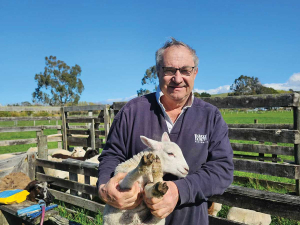
Decades piloting planes has ensured vet and farmer David Hayes is focused on safety. So, after a serious accident while welding on farm, he is sharing his experience so others can learn from it.
Canterbury milk processor, Synlait Milk has confirmed Leon Fung as its chief executive officer.
OPINION: Making it easier to collect rainwater and use it to grow crops and livestock is a no brainer.
As part of its Election 2026 coverage, Rural News asked political parties how they would help pull the arable sector out of the doldrums. Here's what they said:
Farmers are being encouraged to rethink how they manage waste on farm with the launch of ruralwastesorted.co.nz, a new website bringing together practical tips, real farmer experiences and resources.




OPINION: It seems Canterbury processor Synlait is still in the doldrums.
OPINION: Get offside with New Zealand First leader Winston Peters at your own peril.




