Ah Tatua, You've Done It Again!
Waikato milk processor Tatua has again declared a record milk payout to farmer shareholders, leaving other processors in the dust.




 increase font size
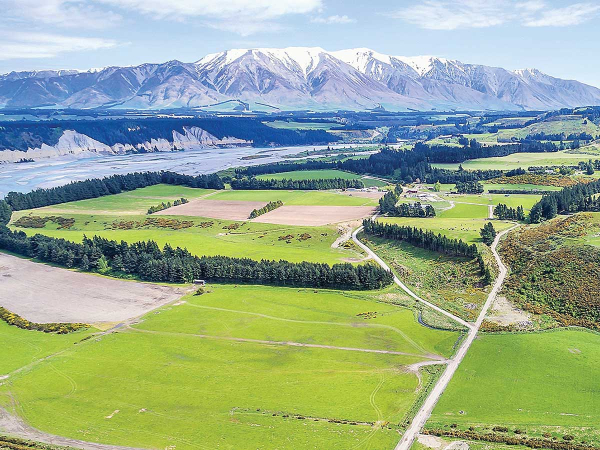 Farm sales activity appears to be growing considerably in recent months.
Buoyed by strong forecasts for milk prices and a renewed demand for dairy assets, the South Island rural real estate market has begun the year with positive momentum, according to Colliers.
Following a challenging period off the back of the Covid-19 pandemic and rising on-farm costs, market activity has grown considerably in recent months.
With green shoots emerging at the back end of last year, that has carried through into 2025. Fonterra’s 2024/25 season forecast Farmgate Milk Price has a midpoint of $10/kgMS, providing a boost for farmers.
Shane O’Brien, director of rural & agribusiness at Colliers Christchurch, says purchasers have been particularly active across the Canterbury region.
“During the past couple of years farmers have worked incredibly hard to make their businesses profitable and many are looking for expansion opportunities or to extend their farming footprint, which is driving a surge in local buying interest,” O’Brien says.
“We have also seen a resurgence among equity partnerships, something that has not been present in the market for several years. Buyers are searching for well-maintained farms with good management practices and strong compliance.”
While interest rates have been dropping as the Reserve Bank cuts the official cash rate, this has had less of an impact in the rural sector compared to the residential property market, according to O’Brien.
In the 2024-25 season, 25 dairy properties have been sold in the Canterbury region, a significant increase on the previous year. This renewed demand for dairy assets has seen the Colliers Canterbury team transact a collection of major deals to start the year, highlighted by the sale of a 179ha Tier 1 farm in Methven for $10.2 million. Another premier offering of a similar size on the outskirts of Ashburton sold for $9.7 million.
Richard O’Sullivan, director of rural & agribusiness at Colliers Christchurch, says as we head into autumn, buyers are seeking purchasing opportunities under the umbrella of an easing regulatory environment, farm cash surpluses, and strong financial backing from major lenders.
“Mid and central Canterbury have been met with the perfect storm of pent-up supply being exceeded by strong buyer demand. This has led to multiple offers being received on most properties we have sold recently,” O’Sullivan says.
“Farmer confidence levels are the highest they have been in a decade and the interest we have received in the recent properties we have taken to market underscores this. Buyers are keen to invest in farmland assets in Canterbury.”
Looking further south, Ruth Hodges, director of Colliers rural & agribusiness in Otago and Southland, says the dairy market in Southland has performed well to start the year with a key theme being a highly localised buyer pool.
“Demand remains strong and a majority of the 24 sales we have seen during the current dairy season are well-located farms that offer appealing infrastructure and production capabilities. One sale topped $50,000 per hectare, pricing not seen since the Global Financial Crisis,” Hodges says.
“Activity in the Gore and Clutha districts has been more subdued. There have been five recent sales across Gore and Clutha.”
Waikato milk processor Tatua has again declared a record milk payout to farmer shareholders, leaving other processors in the dust.

Synlait has swung to second-half profit as operations stabilise, but the dairy processor still posted a $75.4m annual loss.
A 'tsunami' of milk from key exporting countries is winding down and this may be good news for New Zealand dairy farmers.
Most dairy regions around the country have had a pretty good season so far says Tracy Brown.
The latest data from the Real Estate Institute of New Zealand (REINZ) reveals a mixed rural property market due to consistent inflation concerns.


Farmer-owned fertiliser company, Ballance Agri Nutrients is welcoming National’s plan to negotiate security agreements with key supplier countries to protect New Zealand-bound products from export restrictions and greater supply chain certainty.

Carrfields has announced the appointment of Stu Hall to the newly created role of chief operating officer, Carrfields Ltd, reflecting the continued growth of their agribusinesses and the need to ensure the company has the leadership capacity and support in place as it pursues the emerging opportunities ahead.
New Zealand's role is not to compete with Indian growers, according to NZ Apples and Pears.
The potato industry is celebrating the success of two rising stars - James Blair, the 2026 Young Grower of the Year and runner-up and innovation award winner, Amber Davy.
Twenty-eight emerging leaders from across the horticulture sector spent two days last month learning valuable skills and connecting with industry experts.
There are five entrants in this year’s Young Horticulturist of the Year, competing in a series of technical, practical, business and leadership challenges.

OPINION: It seems Canterbury processor Synlait is still in the doldrums.
OPINION: Get offside with New Zealand First leader Winston Peters at your own peril.