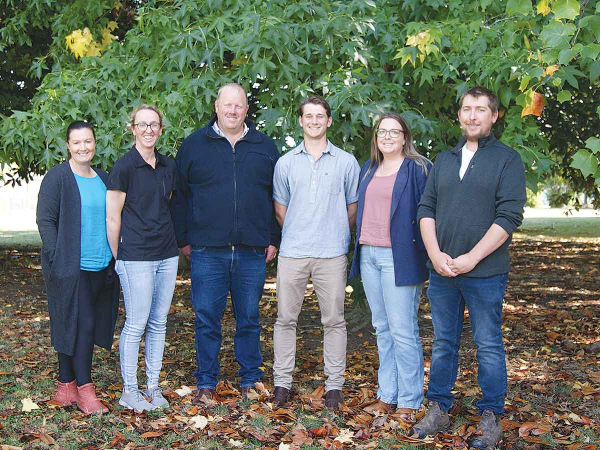
The six young cattle breeders participating in the inaugural Holstein Friesian NZ young breeder development programme have completed their first event of the year.
Waikato’s Sean Alexander, Canterbury’s Rachel Cox, Horowhenua’s Cara How, Otago’s Megan Morrison, Canterbury’s John Wakelin and Manawatu’s Karl Wood took part in a two-day introductory session from March 19-20 in Hamilton, which outlined how the programme would run.
This was followed by a session on understanding TOP traits and Breeding Values, along with governance training covering the four pillars of governance, director responsibilities and governance for not-for-profit organisations.
“It was great to meet the participants in the inaugural Young Breeders Development Programme, they are a great group of keen future leaders,” HFNZ general manager Cherilyn Watson says.
“The first sessions were well received by the group with everyone agreeing they learnt something across the two days. I Iook forward to following their progress through the programme and seeing them develop a range of skills that will allow them to contribute positively to the New Zealand dairy industry in future.”
The six young breeders were approached to join the programme, which runs from March until December, by the Holstein Friesian NZ board of directors, who recognised their potential for leadership roles in the future.
“The programme is targeted at young breeders and aims to help participants develop skills outside of the showring, particularly in the areas of governance and industry affairs,” Watson says.
“The Association sees this programme as a pathway to developing young breeders for board succession and to represent HFNZ across industry affairs in the future.”
Throughout the year, participants will attend a mixture of online and in-person workshops covering industry topics such as understanding three-generation pedigree reports and bull catalogues; health, safety and risk assessment; understanding the national breeding objectives and breeding values that underpin the New Zealand dairy industry; genomics; the New Zealand milk payment system and the impact of global financial fluctuations; strategic planning; banking and finance; and communication, strategic and critical thinking skills.
The HFNZ young breeder development programme is generously sponsored by Dave Marshall of Waihou Friesians, Te Puke, who is in the process of forming an education trust for young people to ensure future leaders can develop to their full potential for the betterment of the dairy industry.