Ah Tatua, You've Done It Again!
Waikato milk processor Tatua has again declared a record milk payout to farmer shareholders, leaving other processors in the dust.




 increase font size
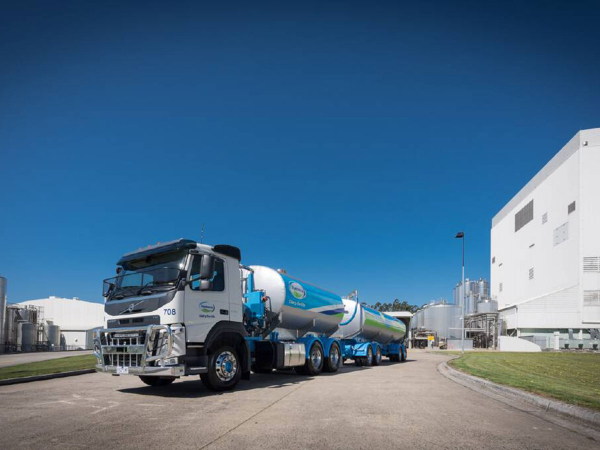 In a letter to Australian suppliers, Fonterra Oceania managing director David Breckenridge notes that their opening price is higher than the current season.
Australian dairy farmers supplying Fonterra are getting an opening weighted average milk price of A$8.60/kgMS for the new season or around NZ$9.26/kgMS - NZ74c less than New Zealand suppliers, based on the current exchange rate.
The price is made up of the minimum monthly rates set out in milk supply agreements and based on a mix of fat and protein and assumes standard production and quality incentives.
In New Zealand, Fonterra shareholders will receive an opening forecast milk price of $10/kgMS this season. However, Fonterra has announced a wide range forecast of $8 to $11/kgMS for the season.
In a letter to Australian suppliers, Fonterra Oceania managing director David Breckenridge notes that their opening price is higher than the current season, reflecting improved global market conditions, although dampened by a continued soft domestic outlook.
However, he adds that geopolitical tensions and potential trade disruptions, along with currency volatility continue to create uncertainty for the longer-term outlook.
“However, there are favourable signals for the season ahead that are building optimism for F26, including the increase in global dairy prices over the last 12 months,” he says.
“Global demand has shown signs of growth, with constrained global supply driving an uptick in global prices throughout the year. Australian dairy exports have strengthened on the previous year in value and volume. These improvements have been supported by a return to balance between local and global dairy prices and a favourable, yet volatile Australian dollar.”
But the domestic Australian market, where Fonterra directs majority of the milk, remains challenging. Inflationary pressures have yet to fully ease, and segments of Australian consumers continue to chase value through lower-cost dairy products. Foodservice channels, both locally and globally, are facing a multi-year recovery as even lower-cost restaurants are challenged as households eat out less.
“While there’s room for local demand to lift, we remain confident in the strength of our business and ability to be competitive on price as we navigate these conditions throughout the season. This is underpinned by the diversity of multiple dairy product types, sales channels, and markets that we sell into.”
Breckenridge says Fonterra Oceania is committed to paying a competitive milk price throughout the season.
He also spoke about the divestment of Fonterra’s Oceania and consumer businesses- Fonterra is looking at a trade sale or a partial float of the assets.
Breckenridge told suppliers that their milk contracts remain one of Fonterra’s most valuable assets.
“And we assure you they will carry through as part of any trade sale or Initial Public Offering (IPO).”
Waikato milk processor Tatua has again declared a record milk payout to farmer shareholders, leaving other processors in the dust.
Fonterra has unveiled its annual results for the 2026 financial year, posting $27 billion in revenue and close to $20 billion returned to New Zealand farmer owners and unit holders.
Fonterra Co-operative Group has confirmed the independently assessed candidates standing for election to its board in 2026.
Fonterra has revised its Farmgate Milk Price forecast for the 2026/27 season, lifting the midpoint and narrowing the range on the back of improving global dairy commodity prices.
Outgoing Fonterra Co-operative Council chair John Stevenson says that it has been a privilege to represent the co-op's farmer shareholders.


A seasoned horticulturist has been appointed to deliver the Apple Action Plan, a key initiative of the India-New Zealand Free Trade Agreement.
New Zealand's citrus growers have been told to compete on the value built into their fruit rather than the volume they grow.
Hawke's Bay fruit growers are being reminded of the need to prepare for whatever the El Niño weather system may bring in the coming months.
Three and a half years on from when Cyclone Gabrielle hit Hawke's Bay, some orchardists in the region are still receiving counselling to help them deal with the trauma they suffered.
South of the central Hawke’s Bay town of Waipukurau is Taniwha Station – a highly successful 550ha bull beef farming operation.
Beef + Lamb NZ funded research has shown that some simple changes to pasture management could help farmers make better use of rainfall and build resilience before dry conditions hit.




OPINION: It seems Canterbury processor Synlait is still in the doldrums.
OPINION: Get offside with New Zealand First leader Winston Peters at your own peril.




