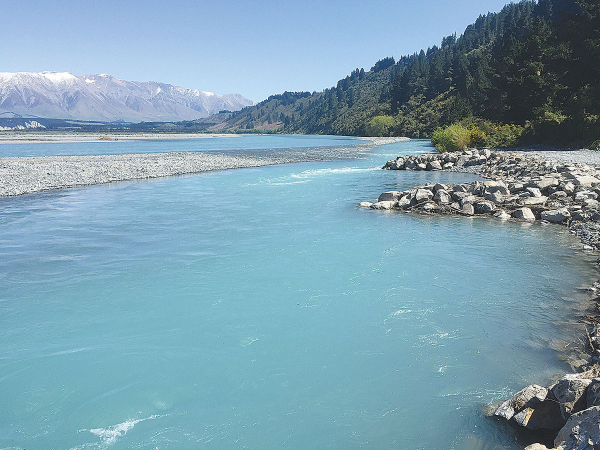
OPINION: University of Otago research describing the water quality of South Westland rivers as pristine, despite 160 years of river flats farming, is no surprise to Federated Farmers.
We already knew this. However, the additional science-based corroboration is great to have as we continue to put the case to government that blanket, one-size-fits-all stock fencing regulations are impractical.
The farming systems used on the West Coast take account of the province’s terrain, weather and environment. The West Coast has mountains very close to the coast meaning when it rains, rivers surge and often flood.
Fences are inevitably swept away and simply become a hazard to river and marine life.
Dr Sarah Mager and Sophie Horton of Otago University’s School of Geography set out to summarise the existing water quality of South Westland rivers from data held by the university and NIWA. They also wanted to evaluate whether existing farming practices were having a measurable effect.
They found that nitrate nitrogen levels in the main waterways were very low - in fact, orders of magnitude below the threshold to be rated ‘excellent’, and thus “are considered pristine” in terms of nitrate nitrogen.
Ammoniacal nitrogen concentrations were also very low and in many measurements there was no detectable ammoniacal nitrogen being below the method detection limit.
Both ammoniacal nitrogen and phosphorus were found to be within the 99% protection limits for species for highland rivers as an annual mean, as defined by the Australian New Zealand Guidelines.
Traditionally the riverbeds are passively grazed and this report proves that passive grazing should continue as it has for over 100 years.
The Otago University researchers noted that due to the low intensity of most of the farms in the area (between Jackson’s Bay and Fox Glacier township), they often lack stock exclusion and fencing, “and in most cases, stock exclusion is impracticable”.
However, there is a national requirement that beef cattle are excluded from lakes and wide rivers on low slope land from 1 July 2025 for existing farms – regardless of stock intensity or effect on the waterway.
Like we said last year, this is not mainstream New Zealand. This is a community like no other – an island on an island. They even generate their own electricity with a run of the river generation scheme on the Turnbull River.
Delete the traditional image of stock grazing in a paddock from your mind. Picture expansive river flats, where you may see one or two head of cattle at a time.
What little stock there are, are doing a sterling job of protecting the precious taonga of our native flora from imported weeds and pests.
Federated Farmers intends using this study in its continued advocacy on impractical and unnecessary aspects of the Essential Freshwater regulations.
As we say here at Feds, if you ask the people on the ground for solutions, they will bring them.
We will continue to do our best to get these solutions heard by those who make the regulations.
Colin Hurst is Federated Farmers spokesman on freshwater.